

Critical Sealing Technology: Ensuring Safety in High-Pressure Fluid Systems
2026-03-17
In modern chemical processing, oil and gas transfer, and power generation facilities, high-pressure fluid systems operate under extreme mechanical and thermal stress. Any failure in sealing integrity can lead to leakage, contamination, or even catastrophic system shutdowns. Preventative maintenance starts with the right components, and this is where industrial Gaskets play a central role in maintaining operational stability.
Across refineries and pipeline networks, sealing solutions must withstand aggressive media, fluctuating temperatures, and high PSI conditions. Our engineering team focuses on delivering materials that meet ANSI, ASME, and DIN standards commonly required in North American and European markets. Ningbo Kaxite Sealing Materials Co., Ltd. has consistently developed sealing materials that align with these regulatory frameworks, ensuring compatibility and reliability across global industrial systems.
From our factory perspective, we understand that long-term sealing performance is not just about material selection, but also about precision manufacturing and strict quality control. Our solutions are designed to minimize maintenance cycles and reduce unexpected downtime.
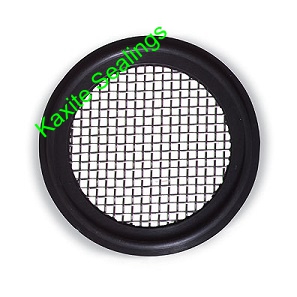
How Do Material Choices Influence Sealing Performance Under Extreme Pressure?
Material selection directly determines how sealing components behave under compression, temperature variation, and chemical exposure. In high-pressure environments, Gaskets must exhibit excellent creep resistance, recovery properties, and chemical stability. Our factory typically recommends graphite, PTFE, and non-asbestos composite materials depending on the application scenario.
For example, expanded graphite provides superior thermal resistance in steam systems, while PTFE-based seals are widely used in corrosive chemical pipelines. Our engineers evaluate each working condition carefully, ensuring that our sealing materials match both pressure class and media compatibility.
Ningbo Kaxite Sealing Materials Co., Ltd. integrates advanced calendaring and compression technologies to ensure uniform density and structural consistency. This allows our products to maintain tight seals even under cyclic loading conditions commonly found in industrial operations.
| Material Type | Temperature Range | Pressure Resistance | Typical Applications |
| Graphite | -200°C to 500°C | Up to 300 bar | Steam pipelines, heat exchangers |
| PTFE | -180°C to 260°C | Up to 150 bar | Chemical processing systems |
| Non-Asbestos Fiber | -50°C to 300°C | Up to 100 bar | General industrial sealing |
What Design Features Improve Sealing Reliability in Industrial Applications?
Beyond materials, structural design significantly impacts sealing efficiency. High-performance Gaskets are engineered with optimized density, layered construction, and precise thickness control to ensure proper compression and recovery.
Key design considerations include bolt load distribution, flange surface finish, and alignment accuracy. In industries such as petrochemical processing, even minor deviations can result in leakage. Our factory emphasizes dimensional accuracy and strict tolerance control during production.
In addition, advanced cutting technologies such as CNC die-cutting and laser profiling allow our team to produce customized sealing solutions for complex flange geometries. Ningbo Kaxite Sealing Materials Co., Ltd. supports OEM and project-based customization, ensuring that each sealing solution aligns with specific equipment requirements.
| Parameter | Standard Range | Importance |
| Thickness | 0.5 mm – 5 mm | Controls compression and sealing tightness |
| Density | 1.6 – 2.2 g/cm³ | Ensures structural integrity |
| Compression Rate | 7% – 17% | Determines adaptability to flange surfaces |
| Recovery Rate | 40% – 60% | Maintains sealing after pressure release |
How Can Preventative Maintenance Reduce Leakage Risks in High-Pressure Systems?
Preventative maintenance strategies rely heavily on consistent inspection and timely replacement of sealing components. Over time, even high-quality Gaskets can degrade due to thermal cycling, pressure fluctuations, and chemical exposure.
Our field experience shows that regular inspection intervals, proper torque application, and correct installation procedures are critical to maintaining sealing performance. Our factory also provides technical guidance to help operators select the right sealing solution based on real working conditions.
By integrating predictive maintenance practices, such as monitoring pressure drops and temperature anomalies, operators can identify potential sealing failures before they escalate. Ningbo Kaxite Sealing Materials Co., Ltd. works closely with industrial clients to optimize maintenance schedules and reduce operational risks.
Why Is Choosing a Reliable Sealing Manufacturer Critical for System Safety?
Supplier capability plays a decisive role in sealing reliability. High-pressure systems demand not only high-quality materials but also consistent production standards and traceability. Gaskets manufactured under strict quality systems ensure uniform performance across batches.
Our factory operates with advanced testing equipment, including tensile strength testing, density analysis, and leakage simulation. This ensures that every sealing product meets international requirements before delivery.
With years of experience in global supply, Ningbo Kaxite Sealing Materials Co., Ltd. has built a reputation for delivering stable and durable sealing solutions. Our commitment to quality and customization helps industrial buyers reduce risks and improve system efficiency.
FAQ: Critical Sealing Technology: Ensuring Safety in High-Pressure Fluid Systems
Q1: What factors determine the performance of sealing components in high-pressure systems?
Performance depends on material selection, pressure rating, temperature resistance, and installation accuracy. High-quality Gaskets must maintain compression under load while resisting chemical degradation. Proper torque and flange condition also significantly influence sealing effectiveness.
Q2: How often should sealing components be replaced in industrial systems?
Replacement intervals vary based on operating conditions such as pressure, temperature cycles, and media type. In high-stress environments, regular inspection every maintenance cycle is recommended, with replacement scheduled proactively to avoid unexpected leakage or system failure.
Q3: Why is material compatibility important in sealing applications?
Material compatibility ensures that the sealing component can resist chemical reactions, swelling, or degradation when exposed to process media. Selecting incompatible materials can lead to rapid failure, leakage, and safety hazards, especially in corrosive or high-temperature environments.
Conclusion: How Can Advanced Sealing Solutions Improve System Reliability?
Ensuring safety in high-pressure fluid systems requires a comprehensive approach that includes material selection, precision engineering, and proactive maintenance. Industrial sealing components remain a fundamental part of system integrity, preventing leaks and supporting stable operations across demanding environments.
Our factory continues to invest in advanced sealing technologies to meet evolving industrial requirements. If you are looking to improve system safety, reduce downtime, and enhance performance, contact our team today for customized solutions and technical support tailored to your application.