

Top Conveyor Pulley Types and How to Choose the Right One
2026-11-16
Nothing slows down a production line faster than a conveyor pulley that can't handle the job. The right pulley type—whether drum, wing, or lagged—keeps belts tracking true and prevents costly downtime, while the wrong one can wear out bearings and belts in weeks. This guide covers the top conveyor pulley types and the practical factors you need to weigh before making a choice. If you're ready to move beyond guesswork, YUFENG offers a range of pulleys built for real-world conditions.
Drum Pulleys: The Workhorse That Keeps Heavy Loads Moving
In any heavy-duty conveyor system, the drum pulley sits at the heart of the operation, quietly taking on forces that would crumple lesser components. It's the cylindrical component that the belt wraps around, transmitting torque from the drive to move everything from crushed stone to packaged goods. Without a properly designed drum pulley, the entire line grinds to a halt—or worse, the belt slips, wanders, or tears under tension.
What makes these pulleys such reliable workhorses is their rugged construction. A typical drum pulley features a thick steel shell, precision-machined end discs, and a shaft sized to withstand both bending and torsional loads. Depending on the application, the face may be crowned to help the belt track true, or lagged with rubber or ceramic to boost friction and shed water. These details matter when you're moving thousands of tons a day in dust, mud, or extreme temperatures.
Maintenance teams learn quickly that a healthy drum pulley means fewer emergency shutdowns. Regular checks for bearing noise, lagging wear, and shell deformation catch small issues before they become costly failures. And while the pulley itself rarely demands attention, aligning it properly and keeping the belt tension balanced extends its life dramatically. In the end, the drum pulley earns its keep by doing the heavy lifting—day after day, often unnoticed until something goes wrong.
Wing Pulleys: Designed to Shed Debris and Reduce Buildup
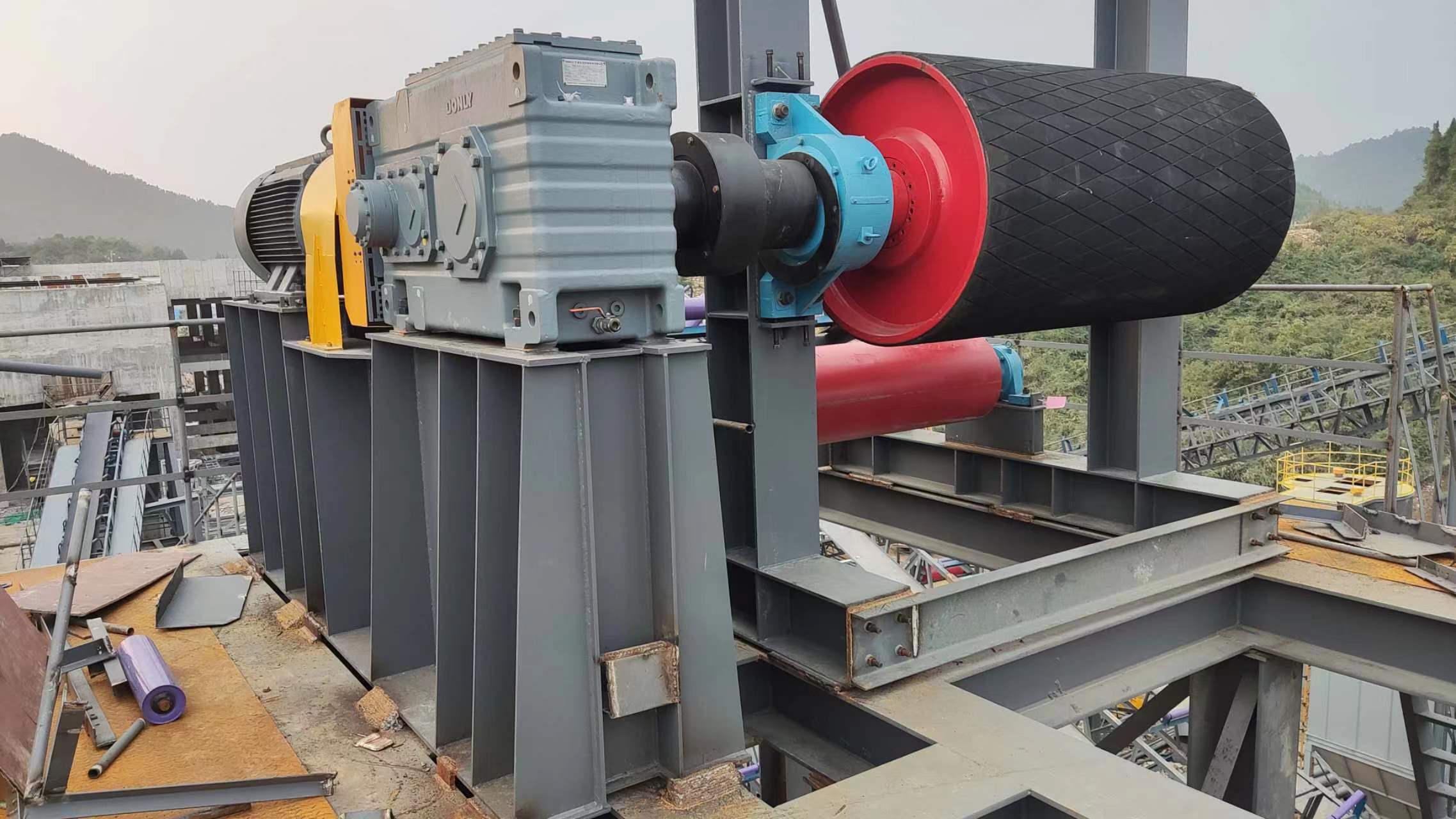
Wing pulleys tackle a problem that standard drum pulleys often ignore: material trapping. The spaced wing fins create open channels that let loose rock, sand, or wet fines escape before they can pack against the belt. As the pulley spins, each wing acts like a vane that shoves debris outward through the gaps, keeping the contact surface clean and the belt tracking straight.
This self-cleaning behavior pays off toughest in sticky or abrasive bulk handling. Instead of stopping to scrape a caked-on drum, crews can run longer between cleanups. Belt life improves because there is no concentrated buildup grinding into the underside, and vibration drops as the pulley remains balanced rather than loaded unevenly.
Tail Pulleys: Where Tension Control and Belt Tracking Happen
Tail pulleys are where the return side of the belt turns back toward the drive, but calling them just a bend point misses the real job. On most conveyors, this is where tension gets tuned—through take-up devices that either push or pull the pulley to keep the belt snug. Too little tension and the belt slips or sags; too much and you're burning bearings and stretching splices. The tail is also where mistracking often shows up first, since any misalignment in the frame, lagging wear, or uneven loading gets amplified as the belt enters the return run.
A well-designed tail assembly manages both tasks without constant fiddling. Self-cleaning tail pulleys, for instance, use slatted or wing-style profiles to shed material that would otherwise get trapped between belt and pulley face—a common cause of drift and premature cover wear. Adding a slight crown or using tapered lagging can help center the belt, but only if the structure is square and the take-up travel is actually free. Many tracking problems blamed on the tail are really symptoms of a frozen take-up bearing or a pulley that's been shimmed one too many times.
In practice, the smartest operators treat the tail pulley as a diagnostic point. Regular checks of lagging condition, shaft alignment, and take-up position tell you a lot about what's happening upstream. If the belt wanders to one side only under load, check the loading zone and skirt seals before reaching for the tail adjustment. And when you do adjust, do it in small increments—a quarter turn at a time—rather than chasing the belt with big swings. That patience pays off in longer belt life and fewer surprise shutdowns.
Head Pulleys: The Drive Point That Turns the Belt
Somewhere along the discharge end of a conveyor, the head pulley does more than just carry the belt back around. It's the component that actually puts motion into the system. A motor and gearbox feed torque through the pulley shaft, and the friction between the pulley surface and the belt cover turns that rotational force into linear belt travel. Without a properly designed head pulley, the rest of the conveyor is just idle steel.
Grip matters more than most people expect. The pulley needs enough contact area and surface texture to prevent slip under load, especially when the belt is wet or dusty. Lagging—rubber, ceramic, or polyurethane—is often applied to boost friction and shed material that would otherwise reduce traction. If lagging wears smooth or the belt wrap angle is too shallow, you'll see the belt slip, surge, and wear unevenly. That's why drive pulleys tend to be larger in diameter than tail pulleys, giving the belt more surface to bite into.
Keeping a head pulley healthy is mostly about watching alignment and surface condition. A crowned pulley or tapered lagging can help the belt track straight, but wear patterns tell you a lot: edge wear points to misalignment, center wear to over-tension, and glazing to heat buildup from slip. Regular checks on bearing temperature, shaft deflection, and lagging thickness prevent the small problems from turning into a sudden drive failure. Because when the head pulley stops transferring torque, the whole line stops with it.
Snub and Bend Pulleys: Small Adjustments That Improve Belt Grip
A snub pulley sits close to the drive pulley, pushing the belt deeper into its arc of contact. That extra wrap angle means the belt clings harder instead of slipping, letting you squeeze better grip out of the same motor and belt without over-tensioning everything.
Bend pulleys work a different trick. By rerouting the belt's return path, they shift the effective angle at which tension pulls against the drive. Even a few degrees of redirection can add significant holding power, especially on long conveyors where the natural sag would otherwise steal traction.
The real craft is in the small moves: nudging a snub pulley up or down, adjusting a bend pulley's offset, or swapping its diameter. These tweaks rarely show up in basic layout drawings, but they're often what separates a conveyor that slips under load from one that holds steady.
How to Match Pulley Type to Load, Speed, and Cleanliness
Matching a pulley to the load starts with understanding how much tension and bending stress the belt will see. Heavy or shock loads call for larger diameters and wider grooves to spread contact pressure and reduce belt fatigue. Cast iron and steel pulleys handle high tension well, but if the load fluctuates sharply, check the rim and spoke design for stress risers. Light or steady loads leave room for thinner wall sections, yet you must avoid undercutting the hub area where cracks often begin.
Speed changes the entire selection logic. At high RPM, pulley imbalance becomes a real problem, so look for dynamically balanced designs or plan to add balancing holes after machining. Aluminum and engineered plastics reduce rotating mass and work well for fast shafts, but verify their strength at operating temperature because heat from friction can soften some polymers. For line speeds above 30 m/s, skip fabricated pulleys with welded joints and choose one-piece machined or die-cast construction with a fine surface finish on the groove.
Cleanliness requirements often override material and bearing choices. Food plants, pharmaceutical lines, and dusty environments need stainless steel or coated pulleys that resist corrosion and washdown chemicals. Avoid open pores in castings where bacteria or debris can collect. If fibers or abrasive particles are present, keep groove surfaces smooth and free of deep machining marks. Sealed bearing units with contact seals prevent contamination from reaching the rolling elements, and adding drainage slots helps when the pulley gets hosed down regularly.
FAQ
A drum pulley has a solid cylindrical face, which gives it a smooth, continuous contact surface. That makes it ideal for drive positions where you need consistent belt traction and minimal vibration. A wing pulley, on the other hand, uses angled bars or wings instead of a solid face. The open design lets loose material fall through instead of building up, so it shines in dirty or wet environments like aggregate handling or mining where a drum pulley would quickly pack with debris and throw the belt off track.
Start with the belt carcass and tension. Larger diameter reduces the stress on the belt's internal plies, so you need to match the pulley to the minimum recommended diameter for the belt type, such as fabric or steel cord. Also consider belt speed and wrap angle. A quick practical check: if you see excessive belt cracking or ply separation near the pulley, the diameter is probably too small for the load and flex cycle.
Ceramic lagging is worth it when drive traction is marginal, especially in wet, muddy, or high-slip conditions. The embedded ceramic tiles bite into the belt's underside and dramatically raise the friction coefficient. Rubber lagging still works well in dry, clean environments and is cheaper up front. If your conveyor sees frequent startup under full load or runs in heavy rain, the longer service life and reduced slippage from ceramic usually pay for the difference.
A snub pulley increases the belt wrap around the drive pulley, which directly boosts the amount of friction the drive can transfer. That extra wrap can be the difference between a conveyor that slips on startup and one that accelerates smoothly. It is not always required; if your drive already has enough wrap angle, say 180 degrees or more, a snub pulley may be unnecessary. But if you want to increase drive capacity without upsizing the motor or drive pulley, adding a snub is often the simplest mechanical fix.
Not always. The head pulley is usually a drive pulley and may need lagging, a larger diameter, and a shaft sized for torque. The tail pulley is more about tensioning and belt alignment, so it often lacks lagging and can be built lighter. However, in small or simple conveyors, some manufacturers do use identical drum pulleys at both ends to reduce inventory. Just confirm that the tail pulley's shaft and bearings can handle the tension load without excessive deflection.
A bend pulley changes the direction of the belt, typically to route it around a corner or bring the return side closer to the carrying side. It sees belt tension but does not actively adjust it. A take-up pulley, usually part of a gravity or screw take-up system, maintains proper belt tension as the belt stretches or wears. In practice, a bend pulley may be fixed, while a take-up pulley needs to slide or pivot to compensate for length changes.
Look for shell wear that has reduced the wall thickness below the manufacturer's minimum, especially if cracking or deep grooves are present. If the end discs are warped or the hub is loose on the shaft, that is a structural failure waiting to happen. Bearing seats that are scored or out of round after a bearing failure often make rebuilding uneconomical. Also, if the pulley has been repeatedly welded and still vibrates badly, replacement is usually cheaper than chasing balance issues.
Balancing becomes much more critical as speed rises. Even a small imbalance creates centrifugal force that grows with the square of the rotational speed, so a pulley balanced fine at 100 feet per minute may shake violently at 500 feet per minute. That vibration shortens bearing life, loosens mounting bolts, and can cause belt mistracking. For any conveyor running above roughly 300 feet per minute, dynamic balancing is not a luxury; it is a basic reliability requirement.
Conclusion
Drum pulleys are the backbone of most heavy-duty conveyor systems, providing a smooth, solid surface that keeps belts tracking under extreme tension. Wing pulleys, on the other hand, have a completely different job: their angled, open-face design lets rocks, mud, and other debris fall through instead of packing onto the pulley, which is why you'll see them in dirty environments like quarries or recycling yards. Head pulleys sit at the discharge end and transfer drive power to the belt, while tail pulleys at the opposite end handle tensioning and help guide the belt back into alignment. Getting these basics right makes or breaks uptime.
The smaller snub and bend pulleys might not get much attention, but they increase the belt's contact angle around the drive pulley, which improves grip and prevents slipping under heavy loads. When it's time to choose, match the pulley to the specific conditions instead of defaulting to one style. Ask how much weight the belt carries, how fast it runs, and how much dust, moisture, or abrasive material is present. A high-speed, clean application may do fine with a standard drum pulley, but a slow, high-load, dirty setup often benefits from a wing pulley on the tail and a lagged head pulley for extra traction. Checking these factors before installation saves bearing failures, belt wear, and costly mid-shift stoppage.
Contact Us
Contact Person: Jayce
Email: [email protected]
Tel/WhatsApp: 8615318787602
Website: https://www.yuphengbelt.com/