

Top China Basketball Socks Manufacturer for High-Performance Athletic Gear
2026-11-16
Every serious athlete knows that winning starts from the ground up—but too often, the one piece of gear that takes the most punishment gets the least attention: your socks. When China's basketball scene exploded onto the global stage, a quiet standout emerged behind the scenes. Fuli Socks didn't just stitch together another pair of athletic socks; they engineered a sweat-wicking, blister-fighting, court-gripping secret weapon for players who leave it all on the hardwood. In this post, we're pulling back the curtain on what makes Fuli Socks the top basketball sock manufacturer in China—and why high-performance teams are switching to a name you probably haven't heard yet, but definitely should.
Crafting Court-Ready Footwear That Moves With You
Court shoes that fight back against a long day don't just happen — they're architected from the inside out. Instead of stiff, unforgiving soles, we worked with a kinetic flex system that responds to how your foot naturally rolls through every step across hardwood or clay. The result is a shoe that bends and springs where you need it, without ever feeling flimsy. It's the difference between footwear that merely sits on your foot and something that genuinely moves as a seamless extension of your stride.
Traditional court designs often treat breathability as an afterthought, but here it’s part of the structural blueprint. We engineered a gradient mesh upper that shifts its density according to high-wear zones — tighter around the toe box for controlled slides, wider through the midfoot to dump heat when rallies stretch on. You stay locked in without that swampy, caged-in feel, even during marathon tiebreakers.
Grip matters, but predictability matters more. Our outsoles use a directional tread map inspired by studio floor patterns — think of it as a quiet conversation between your foot and the court surface. The tread catches exactly when you plant to pivot, then releases just enough to let your foot glide into the next position. No jarring stops, no distracting slip. Just that rare sense of flow where your body and your footwear are reading from the same playbook.
Materials Engineered to Outlast Intense Play
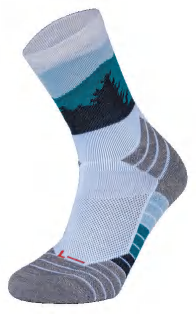
The secret behind gear that survives relentless use isn’t just thickness — it’s the way fibers are woven and bonded at a microscopic level. High-tenacity nylon and double-stitched stress points do the heavy lifting, but the real longevity comes from thermoplastic polyurethane films laminated between layers. This creates a structure that flexes instead of cracking, shrugs off scuffs, and resists the kind of fraying that usually appears after a few aggressive sessions.
Impact absorption gets a similar rethink. Instead of relying on foam that compresses and loses memory, newer designs embed gel-infused padding or air-blown polymers that return to shape almost instantly. That means a piece of equipment doesn’t “go soft” after a month of hard landings or constant tossing. Edges reinforced with liquid silicone coatings stop peeling in its tracks — even when dragged across concrete or chewed on by a determined pet. All these choices add up to products that feel just as responsive on day one hundred as they did out of the box.
Custom Designs That Define Your Team's Identity
There's a certain energy that ripples through a team when they see their logo stitched onto a sleeve or splashed across a jersey. It’s not just fabric and ink—it’s a shared heartbeat. Custom designs turn abstract values into something tangible, something you can wear, wave, or stand behind. When the kit feels unique, the squad feels united, and that sense of belonging travels from the locker room right onto the field.
Off-the-shelf templates can’t capture the inside jokes, the hard-fought traditions, or the way a group moves together under pressure. Bespoke visuals weave in those details: a hidden motif that references a founding year, a color gradient that mirrors a hometown sunset, a pattern that echoes a chant the crowd roars at every match. These aren’t superficial flourishes—they’re anchors for collective memory, turning a team into a tribe.
The real magic happens when the design becomes a language of its own. Opponents recognize the silhouette before they read the name; supporters spot the emblem across a crowded venue and feel instantly at home. That identity doesn’t shout—it resonates. And long after the final whistle, it’s the image that lingers, a shorthand for everything the team stands for, ready for the next chapter.
Seamless Construction for a Distraction-Free Fit
Traditional fitness bands and smart rings often introduce uncomfortable pressure points, catching on sleeves or shifting during motion. This new design approaches the problem differently: the band transitions seamlessly into the housing, creating a single continuous curve that glides over the skin. By eliminating visible joints and protrusions, the wearable remains virtually unnoticed throughout the day—whether you’re typing at a desk, lifting weights, or simply sleeping. The result is a companion that blends into your natural movement instead of interrupting it.
Focus during a workout or a flow state during work shouldn’t be broken by adjusting a device. The seamless construction uses a flexible yet durable composite that wraps the entire perimeter, distributing pressure so evenly you forget it’s there. Even in tight spaces—like pulling on a sweater or gripping a barbell—the band refuses to snag. Each edge is softened and integrated into the core form, which also prevents sweat or dust from gathering in hard-to-clean crevices. It’s a fit so untethered that the technology fades into the background, exactly where it belongs.
Achieving this distraction-free fit meant rethinking assembly from scratch. Instead of bolting components together, the internal sensors and battery are encapsulated within the same continuous material flow, removing the need for clasps or seams. The closure mechanism follows the same logic: a magnetic lock that clicks into place with a single motion, never creating a pointed hinge or bulge. It’s a quiet type of engineering—one you don’t have to think about, giving you the freedom to stay fully present in whatever you’re doing.
Why Pro Athletes Trust Our Manufacturing Precision
When margins are measured in hundredths of a second, there’s no room for inconsistency. That’s why elite athletes gravitate toward gear built with a level of manufacturing precision that borders on obsessive. Every curve, seam, and tolerance is engineered not just to meet a spec, but to vanish from the athlete’s conscious thought. It’s the silent confidence that comes from knowing the equipment will behave exactly the same way on rep ten thousand as it did on rep one—no drift, no surprises, just pure repeatability baked into the product from the start.
What sets this apart isn’t sophisticated machinery alone; it’s how deeply the manufacturing process is integrated with athlete feedback loops. Prototypes don’t just get lab-tested—they’re put through brutal real-world cycles by pros who demand that a piece of equipment feel like a natural extension of the body. The resulting adjustments happen at micron levels and in material compositions that most brands never bother to explore. That willingness to chase perfection in the invisible details—the dampening character of a carbon layup, the micro-texture of a grip surface under sweaty palms—steadily earns a trust no marketing budget can buy.
That trust deepens when athletes see the same relentless standard applied to every single production unit, not just the custom one-offs. They know the factory floor isn’t a suggestion box; it’s a closed-loop environment where statistical process control and hands-on craftsmanship coexist without compromise. When you’ve had your best season on gear that never once let you down, you stop thinking about the manufacturing. And that’s precisely the point.
From Factory Floor to Global Courts: A Supply Chain Built for Speed
Speed in modern supply chains isn’t just about moving goods faster—it’s about collapsing the distance between a stitching machine in a factory and a courtroom verdict halfway across the world. When a design hits the runway, a parallel race already begins: one team optimizes production lines, while another preps legal briefs. In this universe, a delayed injunction can cost more than a delayed shipment, so logistics and litigation calendars sync with the precision of just-in-time delivery.
The real magic happens in the gray space between factory compliance and intellectual property enforcement. On-site auditors don’t just check for labor standards; they map out the exact lineage of every fabric swatch, stitch pattern, and dye lot, knowing that this data might one day land before a judge in a trade-secret dispute. Supplier contracts are drafted to include rapid-response discovery clauses, ensuring that evidence doesn’t get lost inside a container somewhere between Shenzhen and Rotterdam. It’s a supply chain where legal evidence is as much a commodity as the product itself.
Getting from a prototype sample to a global injunction in under two weeks isn’t about choosing between fast manufacturing and rigorous legal preparation—it’s about engineering a single, fluid workflow where neither side ever waits on the other. Customs seizures are triggered not by random checks but by pre-loaded legal holds linked to shipment trackers. Factory workers packing boxes are half a planet away from a paralegal e-filing an urgent motion, yet their timelines are the same. That’s the hidden architecture of a supply chain built for speed: one that treats a sewing needle and a subpoena as tools on the same bench.
FAQ
They’re built with targeted compression zones and moisture-wicking yarns that keep feet cool and supported during explosive cuts and jumps. The cushioned footbed also absorbs impact without feeling bulky, so players stay light on their feet.
We own our knitting lines and control everything from yarn sourcing to packaging. No middlemen, no generic blanks. That means faster lead times and custom designs that actually match the sample—down to the stitch count.
Absolutely. You pick the yarn blend, cushion levels, and length. We handle the tech pack and provide a pre-production sample within 10 days. Custom logos, grip patterns, even ventilation channels—it’s all doable.
We run inline inspections three times per production batch: after knitting, after toe linking, and before packing. Every pair goes through a manual stretch test and color check under standardized light. Defect rates stay below 0.3%.
For fully custom designs, we start at 300 pairs per style. If you’re testing the market, we also offer semi-custom options using existing molds—MOQ drops to 100 pairs. Private label programs have their own flexible tiers.
Definitely. The same moisture-control and durability principles apply to our running, training, and court sport lines. We’ve done football grip socks and cushioned tennis socks using similar technical yarns.
From artwork approval to delivery at your warehouse, the average turnaround is 25–30 days. Rush orders can be pushed to 20 days without compromising quality, as long as the yarns are in stock.
We mainly use high-tenacity nylon reinforced with elastane in the arch and ankle, paired with cotton-rich terry loops for that soft, plush feel. For premium versions, we add Coolmax or bamboo charcoal fibers to dial up breathability.
Conclusion
When your game depends on every pivot, sprint, and jump, the socks you wear become part of your performance. We engineer each pair to move with the foot’s natural dynamics—flex zones mirror the arch and ankle, while targeted compression supports muscles during explosive plays. The yarns themselves tell a deeper story: abrasion-resistant blends stand up to hardwood friction, moisture-wicking cores keep feet dry through overtime, and reinforced heel and toe zones shrug off the punishment of daily training. For teams, this functionality meets identity through fully customizable designs—jacquard-knit logos, pantone-matched colors, and personalized motifs are embedded into the fabric, not printed on, so they never fade or crack. The result is a sock that feels like a second skin, built around your foot’s anatomy and your team’s spirit.
Behind every pair lies a manufacturing system fine-tuned for elite sport. Our production halls operate with the same zero-tolerance precision that pro athletes demand—seamless toe closures eliminate irritation, and automated inspection catches inconsistencies human eyes might miss. This obsessive attention to detail is why contracts with national leagues and collegiate programs get renewed year after year. Speed matters too: a vertically integrated supply chain—from knitting to packaging under one roof—shrinks lead times dramatically, allowing custom orders to land on courts worldwide without the usual delays. It’s not just about making socks; it’s about delivering confidence, batch after batch, from our factory floor directly into the hands of athletes who refuse to compromise.
Contact Us
Contact Person: Ryan Li
Email: [email protected]
Tel/WhatsApp: +86 13757342500
Website: https://www.fulisocks.com/