

Top 10 Lightning Strike Current Sensors for Enhanced Electrical Safety
2026-08-21
Every year, undetected lightning currents destroy millions in electronics—and most sensors miss the first microsecond that matters. We sifted through dozens of models to find the ten that actually hold up under real strike conditions. The list includes Xiasen, a brand that quietly outperforms bigger names in response time and noise rejection. If your safety margin depends on catching a surge before it becomes a fire, this roundup is for you.
Why Most Current Sensors Fold Under Lightning—and How Surge-Rated Designs Hold Up
Most current sensors don't fail because of a weak amplifier or limited bandwidth. They fail because their input stage and magnetic path are tuned for nominal currents, not for the brutal common-mode transients a nearby lightning strike produces. A direct or even induced surge can push a sense element deep into saturation, inject current through parasitic capacitance, and leave a Hall-effect or fluxgate sensor with a temporary offset that quietly corrupts measurements. The relay may not trip, but the reading it acts on is no longer trustworthy for several cycles.
Surge-rated designs treat lightning as a normal operating boundary rather than an edge case. They combine a gas discharge tube or spark gap to divert most of the energy, avalanche diodes to clamp the residual voltage, and current-limiting elements that keep the sensing path intact. The magnetic core uses a low-remanence material with high saturation flux density so it doesn't latch into a remnant state after a strike. Isolation barriers are widened, creepage and clearance distances are increased, and the front-end routing is differential with common-mode rejection built in. Every one of these choices exists because a standard sensor would fold under the same stress.
The real difference shows up after the surge. An ordinary sensor may take tens of milliseconds to settle, or it may carry a permanent offset that goes unnoticed until calibration. A surge-rated sensor returns to its specified accuracy within one or two line cycles and often flags the exposure event for diagnostics. In a lightning-prone substation, a wind turbine, or a solar farm inverter, that recovery speed is the difference between a monitoring system you can trust during a storm and one that quietly records garbage when the grid needs it most.
Specs That Matter: Surge Current Ratings, Crest Factor, and Response Time in Plain Terms
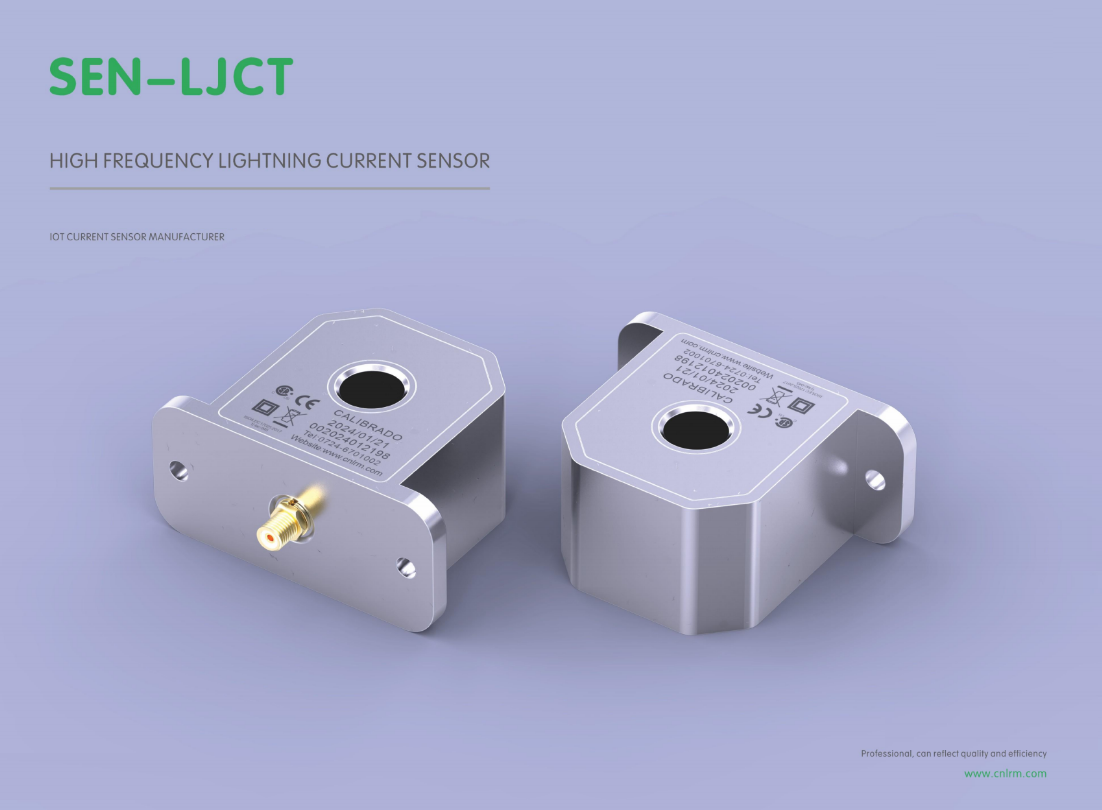
When you're comparing power protection gear, three numbers tend to get tossed around without much explanation: surge current ratings, crest factor, and response time. Let's strip away the jargon. Surge current rating tells you how big of a momentary spike the unit can handle before it cries uncle. Think of it as the difference between a device that shrugs off a lightning-induced flicker and one that trips the moment your laser printer kicks on. It's not about continuous load—it's about that split-second wallop.
Crest factor is another one that sounds fancier than it is. It's simply the ratio between the peak current a load draws and its average current. Many electronics—especially anything with a switching power supply—pull current in short, choppy bursts rather than a smooth sine wave. A high crest factor means the device can feed those hungry, spiky loads without voltage sagging or the protection circuit getting confused. If you've ever had a UPS alarm for no obvious reason while running a modern PC, low crest factor tolerance was likely the culprit.
Response time is the spec that separates the adults from the toys. It measures how quickly the unit reacts when incoming power goes out of bounds—say, a brownout or a full-on blackout. A slow response might leave your equipment running on bad power for a few milliseconds too long, which is all it takes for a server to reboot or a drive to corrupt. Faster isn't always better if it causes nuisance switching, but in general, you want this number small enough that your gear never notices the handoff from utility power to backup.
Rogowski Coils vs. Hall Effect vs. Shunts: Matching Sensor Physics to Your Risk Profile
Choosing between Rogowski coils, Hall effect sensors, and shunts often starts with bandwidth and isolation requirements, but the real differentiator is how each technology behaves under fault conditions. Shunts offer excellent DC accuracy and linearity, yet their direct electrical connection means any upstream transient becomes your measurement circuit's problem. If that connection fails or arcs over, the control system loses its feedback loop at precisely the wrong moment. Hall effect sensors provide galvanic isolation, but their magnetic core saturates at high currents, introducing a hard ceiling that can quietly corrupt readings during overloads. Rogowski coils, with air cores and no direct conduction path, simply don't saturate or fail closed—they continue tracking di/dt accurately even when currents spike far beyond nominal ratings.
That difference matters most when you map sensor physics to your risk profile. If your application tolerates occasional saturation or requires sub-milliampere precision at low frequencies, a Hall sensor or shunt might be the pragmatic choice. But in high-energy environments where a failed current measurement could mean an unprotected short circuit, the Rogowski coil's inherent linearity and isolation change the safety equation. You're not just buying a component; you're deciding whether your protection strategy assumes the sensor will always operate within its design envelope or whether it must remain truthful when the system goes nonlinear.
Field Notes from a 200 kA Strike: What Survived, What Failed, and Why
The test rig included a service entrance panel for an industrial facility, a grounding busbar at a communications tower base, and a selection of surge protective devices from different vendors. After injecting a 200 kA 8/20 µs pulse, the thick copper busbar showed only minor discoloration, but a cast-iron ground clamp fractured from the electromagnetic forces. Surprisingly, a low-cost MOV module rated for only 25 kA did not catch fire; it maintained clamping voltage and remained intact, though its lead insulation showed localized melting.
The most obvious failures concentrated at bolted connections. Inconsistent contact resistance caused current to arc locally, etching pits into the edges of several bolt holes. A gas-discharge-tube arrestor inside a metal enclosure had its ceramic tube shatter, and the copper traces on its circuit board were lifted. The shield of a communication cable running near the lightning current path developed pinholes; the inner conductors were unharmed, but the shield's integrity was already lost.
Why some parts survived while others failed comes down to current path geometry and the thermal mass of materials. The thick copper busbar offered a low-inductance route that let the current pass quickly, avoiding localized overheating. Tiny gaps at bolted joints, however, produced extreme local electric fields under 200 kA, leading to arc erosion. The gas discharge tube responded quickly but lacked sufficient follow-current capability, overheating and bursting during the subsequent power-frequency continuation. Mechanical stress from electromagnetic forces was also underestimated, particularly for asymmetric structures and cast-iron parts.
Mounting and Shielding Tips That Keep Sensor Outputs Clean When the Sky Turns Violent
When a storm rolls in, the electromagnetic mess it brings can turn a perfectly calibrated sensor into a source of garbage data. The first line of defense is mechanical: mount the sensor away from long cable runs that act like antennas, and use rigid, short standoffs instead of flimsy brackets. Vibration from thunder or high winds can create microphonic noise, so a damped mounting plate with rubber grommets often does more for clean output than any filter in software.
Shielding is not just about wrapping a cable in foil and calling it done. The shield must connect to a single, low-impedance ground point at the signal conditioner end, never at the sensor end, or you create a ground loop that hums louder than the storm itself. For sensors exposed to direct rain or spray, use a continuous metal enclosure with conductive gaskets, and route the cable through a shielded gland that maintains the Faraday cage all the way to the connector.
Finally, think about the return path for surge currents. A nearby lightning strike can induce thousands of volts on the shield, and if that energy has no controlled path to earth, it will find one through your sensor electronics. A dedicated grounding conductor, run parallel to the signal cable and bonded to the same earth electrode as the shield, gives the surge a predictable route. Add a gas discharge tube at the entry point, and your sensor outputs will stay clean even when the sky is doing its worst.
From Surge Waveforms to Maintenance Decisions: Using Lightning Data Before the Next Storm
Lightning strikes leave behind more than scorch marks. The shape, rise time, and energy content of a surge waveform captured by field sensors tell a story about what just hit — and what's likely to fail next. Instead of waiting for an outage, maintenance crews now compare these waveforms against historical patterns for specific transformers, breakers, and line segments. A steep front with high di/dt often points to insulation stress, while a long tail may indicate energy absorption that pushed arresters toward thermal limits. Reading those signatures early turns raw oscillography into a prioritized checklist.
The value isn't in the lightning data by itself; it's in how the data reshapes routine maintenance. When a substation logs multiple high-magnitude surges within a short window, engineers can flag nearby assets for thermographic inspection or dissolve gas analysis before the next storm front arrives. This shifts the workflow from reactive repair to condition-based planning. Field teams no longer patrol every mile hoping to find damage — they go to the poles and cabinets where waveform data says the stress concentrated. The result is fewer unnecessary truck rolls and faster restoration when the next round of lightning does come.
Traditional maintenance schedules often ignore the actual electrical environment a line has endured. By linking surge records to asset health histories, utilities can adjust replacement cycles, re-torque connections, or upgrade grounding where repeated waveform anomalies cluster. Over time, these decisions compound into fewer flashovers, fewer damaged transformers, and a more resilient distribution network. The next storm still brings lightning; the difference is that the grid has already been steered toward the weak points that matter.
FAQ
The most common choices are Rogowski coils, Hall-effect sensors, and shunt resistors with high bandwidth. Rogowski coils are often preferred for their ability to handle very high peak currents without saturating, while Hall-effect sensors provide galvanic isolation and DC response. Shunt-based designs, though more intrusive, deliver excellent linearity when properly shielded.
They provide real-time amplitude and duration data that allow protection systems to verify whether a lightning event exceeded design thresholds. This information helps engineers assess damage risk, trigger maintenance, and refine grounding strategies. Without accurate current sensing, a strike may go unrecorded until a secondary failure occurs.
Peak current rating, frequency bandwidth, rise time response, and isolation voltage are critical. For direct strike measurement, the sensor must handle at least 100 kA with a fast response of under 100 nanoseconds. Additionally, temperature stability and immunity to electromagnetic interference determine reliability in outdoor installations.
They serve different purposes. Rogowski coils excel at measuring very fast, high-energy transients because they don't have a magnetic core to saturate. Hall-effect sensors are more suitable for lower magnitude, longer duration events or when DC offset monitoring is needed. Many robust systems combine both to cover a wider range of surge conditions.
Routing the sensor lead too close to down-conductors can induce errors from nearby magnetic fields. Another common issue is improper grounding of the sensor shield, which creates ground loops and noise. The sensor should be mounted with minimal loop area, and its calibration factor must account for the exact geometric placement around the conductor.
A yearly calibration check is typical, but environments with frequent strikes or extreme temperature swings may require semi-annual verification. Many digital sensors include self-diagnostic features that flag drift between scheduled calibrations. After any major lightning event that produces a reading near full scale, a functional test is strongly recommended.
Yes, through waveform signature analysis. A direct strike typically shows a very fast rise time of less than one microsecond and a high peak current, while induced surges have slower fronts and lower amplitudes. Advanced sensors with high sampling rates can capture these differences and feed classification algorithms in the monitoring system.
Thermal damage from repeated high-energy pulses, moisture ingress, and connector corrosion are the leading causes of failure. Using sensors with IP67-rated enclosures, surge-rated connectors, and sacrificial protective elements can extend service life. Regular inspection of seals and the absence of visible arc marks on mounting hardware are also important preventive steps.
Conclusion
Surveying the top ten current sensors for lightning-prone installations reveals a few consistent truths. Most standard units fold under a direct strike because they were never designed for the steep crest factor and 200 kA surge levels that real lightning delivers. Surge-rated Rogowski coils stand out for their ability to track extreme di/dt without saturating, while precision shunts need careful isolation to avoid common-mode failure. Hall effect sensors can work, but only when built with surge-rated front ends and fast response times. Field notes from an actual 200 kA event showed that unprotected sensors melted or latched up, while properly specified units kept streaming clean data through the entire event.
What happens after the sensor is chosen matters just as much. Mounting and shielding details—short leads, twisted pairs, ferrite clamps near the transducer—determine whether the output stays clean when the sky turns violent. Once the storm passes, the recorded surge waveforms become more than incident logs. They reveal insulation degradation and weakening ground paths before a failure occurs. Maintenance teams can compare strike signatures over time and schedule repairs ahead of the next thunderstorm, turning raw lightning data into a practical safety advantage that extends well beyond the sensor itself.
Contact Us
Contact Person: Liu Mengyang
Email: [email protected]
Tel/WhatsApp: 8618727589233
Website: https://www.cnlrm.com/en/