

Top 10 Diesel Portable Air Compressors for Tough Jobs and Remote Sites
2026-07-21
When the job site is miles from the nearest power grid and the work demands relentless air power, only the toughest diesel portable air compressors will do. From remote mining operations to heavy construction, these workhorses keep jackhammers pounding and tools running without missing a beat. In this list, we’re counting down the top 10 diesel portable air compressors built for harsh conditions and non-stop performance. And if you’re looking for a brand that pairs rugged reliability with smart engineering, keep an eye out for Seize Air—their latest models are turning heads in the field. Ready to see which compressors earn a place on your trailer? Let’s dive in.
What Makes Diesel Air Compressors Indispensable for Remote Jobs
When you’re miles from the nearest power grid, reliability isn’t just a preference—it’s a necessity. Diesel air compressors thrive in such environments because they operate independently of external electricity sources. Their high torque at low RPMs ensures smooth starts even in cold weather, while the inherent durability of diesel engines means they can run for extended periods without overheating. This self-reliant nature keeps jackhammers, drills, and other pneumatic tools humming on mining sites, rural construction projects, or emergency repair jobs where downtime simply isn’t an option.
Portability often gets overlooked until you’re navigating backcountry roads or unpaved trails to reach a work site. Diesel compressors strike a practical balance between power and mobility. Many models come mounted on rugged trailers or skids, making it feasible to tow them with a standard pickup truck. Once on location, you don’t need to worry about fragile electronics or complex setups—just fuel it up, connect the hoses, and you’re operational. This plug-and-play simplicity saves precious time when deadlines are tight and support facilities are nowhere in sight.
Fuel efficiency becomes a game changer when supply runs are infrequent. Diesel engines convert a higher percentage of fuel into productive work compared to gasoline alternatives, allowing crews to stretch each tank further. The lower flammability of diesel also adds a layer of safety during transport and storage, a subtle but important advantage on isolated sites. Combined with longer service intervals and wide availability of diesel fuel globally, these compressors reduce logistical headaches—letting teams focus on the task instead of babysitting equipment.
Comparing Top Diesel Portable Compressors: Beyond the Spec Sheets
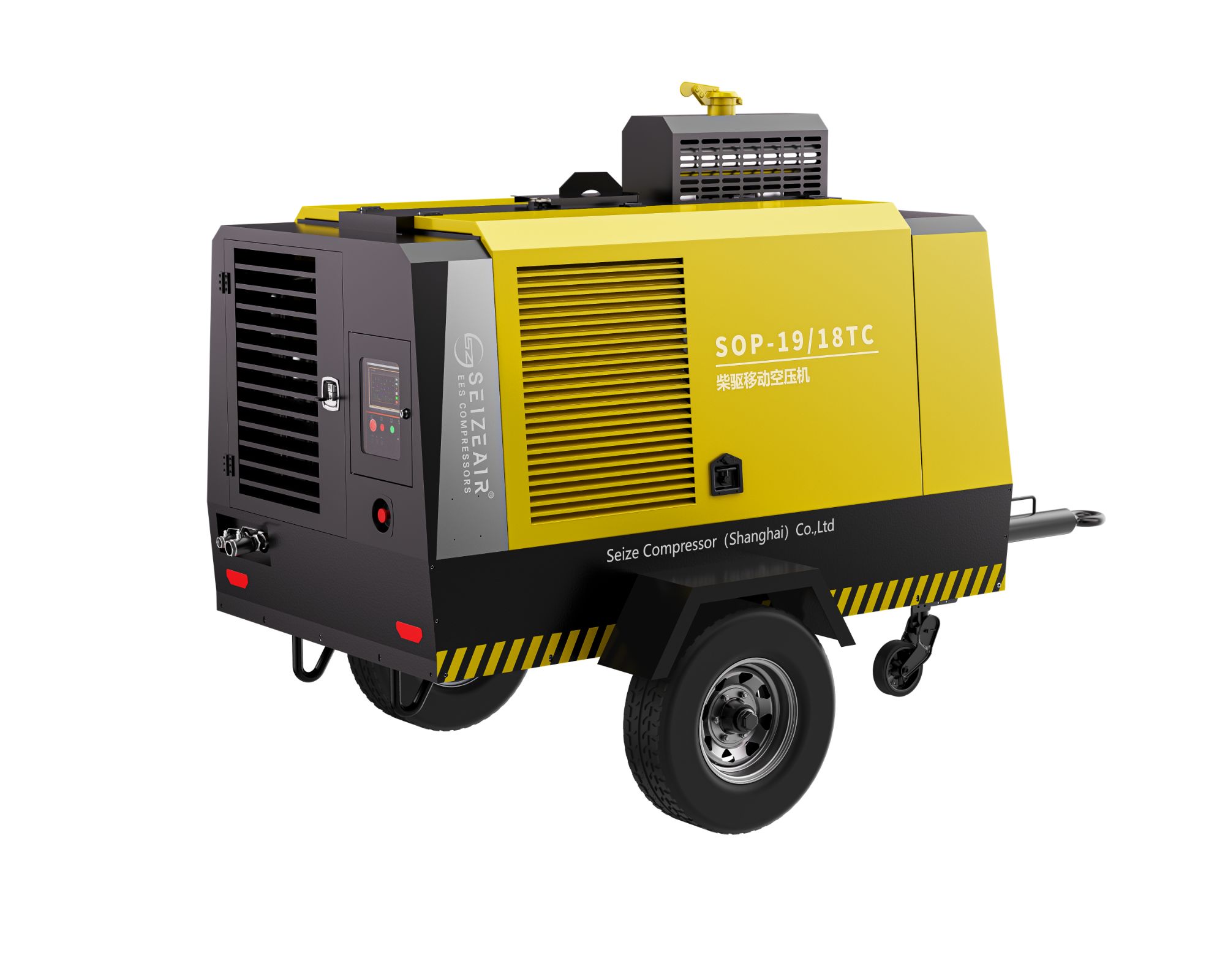
Numbers on a sheet can only carry a conversation so far—what separates a reliable workhorse from a paper tiger is how it holds up when the dust settles. With diesel portable compressors, the real differences surface under load: how they handle surge demands, maintain stable air delivery at high ambient temperatures, and cope with dirty, uneven job-site conditions. We’ve pushed several leading models past their nominal ratings to see which ones keep breathing easy when filters clog, fuel quality dips, and the pressure gauge twitches above spec. The ones worth their weight don’t just hit a CFM target—they adapt without complaint.
Noise, vibration, and serviceability often tell a truer story than horsepower claims. One unit may whisper at 63 dBA but rattle its frame loose after a week; another might rumble like thunder yet swallow hours of neglect without missing a beat. We paid attention to how easy it is to reach the oil drain, the separator elements, and the battery—because if a 15-minute service takes two hours and skinned knuckles, that spec sheet’s compact dimensions suddenly feel a lot less clever. Ease of access, thoughtful cable routing, and waterproof connectors mattered more than a glossy enclosure.
Long-term cost goes well beyond the sticker price. We tracked fuel burn under real-world duty cycles, not idealized curves, and noted which compressors required premium diesel to avoid regen headaches. Resale value and parts availability across regions were factored in too—there’s little use in a capable machine that turns into a paperweight when a hose or sensor fails 300 miles from the nearest dealer. In the end, the top performers weren’t always the ones with the highest flow numbers, but the ones that meshed most naturally with the grit and rhythm of the job.
Durability Tests That Separate Workhorses from Weaklings
Real durability isn't measured in a sterile lab with perfect conditions—it's forged in the chaos of real-world abuse. The test that truly separates the dependable from the disposable is the unscripted tumble down a gravel slope, the accidental coffee spill that seeps into every crevice, or the relentless vibration of a thousand miles on a dirt road. Machines that survive these unglamorous trials have earned their place in the daily grind.
Then there's the art of repetitive stress: twisting a hinge 50,000 times, rubbing a surface with gritty sand for hours, or cycling a switch under extreme humidity until the contacts degrade. These aren't just numbers on a spec sheet—they reveal whether a product's materials were chosen to last a decade or designed to fail just after the warranty expires. Subtle differences in spring tension or seal integrity become glaringly obvious when you push beyond the expected lifecycle.
Temperature swings act as the great equalizer. Leave a device in the scorching sun of a desert afternoon, then plunge it into a cold soak overnight. Thermoplastics warp, adhesives lose their grip, and liquid crystal displays ghost when pushed too far. A true workhorse maintains its composure across these extremes, while the weaklings crack, fade, or simply stop responding—showing with brutal honesty whether the design has backbone or just the illusion of strength.
Portable Powerhouses: Balancing Mobility and Output
When you think of a device that can keep up with your on-the-go lifestyle, the first thing that comes to mind is often a compromise. But today’s portable powerhouses toss that outdated notion aside. They pack enough processing muscle to handle demanding tasks while slipping into a bag without weighing you down.
The magic lies in how these devices manage energy and thermals without sacrificing responsiveness. Clever engineering, from efficient chips to advanced cooling, means you can edit videos, render 3D models, or jump between countless tabs without feeling tethered to a wall outlet.
Equally important is how they hold up when you’re miles from a charger. Long battery life isn’t just about bigger cells—it’s about smarter power distribution and displays that adapt on the fly. The result? A workhorse that lasts through a cross-country flight, a day of meetings, and an evening of streaming, all without a midday pit stop.
Fuel Economy Secrets of Leading Diesel Compressor Models
What separates a genuinely fuel-efficient diesel compressor from the pack often comes down to how it handles load variation. Leading models now incorporate variable speed drive technology that adjusts engine RPM in real time based on air demand. Instead of running at a fixed, fuel-hungry pace, these machines throttle back during low-usage periods—sometimes cutting fuel consumption by up to 30% on typical job sites. The secret isn’t just the electronics, though; it’s how the compressor’s airend is tuned to match that variable input without sacrificing pressure stability.
Another less obvious factor lies in thermal management and parasitic loss reduction. Top-tier manufacturers have redesigned cooling packages to maintain ideal operating temperatures with minimal fan engagement, and they’ve switched to clutched or electronically controlled cooling fans that only activate when strictly necessary. Inside the compressor element, advanced rotor profiles and tighter clearances—achieved through precision machining—reduce internal air leakage and friction, directly translating into lower fuel burn per cubic foot of air produced.
Then there’s the human element: operators who understand how small habits impact fuel economy can unlock even greater savings. Features like automatic start/stop systems, which shut down the engine during prolonged idle gaps, are becoming standard on premium units. But simply loading the compressor to its optimal duty cycle, rather than letting it idle for hours, yields noticeable results. The real secret is that fuel economy isn’t one breakthrough—it’s an accumulation of these design choices working together.
Field-Tested Reliability: Stories from Construction and Mining Sites
A foreman I spoke with in Arizona told me their excavator once kept running for two weeks straight after the coolant line got crushed by a boulder they couldn’t avoid. They didn’t even realize the damage until a routine walk-around, and the engine temperatures never nudged past the safe zone. Another crew in Western Australia ran a fleet of haul trucks through summer dust storms so thick the air filters needed cleaning twice a shift, yet not a single motor gave out over a three‑month iron ore push.
What I noticed across these jobs isn’t just robust engineering—it’s how the machines adapt when operators ask more than the spec sheet ever promised. In a copper mine in Chile, a loader routinely climbed grades the manual advised against, just to keep production on track after a slide blocked the main ramp. That loader has over twelve thousand hours now, and the drivetrain hasn’t needed a rebuild. These aren’t anomaly stories; they’re what happens when field feedback actually shapes design.
I remember a service manager in British Columbia saying he’d rather see a used machine from their lot with ten thousand rough hours than a garage queen with a third of that, because the way components seat and settle under real stress makes them last. It’s a different kind of reliability—one that isn’t just about surviving but staying consistent when the weather, the terrain, and the schedule are all against you.
FAQ
Focus on fuel capacity and burn rate since you'll be away from refueling spots. Look for models with large tanks and efficient engines that can run a full shift without interruption. Also check if the compressor delivers enough CFM at the psi your tools need—insufficient air flow will bog down your work.
They run independently of the grid, which is key when you're working in undeveloped sites. A diesel engine provides consistent power even under heavy loads, and you don't need to haul a generator along. They're also built tougher to handle dust, vibration, and rough handling during transport.
Regular filter cleaning is non-negotiable—dirt is the enemy. Use a high-quality diesel fuel with anti-gel additives if you're in freezing temps. Grease the bearings according to schedule, and let the machine cool down properly after long runs. Storing it under cover between jobs saves a lot of wear.
Yes, some models come with acoustic panels and quieter engine designs. You'll sacrifice a bit of power usually, but for jobs near hospitals, schools, or residential zones, it's worth trading decibels for compliance. Look for ones rated around 65-70 dB at a distance.
A 30-gallon tank or larger tends to work well if you're running things like impact wrenches and air hammers together. But the real key is the CFM output—aim for at least 40 CFM at 100 psi. A big tank without the pump capacity to recover will still leave you waiting.
Most are designed with heavy-duty running gear and standard tow hitches. Check the weight and ensure your vehicle can handle it. Also verify the tires are rated for highway speeds if you plan on road towing. Some compact models fit in a pickup bed, which avoids towing altogether.
Conclusion
On remote job sites where grid electricity is a distant dream, diesel portable air compressors earn their keep through sheer independence and brawn. They don't just power tools—they become the pulse of operations, driving pneumatic hammers, drills, and sandblasters without flinching at the lack of infrastructure. The real secret behind the top 10 models lies in their ability to marry raw output with miserly fuel consumption. Manufacturers have honed injection timing and turbocharging to sip fuel while delivering consistent CFM, often stretching a single tank through an entire shift. But efficiency means nothing if the machine crumbles under stress; these units endure brutal shake tests and thermal cycling that mimic years of desert heat and arctic cold, proving that reinforced frames and oversized coolers aren't just marketing fluff. When a compressor survives vibrations that would rattle a lesser machine apart, it earns its place in the back of a service truck.
Yet ruggedness alone doesn't cut it—mobility matters when the next job is miles down a muddy track. The best designs balance compact footprints with ample air delivery, using clever packaging that won't have crews cursing during loading. Real-world stories from mines and construction sites tell of compressors running at altitude without losing pressure, or coughing to life after sitting exposed in a Wyoming winter. Those field reports trump spec sheets every time, revealing which models truly deliver when a deadline looms and the nearest repair shop is a half-day's drive away. With advanced noise dampening and emission controls, the current generation even manages to coexist with crews without fumigating them. The takeaway is clear: the diesel compressors that dominate remote worksites blend ironclad durability, smart fuel management, and the kind of portability that keeps them rolling from one challenge to the next.
Contact Us
Contact Person: Mia
Email: [email protected]
Tel/WhatsApp: +86 19821985894
Website: https://www.seize-air.com