

Slitter Rewinder Machine Supplier Delivering Precision and Reliability
2026-11-16
Every converter knows a slitter rewinder can make or break your production line. But finding a supplier who truly delivers precision and reliability? That’s where XIAOPAI stands out. In this post, we’ll explore what separates a dependable slitter rewinder supplier from the rest—and why XIAOPAI keeps earning trust on factory floors worldwide.
Precision Cutting Without Compromise
The arbor and blade flange are ground as a matched set, so the cutting edge tracks true from the first rotation. You can bury the blade in dense hardwoods, laminates, or non-ferrous metals without seeing the kerf drift or the surface scorch.
Feed pressure stays predictable because the tool body resists flex under load. That means you don't have to compensate by steering left or right mid-cut, and the offcut doesn't pinch the back of the blade when the material settles.
Repeat setups are just as reliable. After swapping blades or adjusting depth, the zero point stays put, which keeps your joinery tight and your trim lines crisp without tapping the fence or re-measuring after every pass.
Built to Run Around the Clock
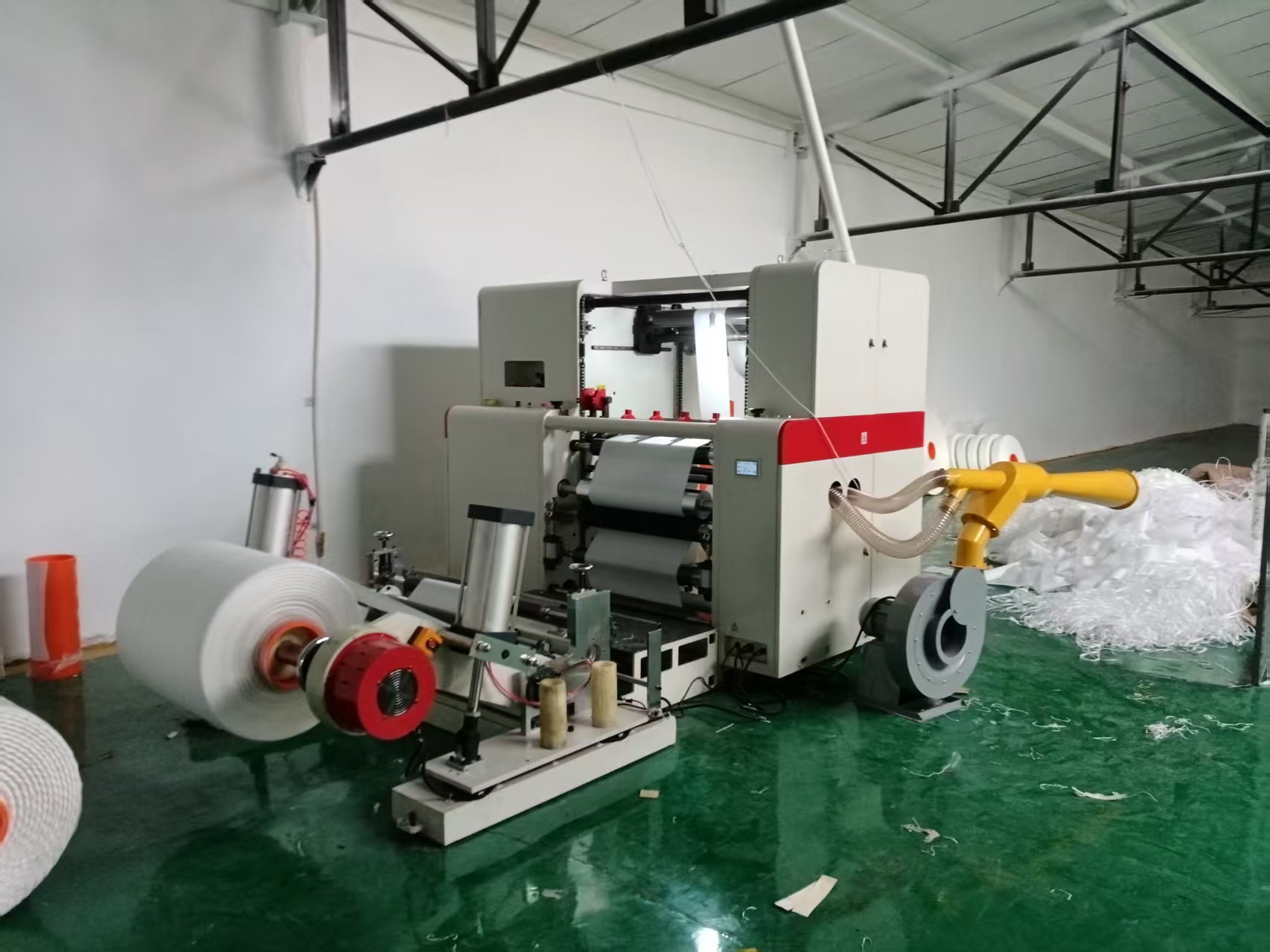
A machine that never sleeps sounds like a maintenance nightmare, yet the whole point of this design is to make constant operation boring. Instead of exotic alloys or space-grade lubrication, the engineering leans on unglamorous redundancy: two power supplies that can be swapped while the unit is still running, cooling fans that spin down individually for cleaning without a full shutdown, and firmware that treats a failed component as a routine event to be logged, not an emergency to be broadcast. The result is that a 3 a.m. drive failure in a hospital lab or a 2 p.m. dust storm at a remote weather station doesn't trigger a cascade of alarms—it just quietly keeps working.
Routine wear is the real enemy of 24/7 gear, so the mechanical design spreads the load across more surfaces than typical hardware. Bearings are sized for twice the expected lifespan and run at lower RPM, plugs and sockets use gold contacts that shrug off oxidation, and the chassis is deliberately over-ventilated so dust has a harder time settling into tight spots. Field technicians can reach the most common failure points—filters, drives, memory modules—without tools and without powering down the system. That small choice means maintenance happens during a coffee break rather than during an announced outage window.
The true test of around-the-clock operation isn't a spec sheet but a calendar. After 18 months of continuous use in a concrete plant where vibration and fine dust are part of the air, a stack of these units showed no measurable performance drift. The real reward is psychological: operators stop thinking about the hardware at all, the same way nobody thinks about the electrical grid until a storm hits. That invisibility is the design goal—not a blinking rack of heroic engineering, but a background hum that never asks for attention.
Tailored Solutions for Diverse Materials
Finding the right method for each material isn't about forcing one process to fit everything. It means reading how a metal reacts to heat differently from a polymer, or why a composite may need lower tool pressure to avoid delamination. We adjust cutting speeds, coolant types, and even the direction of the tool path based on what the material actually does under stress, not just what the spec sheet says.
For brittle ceramics or hardened alloys, the first approach that comes to mind rarely works. Our workshop keeps multiple setups on hand—from diamond-tipped tooling for abrasive stock to slow-feed strategies for thin-walled plastics. That flexibility allows us to take on jobs where the material behaves unpredictably, and still hold tolerances that others consider unrealistic.
Batch size also changes how we tailor a solution. Short runs might call for softer tooling and more manual checks, while long production runs benefit from custom fixtures and automated feed adjustments. By matching the technique to the material and the order volume, we avoid over-processing delicate parts and under-supporting tough ones.
Quality Control That Goes Beyond Standards
Our quality control doesn't stop at checking boxes on a compliance sheet. We pull random samples from every production run and push them through stress tests that simulate years of field abuse—temperature swings, vibration, impact, and corrosion cycles. If a single unit fails, the entire batch is quarantined and reworked, even if it technically meets ISO tolerances.
Beyond the lab, every operator on the floor is trained to spot subtle defects that instruments miss—slight discoloration in a weld, a faint irregularity in surface finish, or a torque reading that drifts just inside the acceptable range. We log these observations into a shared database, and our engineers review the patterns weekly. That's how we've caught supply chain variations before they ever reached a customer.
We also track field performance data from units that have been in service for over five years. When we see a component wearing faster than predicted, we proactively adjust the manufacturing process—tightening a tolerance here, changing a material batch there—without waiting for a formal spec update. It's quality control that treats standards as a floor, not a ceiling.
From Installation to Ongoing Support
Getting a new system up and running is often where the real journey begins. We don't just hand over a manual and walk away—instead, our team works side by side with yours during installation, making sure every component is configured to match the way you actually work, not some generic template. From the first login to the final data migration check, we sweat the small stuff so your team doesn't have to.
Once everything is live, our involvement doesn't taper off. We schedule regular check-ins that feel less like formal reviews and more like casual conversations about what's working, what's frustrating, and what could be smoother. If a question pops up at an odd hour, you won't be left waiting in a ticket queue—you'll get a direct line to someone who knows your setup by name.
Over time, we stay alert to changes in your industry and your own workflows. When a new feature or a better integration becomes available, we'll flag it only if it genuinely helps—not just because it's on a product roadmap. Support here means adapting with you, sometimes before you even realize you need it.
The Supplier Difference in Every Roll
Walk into any paper aisle and you'll see rolls that look nearly identical. But feel them, stretch them, run them through a machine at high speed, and the gaps become obvious. It starts long before the mill floor—with fiber sourcing. Some suppliers settle for shorter, mixed-species pulp that breaks down under pressure. Others insist on long-fiber virgin stock, which keeps its structure when wet or pulled. That choice alone separates a roll that performs from one that just looks the part.
Then there's the matter of how the sheet is formed. A rushed drying cycle can leave micro-variations in thickness that you can't spot with your eyes but that show up as jams, tears, or uneven coating absorption. Suppliers who take the time to fine-tune calender pressure and moisture profiles end up with a roll that unwinds true, every single time. It's the kind of detail that never makes it onto a spec sheet but shows up in your machine's uptime.
Finally, consider the end of the line—literally. Quality checks that sample only the outside of a master roll can miss core defects. A supplier invested in the difference will cut into random rolls, test tensile strength across the width, and grade every inch before it leaves the dock. That's why two rolls with the same base weight can behave completely differently in your hands. The supplier difference isn't a marketing phrase; it's built roll by roll, and you feel it in every unwind.
FAQ
The difference usually comes down to how well the machine holds its settings over long runs. A dependable unit keeps blade pressure, tension zones, and roll alignment stable without constant operator intervention. You see it in the frame rigidity, the quality of the bearings, and the way the control system responds to small changes instead of overcorrecting.
Precision shows up most at the edges and in the wound roll profile. If the slit edges are clean and the rolls come out with uniform density across the full width, the downstream processes run smoothly. Any small deviation in knife overlap or tension can turn into telescoping rolls or rough edges that customers notice immediately.
Ask for run data from similar materials and working widths, not just a brochure. A credible supplier will walk you through actual production logs, invite you to see a machine running in the field, and give you clear numbers on mean time between failures for key components like knives, shafts, and drives.
Roll geometry is often overlooked, but it is critical. If the idler rolls are not perfectly concentric or the frame flexes under load, you'll get width variation that no tension control can fix. Precision-ground rolls, dynamic balancing, and a rigid frame are what keep every slit at the same width across the entire web.
Yes, and it's often a smarter investment than buying new. Retrofits like closed-loop tension control, servo-driven knife positioning, or adding a web guide can bring a solid older machine back to tight tolerances. The key is starting with a frame that is still straight and rolls that can be re-ground to spec.
Operators should pay attention to small shifts in vibration, unusual noise from the rewind shafts, or a gradual increase in tension fluctuation. These are early signs of bearing wear, misalignment, or dull knives. Catching them before they become a shutdown saves far more than any scheduled inspection ever costs.
A machine is only as precise as the support behind it. Regular calibration visits, fast access to spare parts, and clear guidance on knife changes keep the slitter running at its original tolerances. Suppliers who treat the sale as the beginning of the relationship tend to deliver machines that stay accurate for a decade or more.
Conclusion
A dependable slitter rewinder machine supplier does more than just ship equipment—it embeds precision into every cut and reliability into every shift. The machines are engineered for uncompromising cutting accuracy, handling films, papers, foils, and laminates without tearing or uneven edges. Built to run around the clock, they feature robust drives, tension controls, and automatic knife positioning that hold tight tolerances even at high speeds. This means converters can trust consistent roll quality from the first meter to the last, reducing waste and rework. Tailored solutions further set the supplier apart: rather than forcing a generic setup, they configure web widths, unwind/rewind diameters, and optional features like slitting modes or edge trim removal to match specific material behavior—whether it’s a delicate adhesive or a thick nonwoven.
Quality control at the supplier’s facility goes beyond standard checklists. Each machine undergoes dynamic testing under load, with laser alignment verification and runout measurements before shipment. After installation, the partnership continues with on-site commissioning, operator training, and responsive spare parts availability—minimizing downtime and keeping production schedules intact. The real difference shows in every roll shipped to end customers: clean edges, uniform tension, and repeatable roll hardness. By combining rugged construction with attentive service, the supplier turns precision and reliability from marketing phrases into measurable outcomes on the factory floor.
Contact Us
Contact Person: Kellen Chen
Email: [email protected]
Tel/WhatsApp: 8613806536768
Website: https://www.cnxiaopai.com