

Rubber Tire Tread Cooling Production Line Supplier: Streamlining Your Manufacturing Process
2026-11-16
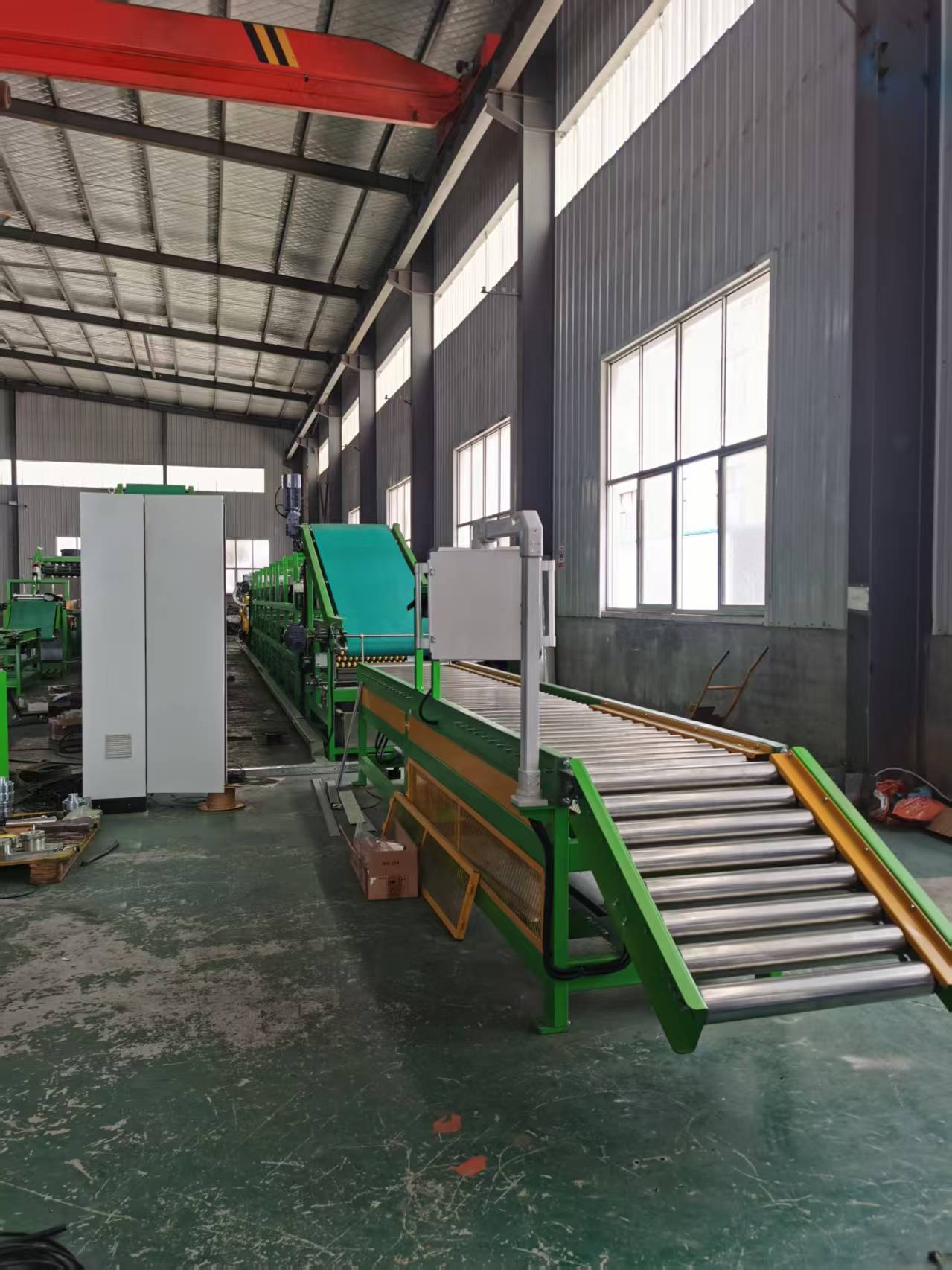
Ever wondered what separates an average tire manufacturer from a market leader? The secret often lies deep within the production line—specifically, how tread is cooled before curing. A rubber tire tread cooling production line isn’t just another step; it’s the silent architect of quality, consistency, and cycle time. But sourcing a system that truly streamlines your process instead of piling on hidden costs can feel like a gamble. This is where expertise matters. At AUGU AUTOMATION, we don’t just supply machinery—we engineer cooling solutions that become the heartbeat of your manufacturing efficiency. In this post, we’ll walk you through why choosing the right supplier transforms not only your tread quality but your entire production rhythm.
How Precision Cooling Shapes Tread Consistency
Maintaining exact temperature control during vulcanization isn’t just a quality checkpoint—it’s the hidden lever that determines whether every tread block cures evenly from shoulder to shoulder. When cooling drifts by even a few degrees, the crosslinking rate in the rubber compound shifts, creating subtle density variations that later show up as irregular wear patterns or traction loss. Precision cooling locks in that critical phase, ensuring each segment of the tread sees the same thermal history and emerges with identical mechanical properties.
What makes this difficult is that mold temperatures naturally vary across different zones, especially in complex tread geometries. Targeted cooling channels and real-time sensor feedback correct this imbalance before it can transfer into the rubber matrix. By holding a tight bandwidth around the ideal setpoint, the process prevents under-cured soft spots or over-cured brittle edges, both of which would compromise the tire’s footprint and consistency mile after mile.
The bottom line is that a more uniform vulcanization profile translates directly into lower harmonic variation once the tire starts rolling. Drivers experience this as reduced vibration and predictable grip, whether on wet pavement or dry asphalt. In manufacturing terms, it means fewer rejected batches and higher repeatability across production runs—something traditional heatsetting simply can’t guarantee without layer upon layer of inspection downstream. Precision cooling builds that reliability right into the tread structure from the start.
The Real Cost of Uneven Temperature Drops
When temperatures fall unevenly across a region, the first thing to suffer is predictability. Farmers who rely on a gradual seasonal shift find their crops exposed to sudden cold snaps that can wipe out entire yields. It's not just about a few cold mornings; it's the erratic swing from mild afternoons to freezing nights that forces plants, infrastructure, and even human routines into constant, costly adaptation.
Buildings and roads bear a quieter but equally heavy toll. Materials expand and contract at different rates when warmth and cold don't follow a steady pattern. Concrete cracks, asphalt heaves, and pipes burst without warning. These aren't dramatic disasters that make headlines—they're slow, creeping expenses that chip away at municipal budgets and household savings, often going unnoticed until the repair bill arrives.
The hidden strain lands hardest on communities with fewer resources. Uneven cooling drives up heating costs unpredictably, making it difficult for families to budget. It can also push pests and invasive species into new areas, sparking problems that local ecosystems and agriculture aren't prepared to handle. The real cost isn't just measured in dollars but in the quiet erosion of stability that people once took for granted.
Matching Line Speed Without Sacrificing Quality
It's tempting to push a production line faster and call it a day, but raw speed alone rarely tells the whole story. What really matters is how many flawless units come off the end of it. The trick lies in designing processes that accelerate without introducing variability. When everything from material handling to final inspection works in tight synchronization, you can raise the throughput rate while defect counts stay stubbornly low.
A lot of it comes down to how you handle transitions. The moments when a product moves from one station to the next are where hidden friction lives—tiny misalignments, inconsistent curing times, or momentary pressure drops. Smoothing these hand-offs doesn't require massive capital investment. Sometimes it's about recalibrating sensor sensitivity, rethinking the placement of a guide rail, or giving operators clearer visual cues so they can make micro-adjustments on the fly without stopping the line.
Quality at speed also demands feedback loops that don't wait for end-of-shift reports. In-line vision systems, real-time torque monitoring, and simple pass/fail light stacks give people the data they need right when they need it. When a trend starts to creep off target, the line corrects before scrap piles up. The result is a pace that feels brisk but not frantic, and a reject rate that makes even the accountants smile.
Built for Your Floor Plan, Not a Catalog
Too often, furniture arrives and immediately feels foreign—like it was meant for a glossy showroom, not the corner you had in mind. We flip that entirely. Every piece we make starts with the dimensions and flow of an actual space, shaped by the way light hits a wall or how traffic moves through a room, not by a list of stock offerings. The result is something that belongs from day one, as if the house itself asked for it.
There's a quiet friction in standard sizing: the gap behind a sofa that collects dust, the table that blocks a walkway by just a few inches. We measure your floor plan the way a tailor measures shoulders and inseams. Curves, alcoves, odd angles—details that usually get compromised—become the starting point. No filler, no make-do, just a precise response to the architecture you already live in.
When design originates with the room, not a warehouse, the character shifts. Materials, joinery, even the arc of an armrest adapt to the rhythm of daily life in that specific place. It stops being about impressing guests with a brand name and starts being about waking up in a home that simply works, down to the last inch.
Cutting Energy Use Without Touching Performance
It’s easy to assume that dialing back energy consumption means giving up speed or responsiveness—but that’s a false tradeoff. Modern systems can sidestep this entirely by being smarter about when and how they draw power. Think of it like a hybrid car that switches seamlessly between electric and gasoline: the driver still gets the acceleration they expect, yet fuel use drops. In software and hardware design, similar principles apply. By letting the workload itself dictate resource allocation, devices can coast through light tasks on minimal wattage and only ramp up for the heavy lifting. The user never notices the shifts because the transition is instantaneous and tuned to real demand, not a static “low power” badge.
The real magic lies in reclaiming what’s usually wasted. Idle cycles, overprovisioned buffers, and polling loops that run at full tilt even when there’s nothing to do—these are silent energy vampires. Turning them into deep-sleep pauses or event-driven triggers keeps the same work getting done without the constant background hum. Add in adaptive batching, where small tasks are grouped to let processors relax between bursts, and you’ve got a system that delivers identical throughput while sipping power. It’s not about cutting corners; it’s about removing the invisible drag that never helped performance in the first place.
When Less Operator Intervention Means More Output
Walk into a chip packaging line where operators once spent hours tweaking alignment offsets and recalibrating pick-and-place heads. The cycle of frequent, well-meaning adjustments created a kind of production stutter—unseen micro-pauses that added up to over two hours of lost output per shift. When the team shifted to a closed-loop vision system that self-corrects in real time and only flags true anomalies, those tiny interruptions vanished. Throughput climbed 14% in the first quarter, not because the machines ran faster, but because they were finally allowed to run without watching eyes second-guessing every tenth of a millimeter.
Highly instrumented wind farms tell a similar story. Field engineers historically dialled in yaw offsets and blade pitch angles based on gut feel and historic wind rose charts, often chasing yesterday’s conditions. Transitioning to a model where the turbine controller autonomously hunts for the sweet spot minute by minute—and only pings a remote technician when component wear models signal a genuine drift—flipped the performance curve. Annual energy capture rose enough to power 800 additional homes from the same hardware. The gain came from letting the asset optimize its own dialogue with the wind, free from ritualistic manual overrides.
Automated freight handling yards provide the most visceral example. Veteran crane operators were legendary for their ability to squeeze an extra box into a tight rail wagon, but that individual craft came at the system’s expense: inconsistent dwell times, engine idling, and safety shadow zones that locked entire aisles. When dynamic scheduling software took over the micro-decisions of which container to land next and where to stack it to minimize reshuffles, the human role pivoted to managing exceptions remotely. Box moves per hour jumped 22%, and loaded train departures hit their slots with a precision that manual coordination never touched. Real output isn’t about eliminating people—it’s about removing the friction of unnecessary, repetitive interventions so the flow state of the entire operation can take hold.
FAQ
It's the section of the manufacturing process where freshly extruded or calendered tread strips are cooled in a controlled way before further handling, so they set properly without warping or sticking together.
Instead of relying on manual intervention or slower batch cooling, an in-line system continuously cools tread to exact temperatures, letting downstream cutting, inspection, or stacking keep pace with the extruder output without bottlenecks.
Look for proven temperature control precision, belt designs that minimize tread marking, easy maintenance access, and a supplier who understands your specific rubber compound behavior and line speed targets.
Absolutely. Experienced suppliers usually offer modular designs that adapt to your available floor space, drop lengths, and connection points with upstream extruders and downstream equipment.
It's critical. Using the right water temperature and uniformly distributed spray or immersion avoids thermal shock, blistering, or uneven shrinkage, while also preventing excessive moisture carryover.
Features like quick-release spray nozzles, easy-clean tanks, automatic belt tracking, and integrated drainage systems cut downtime. Some even include recipe-based controls to switch cooling profiles for different tread patterns instantly.
Yes, many suppliers now incorporate closed-loop water circulation, heat recovery options, and variable-speed fans to reduce both energy and water consumption without compromising cooling performance.
Beyond installation, responsive technical support, readily available spare parts, training for your operators, and the ability to remotely diagnose issues keep your line running smoothly over the long term.
Conclusion
In rubber tire manufacturing, the cooling stage after tread extrusion is often underestimated, yet it holds the key to shape stability and compound integrity. Our production line tackles the challenge head-on by combining precision airflow control with zone-specific temperature mapping, so every inch of tread exits at a uniform, controlled temperature. This eliminates the internal stresses that cause warping or gauge variation later—a direct answer to the real cost of uneven temperature drops. You’re not just cooling rubber; you’re locking in the exact profile that your downstream processes depend on. We engineer the line to match your highest line speeds without forcing sacrifices: the cooling path can be extended or intensified within the same footprint, and the spray or air-knife arrays react in real time to thickness changes, keeping cycle times predictable.
The physical layout is designed around your floor plan, not a catalog diagram. Modular sections, adjustable conveyor angles, and overhead or pit-configured returns make the line adapt to tight aisles or existing building columns without disrupting flow. Energy use drops significantly because our variable-speed fans and recirculating water systems only work as hard as the load requires—no constant peak-speed operation. And when the process self-corrects, operator intervention shifts from constant knob-turning to oversight by exception. Fewer manual adjustments mean fewer shutdowns and steadier output. It’s a system that blends thermal science with daily practicality: stickier treads release cleanly, scrap rates fall, and the line keeps moving. From bead-to-bead consistency to a utility bill that reflects true demand, the result is a cooling process that streamlines your manufacturing instead of complicating it.
Contact Us
Contact Person: Lareina
Email: [email protected]
Tel/WhatsApp: +86 17561696737
Website: https://www.auguauto.com/