

Robotic Bending Manufacturer Enhances Precision and Productivity in Metal Forming
2026-10-27
Precision in metal forming has long been a tug-of-war between speed and accuracy—until now. As robotic bending technology reshapes production floors, manufacturers are discovering that tight tolerances and rapid throughput don’t have to be mutually exclusive. The shift isn’t just about automation; it’s about rethinking what’s possible when machine intelligence meets hands-on fabrication. HUNSONE sits at the heart of this evolution, delivering solutions that redefine how fabricators approach complex bends, tricky materials, and demanding lead times. In this post, we’ll unpack the forces driving this change and explore why the next generation of metal forming looks less like a compromise and more like a breakthrough.
Tightening Bend Tolerances Without Slowing the Line
The usual way to chase tighter bend tolerances is to pull parts off the line for frequent manual checks or to force the press to dwell longer at bottom dead center. Both create bottlenecks that wipe out any gain from improved accuracy. A more practical route is to move the control point earlier in the stroke: build additional stiffness into the ram and die set, then use real-time angle feedback so the controller adjusts tonnage or penetration on the fly without stopping the part flow.
Springback compensation is often treated as a fixed correction, but actual coil properties vary from heat to heat. Feeding the press controller live tensile and thickness data from the mill allows the bend angle to be recalculated for each coil or batch. This shifts the correction upstream, before the first bad part lands in the bin. Long parts also benefit from segmented dies with slightly different radii, which counter the edge-to-center variation that single-piece tooling tends to ignore.
The key is that these methods remove inspection steps rather than adding them. An adaptive loop that holds ±0.2 degrees can run at the same stroke rate as a looser setup, because the corrections happen inside the control system instead of at a separate measuring station. The operator sees no extra handling; the press simply works against a tighter internal target and keeps the line moving.
What Automated Angle Correction Brings to Complex Parts
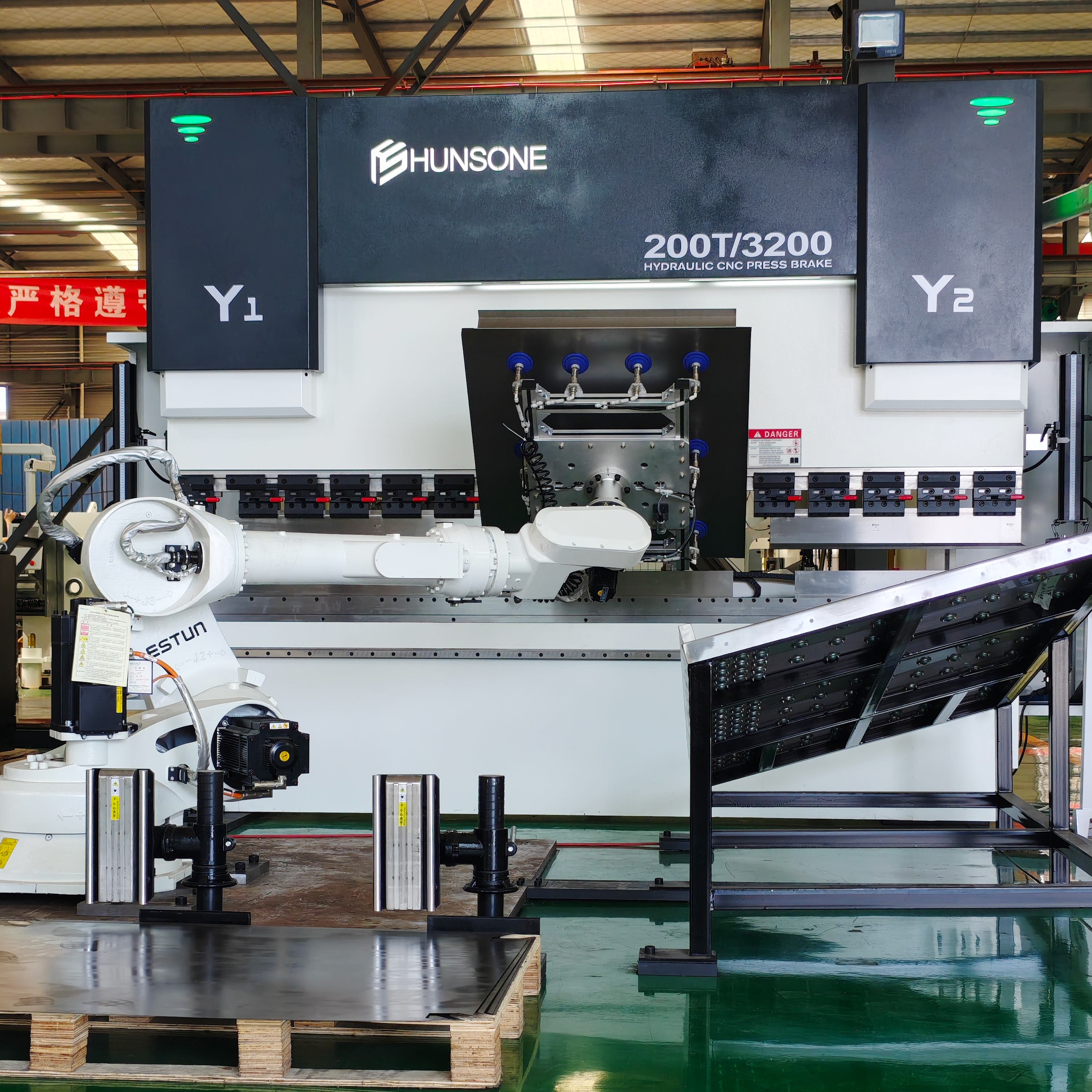
Automated angle correction removes the need to stop, re-measure, and manually nudge a part every time the geometry gets tricky. It reads the true position of the workpiece against the intended shape and applies small, continuous adjustments during the process. On parts with multiple angled surfaces, this keeps every facet aligned without leaning on operator feel or guesswork.
The biggest benefit appears in assemblies where a minor offset on one edge quietly throws off the whole structure. By correcting that drift in real time, the system stops tiny errors from piling up into a larger problem at final inspection. The outcome is more consistent geometry, fewer rejected pieces, and a lot less time spent chasing variation.
Reducing Setup Time on Short-Run Metal Jobs
Cutting setup time on short-run metal jobs starts with treating every changeover as a repeatable process, not a one-off scramble. Map the exact sequence from last part to first good part, then eliminate anything that can be done before the machine stops. Pre-stage tooling, collets, and jaw sets on a cart next to the machine, and mark each tool holder with its offset so there's no searching or guesswork.
Quick-change workholding makes the biggest dent. Instead of indicating a vise or chuck every time, use subplates with dowel pins or ball-lock receivers so fixtures drop onto the table in the same position within a few thousandths. If you run families of parts, keep dedicated soft jaws or fixture plates already machined and stored with the job traveler. Even a simple stop block bolted to the table can save ten minutes of edge finding.
Finally, shift as much adjustment as possible offline. Preset tools on a bench with a height gage, so you can load them with known lengths and only touch off one reference tool. Write setup notes that show photos of the fixture, tool list, and program number, and update them every time something is unclear or goes wrong. On short runs, the goal isn't perfect cycle time per part; it's getting the spindle cutting sooner and keeping the next setup from starting from zero.
From Manual Fixtures to Sensor-Guided Bending
For decades, press brake operators relied on a blend of experience and physical jigs to position each workpiece. Manual fixtures meant measuring, clamping, and re-checking between bends—slow, repeatable only in the hands of a veteran, and prone to drift over a long shift. When a new batch arrived or material thickness shifted, the whole setup often had to be torn down and rebuilt, eating into already thin margins.
Sensor-guided bending changes that rhythm entirely. Instead of trusting a hard stop or a scribed line, the machine now reads the part in real time. Laser or vision sensors track the edge, measure springback, and feed corrections back to the ram before the next stroke. The result is a process that adapts to variation rather than fighting it, cutting setup from hours to minutes and letting one operator manage jobs that used to require a dedicated setup hand.
The shift is less about removing the operator and more about moving their skill upstream. Rather than tweaking clamps and shims, a technician now teaches the control system what a good bend looks like. From there, the sensors handle the repetitive adjustments. Shops that make this jump often find their bottleneck was never the bending itself—it was the time lost between knowing a part was off and doing something about it.
Why Throughput Jumps When Robots Handle Material Flow
When material flow shifts from manual or conventional conveyance to robots, the throughput gain rarely comes from robots moving faster. They usually don't. The gain comes from eliminating idle time—loading stations no longer sit empty because of shift changes, fatigue, or inconsistent human pacing. Robots present and retrieve materials at predictable intervals, so downstream processes keep moving in a continuous rhythm instead of a stop-and-start cadence.
Another overlooked factor is the coupling of decision-making with execution. Robots are driven by the same dispatch logic that sees upcoming work cells, so they can prioritize tasks, reroute themselves, or restock high-demand stations without a human having to scan, call, or walk around to figure out what happens next. Those micro-delays, repeated hundreds of times a day, quietly eat into production time. When they disappear, the cumulative effect on throughput is outsized.
Perhaps the biggest jump comes from removing bottlenecks. Manual material handling tends to pile up at the busiest intersections because people naturally take the path of least resistance. Robots follow a global flow model that can route around congestion, balance loads across multiple aisles, and prevent any single station from overwhelming the system. The result is a smoother velocity across the entire facility, not just faster trips for one robot.
Keeping Consistent Springback Control Across Batches
Springback rarely behaves the same way twice if you let material, tooling, and process drift quietly between runs. A batch that forms perfectly on Tuesday can fight you on Thursday for no obvious reason. The practical fix isn't a tighter tolerance on paper—it's locking down the variables that actually move springback. Start by tracking coil-to-coil yield strength shifts, not just thickness. Even a small change in material temper can alter the elastic recovery enough to push a part out of spec. Pair that with consistent die temperature, because warm tooling changes friction and contact pressure in ways that mimic springback variation.
Once you know where the drift comes from, build control loops that react before parts go bad. Instead of adjusting the press stroke after every dimensional check, sample parts at fixed intervals and compare springback angle against a rolling baseline. Use that data to adjust blank holder force or punch penetration slightly, keeping the process centered rather than chasing the last bad part. It sounds simple, but many shops overcorrect—making a big change for a small deviation, then fighting the resulting overshoot for the rest of the shift.
Finally, make springback control a shared habit, not a hero effort. Document the exact setup for each batch: incoming material heat number, die temperature at startup, lubrication type, and press speed. When a new batch starts, check those first before touching the tooling. A short pre-production run with a few sacrificial parts can confirm the springback trend before full production begins. Over time, this turns springback from an unpredictable nuisance into a predictable range you can manage shift after shift.
FAQ
Manual press brakes put a lot of strain on operators and often lead to inconsistent angles across long runs. A robotic bending cell removes that variability by controlling the same motion path every time, while force sensors and angle measurement correct for springback within the cycle. Shops see fewer rejected parts and can move skilled workers to final inspection or tooling setup instead of repetitive lifting.
Material from different coils often has slightly different yield strength or grain direction, which changes how it bends. Modern robotic bending cells use in-process angle feedback, usually from laser or mechanical probes, and adjust the ram depth on the fly. Some also pre-bend a test coupon and apply an offset before the first production part. That combination keeps tolerances well within a few tenths of a degree without manual tweaking.
They handle far more than simple brackets. With a capable gripper system and offline programming, a robot can re-grip between bends, rotate a part for flanges in different directions, and even switch between forming tools without operator intervention. Parts with four or five bends, holes needing orientation, or tabs that would collide with a manual backgauge are often easier to run robotically because the path is simulated before it ever reaches the shop floor.
It depends on part mix and batch size, but many fabricators move from roughly 80 to 120 parts per hour on manual cells to 200 or more with a robot, especially on parts that require two operators to manhandle. The bigger gain often comes from unattended operation: a robot can run through a planned queue during breaks or after a shift, which multiplies output without adding labor.
Instead of teaching points on the floor with the cell stopped, an engineer simulates the entire sequence on a digital twin. Gripper positions, bend order, tooling stations, and possible collisions are all checked in software. By the time the program reaches the machine, it may only need a few test bends for springback verification. That reduces changeover from hours to minutes and makes short runs economically viable.
Look beyond the robot arm itself. The critical parts are the bending-specific software, the gripper design, and the integration with the press brake control. Ask how the supplier handles springback correction, what happens if the robot drops a part mid-cycle, and whether the cell can recover automatically. Also check the service network and training plan, because a well-designed cell still needs operators who understand tooling setup and program adjustments.
Absolutely. Large panels and thick plates often require two people to lift and hold against the backgauge, which leads to back injuries and inconsistent positioning. A robot can manipulate heavy blanks with vacuum or magnetic grippers and maintain a stable reference edge. Safety improves because operators stay outside the cell during the bending cycle, and the robot's force limiting or area scanners can slow or stop motion if a person enters the zone.
Regular calibration is the most important task. Check the robot's tool center point after any gripper change or collision, and verify the angle measurement system against a known standard every few months. Keep the press brake's hydraulic system and ram guides in good condition, because any drift there affects the robot's results. Clean vacuum cups or magnetic grippers daily, and monitor program logs for small offsets that may indicate wear before they become rejects.
Conclusion
Moving from manual fixtures to sensor-guided bending changes how a shop handles tolerance stack-up. Instead of setting hard stops and hoping material properties stay constant, the robotic cell measures the actual bend angle after each hit and feeds that back to the press brake. This closes the loop on springback, which varies coil to coil and batch to batch, so the line can hold tighter tolerances without pausing for test bends or manual corrections. On complex parts with multiple flanges, automated angle correction adjusts each station independently, preventing small errors from compounding into a rejected part. Short-run jobs benefit the most: setup time drops because there is no need to fine-tune fixtures for every new profile. The sensor-guided system references the part geometry directly, so switching from one drawing to the next is largely a software change.
Throughput gains come less from raw bending speed and more from keeping material moving. When robots handle blank loading, flipping, and unloading, the press brake spends less time waiting for an operator to position the next piece. This is especially visible in high-mix work, where a robot can stage different part families and swap grippers without slowing the line. Consistent springback control across batches also reduces downstream inspection and rework, which used to eat into productivity. The combined effect is a bending operation that holds tighter tolerances on complex parts, handles short runs without long changeovers, and pushes more finished pieces out the door without adding headcount.
Contact Us
Contact Person: James Chen
Email: [email protected]
Tel/WhatsApp: 86 13770803946
Website: https://www.hunsone.com/