

Rescue and Firefighting Boat Factory: Where Lifesaving Vessels Come to Life
2026-07-01
Step inside the factory where purpose meets precision. At Allheart, rescue and firefighting boats aren’t just assembled—they’re forged from decades of expertise and an unwavering commitment to saving lives. Every hull tells a story of innovation, and here’s where that story begins.
Blueprints to Buoyancy: Engineering the Rescue
Every rescue operation begins long before boots hit the ground—it starts with a careful dance between foresight and physics. Engineers pore over terrain maps, weather patterns, and structural weaknesses, transforming abstract data into actionable rescue paths. They ask questions that blueprints alone can’t answer: How will floodwaters shift under the weight of a rescue raft? Which materials can withstand sudden pressure drops without buckling? The result is rarely a single rigid plan, but a fluid set of contingencies that breathe with the crisis, bending without breaking.
Turning those blueprints into buoyancy involves a tactile understanding of force and material. Rescue pontoons, inflatable walkways, and temporary bridging systems aren't just assembled—they're tuned to the specific needs of the moment. A rescue platform designed for a calm lake becomes useless in churning rapids unless engineers have anticipated the torsional stress. That often means rapid prototyping: testing flotation bladders with unexpected puncture scenarios, or reinforcing joints with locally available materials. The goal is to create structures that feel almost organic in their ability to compensate for the unpredictable, keeping rescuers and survivors afloat when the environment does its worst.
But true buoyancy is as much psychological as physical. The best-engineered rescue systems fade into the background, instilling a quiet confidence that lets responders focus on the human element. When a rickety bridge of barrels and rope holds steady under evacuees’ feet, it’s not luck—it’s the invisible work of distributed load calculations and redundant supports. That seamless integration of engineering and urgency is what turns a blueprint into a lifeline, proving that the most elegant solutions are the ones that keep people above water without ever calling attention to themselves.
Skeleton of Strength: Hull and Structural Fabrication
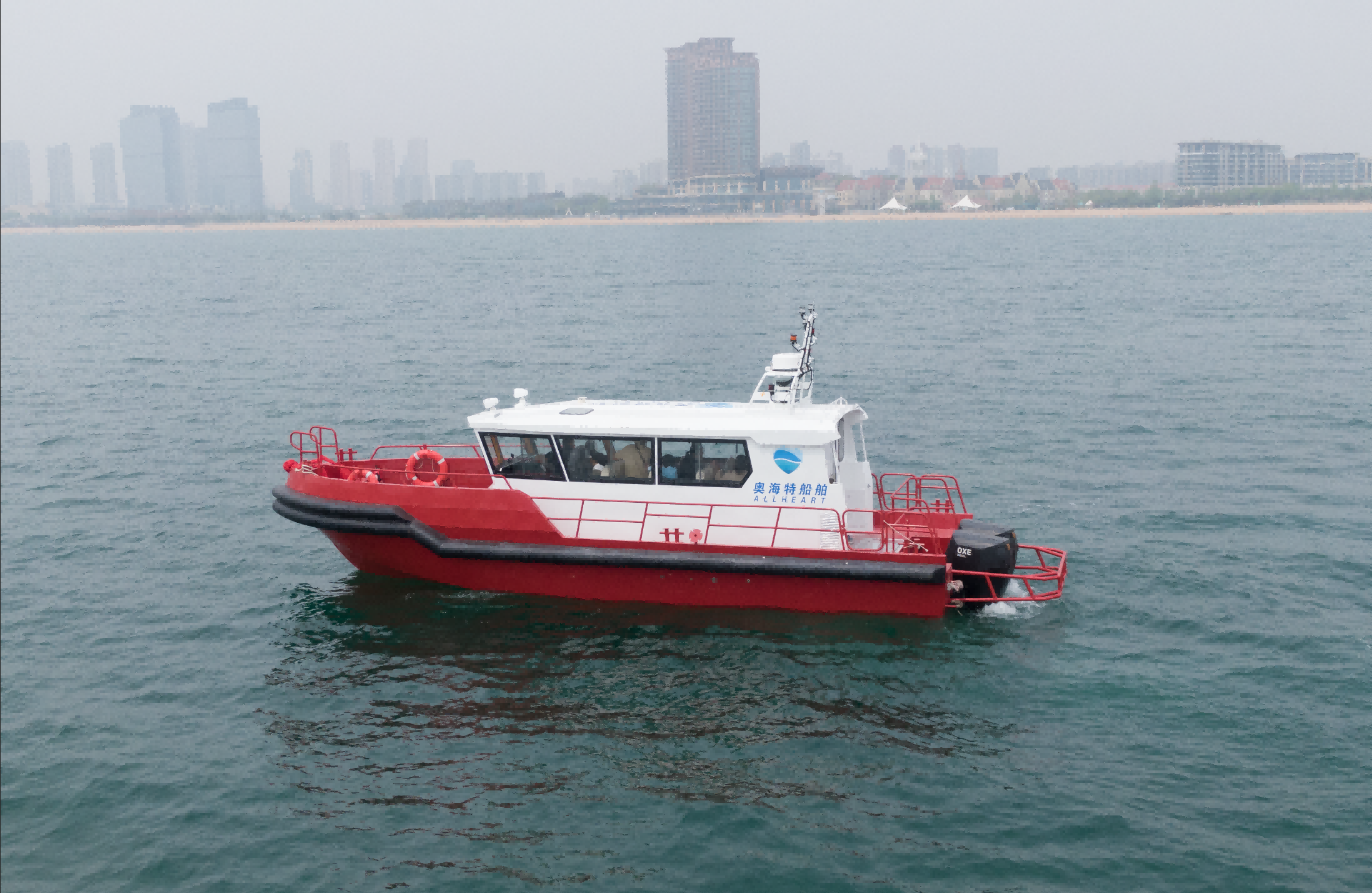
The hull is not merely a shell; it’s a meticulously engineered skeleton designed to withstand the relentless assault of the sea. Every plate, every stiffener, and every weld plays a role in distributing stress, resisting fatigue, and ensuring the vessel remains watertight under the most extreme conditions. The fabrication process transforms raw steel into a coherent framework, where precision cutting, forming, and fitting are as critical as the final welds that bind everything together.
In modern shipyards, the dance between automation and human expertise is on full display. Advanced CNC cutting machines carve complex shapes from thick plates with sub-millimeter accuracy, while robotic welding cells ensure consistent penetration and minimal distortion. Yet, it’s the seasoned shipwright who reads the steel, adjusting fit-up gaps, compensating for thermal contraction, and making those crucial judgment calls that no algorithm can replicate. It’s this fusion of technology and touch that gives a hull its quiet confidence.
Beneath the surface, the structural lattice—keels, frames, girders, and stringers—forms a hidden geometry optimized for strength-to-weight ratio and hydrodynamic efficiency. Each component is jig-aligned and tacked into place before the full welding sequence begins, a choreography that prevents warping and locks in the intended shape. From the double bottom to the weather deck, this skeleton is the invisible architecture that lets a ship flex with the waves without breaking—a testament to engineering where form and function meet in steel.
Systems That Sense Danger: Integrated Safety Electronics
Modern vehicles are no longer passive machines; they are active participants in their environment, constantly scanning for threats through a sophisticated web of integrated safety electronics. This network fuses data from radar, cameras, ultrasonic sensors, and even lidar, creating a real-time, 360-degree awareness bubble around the car. It’s not just about seeing—it’s about interpreting, distinguishing a stray plastic bag from a child running into the street, or recognizing the subtle drift of a drowsy driver. This sensory fusion is the bedrock of pre-crash preparation, enabling systems to tighten seatbelts, adjust suspensions, and pre-charge brakes in those critical milliseconds before impact, often entirely without the driver’s awareness.
The true sophistication lies in the decision-making algorithms that orchestrate these safety countermeasures. Unlike standalone systems of the past, today’s integrated electronics process overlapping inputs to form a unified threat assessment, weighing the severity and probability of multiple risks simultaneously. A sudden obstacle ahead might trigger emergency brake assist, while a fast-approaching vehicle in an adjacent lane could prompt the blind-spot intervention to gently nudge the car back into safety. The system doesn’t just react; it prioritizes, deploying the least intrusive correction first, yet escalating instantly to forceful evasion or full autonomous braking if the situation deteriorates. This layered intelligence reduces false alarms and builds driver trust, making safety interventions feel supportive rather than intrusive.
Behind these seamless reactions is an invisible architecture of cross-domain controllers and ultra-fast communication buses, where steering, braking, and occupant restraint modules exchange commands in fractions of a millisecond. The integration extends beyond crash prevention to post-impact care: in the event airbags deploy, the same sensor network immediately cuts high-voltage power, unlocks doors, and automatically triggers an eCall system that relays the vehicle’s exact GPS coordinates and impact data to emergency services. It’s a closed-loop system where danger detection, mitigation, and rescue become one continuous, automated chain—transforming the vehicle into a guardian that not only senses danger but actively fights to preserve life before, during, and after a collision.
Firepower on Water: Pump and Suppression System Install
When it comes to mounting a serious defense against fire on the water, nothing beats a properly rigged pump and suppression system. The heart of the setup is a high‑flow, self‑priming pump that pulls directly from the lake or sea, eliminating the need for onboard tanks. We hard‑mount these units below deck, vibration‑isolated and plumbed with corrosion‑resistant stainless lines. The control panel gets positioned at the helm, giving the operator instant throttle and foam injection adjustments without ever leaving the wheel.
The suppression plumbing branches out to a network of remote‑operated monitors and concealed nozzles. We favor dual‑agent systems that combine water with AFFF foam concentrate, kicking in via electric or pneumatic actuators the moment a heat sensor trips. Each nozzle cluster is strategically placed to blanket engines, fuel compartments, and berthing areas. The trick is balancing flow rates so the pump sustains pressure even when multiple zones activate simultaneously—something only careful pipe sizing and accumulator tanks can guarantee.
Installation isn’t just about bolting hardware in place; it’s a full integration with the vessel’s electrical and monitoring systems. We tie the suppression controller into the main alarm panel, so any discharge triggers engine shutdowns and visual beacons. Sea trials then verify the system’s reach and pattern under real pitch and roll conditions. The result is a firefighting backbone that’s always on standby, ready to flood a threat before it ever gets a foothold.
Trials by Fire and Wave: Realistic Rescue Simulations
When lives hang in the balance, textbook knowledge crumbles under pressure. Realistic rescue simulations throw first responders into chaos—blazing infernos, surging floodwaters, collapsing structures—where every decision carries weight. These aren’t scripted drills; they’re immersive, heart-pounding ordeals designed to blur the line between training and reality. Firefighters navigate pitch-black, smoke-filled corridors with only sound and touch, while swift-water rescue teams battle swirling currents that mimic flash floods. The sensory overload—heat, noise, disorientation—builds muscle memory that theory never could.
Behind the smoke and spray, technology quietly elevates the stakes. Computer-controlled burn rooms adjust flame patterns unpredictably, artificial fog machines reduce visibility to inches, and hydraulic wave pools generate treacherous riptides on command. Wearable sensors track vitals and decision latency, feeding data back for ruthless debriefings. Instructors deliberately inject complications—a hidden victim, a sudden structural shift, an equipment failure—forcing teams to adapt or fail. It’s controlled danger that leaves no physical scars, but the mental toll is carefully monitored to prevent simulation fatigue.
Yet the truest test isn’t individual skill—it’s cohesive instinct. Teams learn to read each other’s movements through layers of protective gear, to communicate in shouts over roaring flames or gushing water. Trust becomes a tangible asset when a partner’s hand is your only anchor in a zero-visibility environment. These trials strip away bravado, revealing who panics and who leads. Long after the artificial smoke clears, the lessons cling: calm under fire isn’t born, it’s forged.
Delivering the Shield: Final Outfitting and Departure
The last few days before departure felt like a blur of activity and purpose. Every station along the drydock hummed with a sense of urgency as crews bolted on the final armor plates and calibrated the shield emitters one last time. There’s a strange intimacy in watching a vessel you’ve poured years into finally take on her full form—no longer a skeleton, but a living thing, ready to breathe. The smell of ozone and hot metal hung in the air as we ran the shield harmonics test, a low thrum vibrating through the deck plates. It was the sound of potential, of everything we’d worked for humming just beneath the surface.
Outfitting isn’t just about the hardware; it’s about all the small, human touches that make a warship a home. I still remember the chief engineer taping a faded photograph of her daughters to the bulkhead next to the main reactor readout. Someone had scratched a set of tally marks into the paint near the port airlock—a tradition from the last crew’s shore leaves, now part of the ship’s soul. The shield generators themselves got a little extra attention: one technician insisted on painting a tiny, stylized lightning bolt onto each emitter housing, claiming it brought good luck against incoming fire. Superstition or not, nobody argued. When you’re about to sail into the unknown, you take every charm you can get.
Departure came faster than anyone expected. The final checklist was a ritual—voice confirmation from every section, a drumbeat of readiness. As the moorings released and the maneuvering thrusters nudged us clear of the dock, I stood on the observation deck, watching the station shrink into the void. The shield shimmered to life around us, a faint aurora of energy that sealed our fate. There was no turning back, but in that moment, wrapped in the hum of our new skin, I felt nothing but a quiet thrill. The shield wasn’t just protection; it was a promise. We were carrying it forward, and it would carry us home.
FAQ
We pour decades of hands-on maritime experience into every weld and circuit. Our team includes former first responders who know exactly how these boats perform under real duress, so we prioritize rapid deployment hatches, intuitive helm layouts, and hulls that stay stable even when you're pumping water at full throttle.
After construction, each hull goes into our onsite test basin where we simulate years of fatigue in a matter of weeks. We use strain gauges and hydrostatic pressure rigs to push well beyond the design limits. If there's even a hairline crack forming, we catch it long before it leaves the shed. One fireboat had to endure 150% rated pump pressure for 48 continuous hours before we signed off.
We've done everything from seawater foam induction to high-volume AFFF setups for aviation incidents. A recent 45-footer for a port authority has a remotely operated monitor that throws 10,000 liters per minute, with a drop-down bow ladder for direct assault on ships. We'll tailor pump layouts, tank placement, and even nozzle types based on the specific fuel profiles in your region.
We map every compartment for clear egress with no blind corners. Cabin air intakes are filtered against toxic fumes and positioned high. We use a closed-circuit cooling system so nobody's scalded by an engine leak. Handrails are spaced for gloved hands, and the deck has a grip pattern we developed from studying ice-covered piers in the Baltic. It's the small details that matter when someone's life hangs on them.
There was a harbor fire a few years back where a fuel barge ignited alongside a passenger ferry. Our 38-footer arrived first, laid down a foam blanket within 90 seconds, and held position in 6-foot swells while the bow monitor kept the ferry's hull cool enough for the passengers to disembark. The crew later said the boat's instant throttle response and spray protection let them get closer than any other unit that night.
We don't just hand over the keys. Every delivery includes a multi-day, on-water regimen with our instructors—usually retired coast guard officers. We cover emergency drills, pump engagement under power, high-speed cornering with a full manifold, and nighttime operations using the integrated FLIR. One chief told me he learned more about his boat's low-speed maneuvering in three hours than he had in months on his previous vessel.
Conclusion
At the Rescue and Firefighting Boat Factory, every vessel begins its journey as a meticulous set of blueprints, where naval architects and engineers transform lifesaving concepts into buoyant reality. The hull takes shape in a cavernous fabrication hall, its skeleton forged from marine-grade aluminum and reinforced with collision bulkheads — a silent promise of resilience against raging seas and blistering heat. As the structure rises, a web of integrated safety electronics threads through the frame: thermal cameras, gas detectors, and self-righting sensors that can smell danger before human senses ever could. This is a place where precision welding and computer-modeled hydrodynamics merge, ensuring that each boat cuts through waves with stability while carrying the weight of high-stakes rescue missions.
On the assembly floor, the heartbeat of fire suppression is installed — powerful pumps and remote-controlled monitors capable of unleashing thousands of gallons per minute, transforming the vessel into a floating fortress against infernos. But no boat leaves without facing trial by fire and wave: in a massive test basin, crews ignite real blazes and simulate hurricane-force conditions, pushing every system to its breaking point to guarantee flawless performance when lives hang in the balance. Finally, the vessel undergoes final outfitting — medical bays, thermal imaging consoles, and rescue davits — before departing the factory, not merely as a machine of metal and electronics, but as a shield for those who brave the world's most unforgiving waters. Here, engineering meets empathy, and every rivet secures a second chance at life.
Contact Us
Contact Person: Benny Hu
Email: [email protected]
Tel/WhatsApp: +8618354225697
Website: https://www.allheartmarine.com/