
Red Light Therapy: How to Choose the Best Device for Your Needs
2026-06-09
Red light therapy has surged in popularity, promising benefits from skin rejuvenation to pain relief. But with countless devices flooding the market, finding the right one can feel overwhelming. From panels to handheld wands, the choices are vast and not all are created equal. Whether you're a first-time buyer or upgrading your setup, understanding key factors like wavelength, irradiance, and build quality is essential to avoid costly mistakes. Brands like GUANG TAI are helping set a higher standard, but knowing what to look for puts you in control. Ready to cut through the confusion and invest in a device that truly works for you? Let's break it down step by step.
What Your Skin Actually Needs from Red Light Therapy
Your skin doesn’t just want a surface-level fix—it needs real, cellular energy. Red light therapy delivers exactly that by reaching the mitochondria, the tiny power plants inside your cells. When those mitochondria absorb that specific wavelength, they ramp up ATP production, giving your skin the fuel to repair itself faster and work more efficiently. It’s subtle at first, but day after day, that extra energy adds up to smoother, less tired-looking skin.
Beneath the glow everyone talks about, what skin truly craves is balanced renewal. Red light coaxes fibroblasts into producing fresh collagen and elastin without pushing them into overdrive, which can actually weaken the structure over time. Think of it as a gentle nudge, not a command—your skin responds by rebuilding firmness and softening lines at its own natural pace, so the results feel earned rather than forced.
And it’s not just about looking younger. Stressed, inflamed skin needs calm as much as it needs repair. Red light helps dial down that persistent redness and improves microcirculation, so nutrients get where they’re needed and waste finds its way out. Over weeks, you might notice wounds healing faster, breakouts fading without leaving a mark, and a steadier, more even tone emerging—proof that your skin’s own resilience is kicking back in.
Decoding Wavelengths: Why 630nm and 850nm Aren't the Whole Story
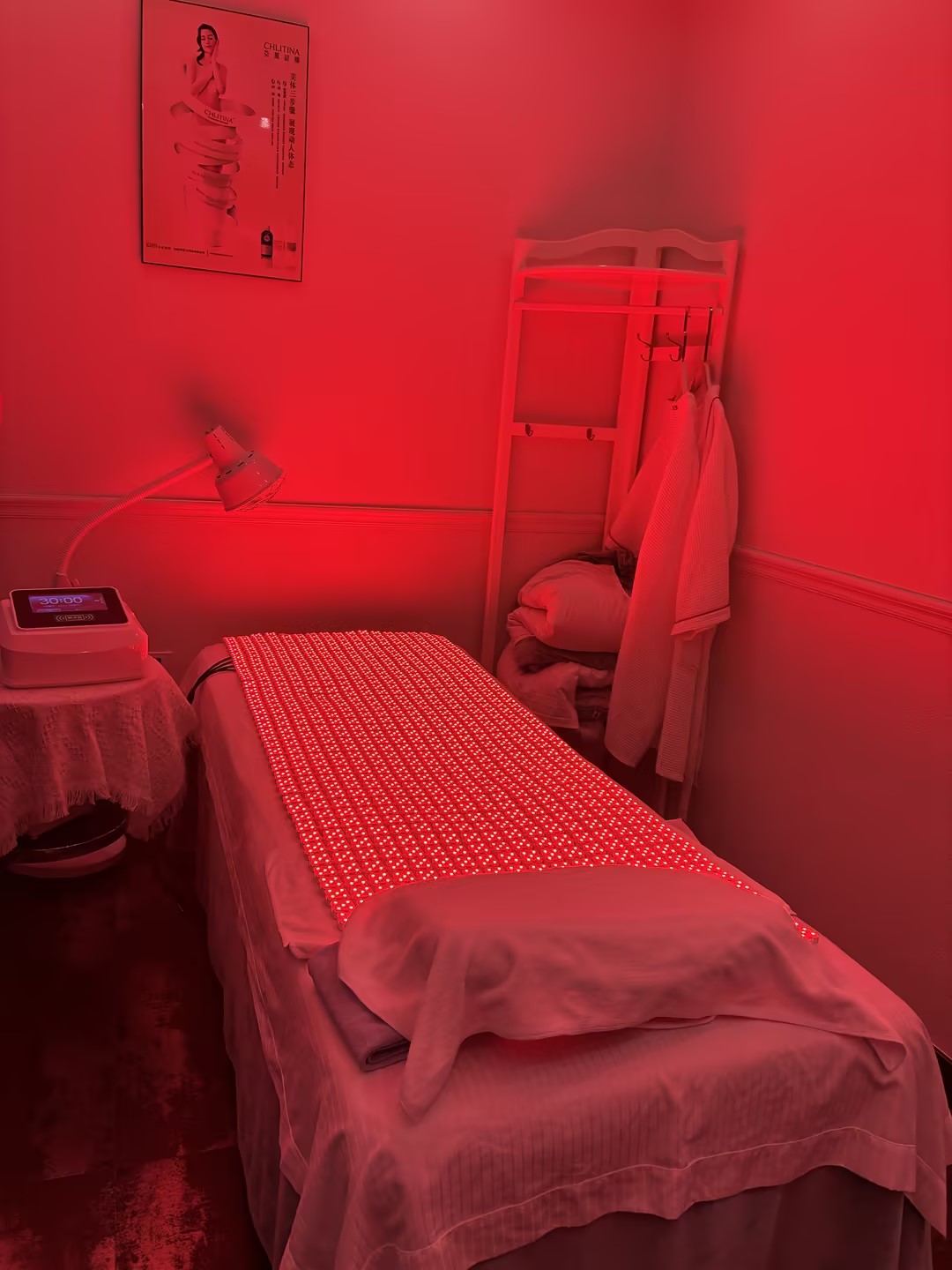
Most people fixate on 630nm and 850nm because they're the most studied, but light therapy is far more nuanced than a two-number code. Think of it like nutrition: you wouldn't survive on only two vitamins. Our cells harbor a symphony of light-sensitive proteins—cytochrome c oxidase, opsins, flavins—that each tune in to slightly different frequencies. For instance, 670nm subtly shifts electron transport in mitochondria, while 830nm may penetrate deeper but triggers a distinct cascade of anti-inflammatory signals. Sticking rigidly to the classic duo ignores how overlapping wavelengths can amplify or even cancel out healing effects.
The skin itself edits the light that reaches deeper tissues. Hemoglobin gobbles up blue and green, water absorbs portions of the infrared, and melanin scatters a broad range. A 630nm beam might barely graze a joint injury if applied over a thick muscle, whereas 980nm slips through water-rich tissue more gracefully. Yet 980nm isn't a magic bullet either—it can overheat superficial layers before enough energy hits the target. This is where pulsing and fluence rate become as critical as the wavelength number itself. The outdated idea that a single "therapeutic window" exists is giving way to a more textured understanding: certain wavelengths prime the lymphatic system, others rebalance oxidative stress, and some even modulate the gut-brain axis via vagal nerve stimulation.
Paradoxically, the chase for a perfect wavelength overlooks how the body’s own repair state dictates what works. A wound stuck in inflammation may respond best to 830nm, while one that's stagnating in proliferation needs a nudge from 660nm. Even 405nm, often dismissed as merely antibacterial, can reset dysregulated pain signaling in nerve fibers. Clinicians now realize that matching wavelength to the phase of healing—not just the tissue depth—unlocks better outcomes. The real story isn't about finding the "best" nanometers; it's about reading the biological context and using the full spectral toolbox with precision.
Power Density: The Spec That Can Make or Break Your Results
Many engineers treat power density as just another number on a datasheet, but overlooking it can derail an entire design. It fundamentally determines how much heat you’ll need to manage per unit volume, and in high-current applications, even a slightly underestimated figure can push thermal limits past the point of safety. The result is throttled performance, shorter component life, or outright failure—all because a supposedly minor spec was brushed aside.
On the flip side, optimizing for higher power density opens up possibilities that go beyond mere footprint reduction. When you pack more capability into a smaller space without sacrificing reliability, you gain freedom to reimagine enclosure shapes, cut weight, and simplify thermal paths. This isn’t just about chasing miniaturization trends; it’s about delivering consistent, rugged output where every cubic inch truly earns its keep.
A practical approach starts with honest thermal modeling under worst-case conditions, not just nominal ratings. Pair that with careful derating curves and validate early prototypes in the actual enclosure—because airflow and ambient temperatures rarely match the lab bench. By treating power density as a design anchor rather than an afterthought, you transform it from an ambiguous target into a measurable lever that sharpens efficiency, endurance, and overall system integrity.
Safety Beyond the Box: Certifications Worth Looking For
Plenty of shoppers grab a gadget, spot a safety stamp, and assume all is well. But real safety isn't a one-and-done sticker. It’s a process that lives far beyond the box. Take UL certification: it doesn't just test a single unit in a lab. It demands unannounced factory checks long after the product hits the shelf. If a manufacturer tweaks a component, that tweak must be re-evaluated. That is the kind of ongoing, slightly tedious accountability you actually want backing up a mark on your device.
Then there are marks like ETL, CE, or TÜV. These aren't just interchangeable badges for the packaging. They differ in scope and testing depth, and some require more robust third-party oversight than others. When a product carries them, it often signals a company willing to invest in scrutiny that most buyers never see—thermal cycling, abnormal use simulations, failure mode drills. A brand that goes that far isn't just ticking a box; it's building a habit of rigor that matters long after you've recycled the cardboard.
The Real Cost of Bargain Devices: Durability and Support
When you pick up a device that costs half as much as its well-known rival, it’s tempting to celebrate the savings. But peel back the discount sticker and you’ll often find corners that were cut with surgical precision. The plastics feel lighter and more brittle, the hinge that flips your screen moves with a faint, unsettling wobble, and the charging port starts to loosen its grip after only a few months. These aren’t just minor annoyances—they’re early signs that the device was built for a short sprint, not a marathon. Over a year or two, the hidden costs stack up: replacing a shattered screen that a sturdier build might have survived, buying a new cable because the connector no longer makes contact, or simply enduring the slow decay of a battery that refuses to hold a charge after a few hundred cycles.
Support is where the true price often reveals itself, though not in the way you’d expect. With premium devices, you’re buying into a network of help—walk into a store, describe the issue, and often leave with a solution. Budget brands, on the other hand, tend to treat support as an afterthought. There might be no local repair center, only a distant warehouse and a chatbot that cycles through the same unhelpful suggestions. Software updates, which keep a device secure and running smoothly, arrive late—if ever—and over time your device falls behind, vulnerable in ways you don’t immediately notice. What you saved upfront can quickly evaporate the first time you need a fix and discover you’re on your own.
There’s also a quieter cost, one that doesn’t come with a receipt. A device that fails after a year isn’t just an inconvenience; it’s another chunk of electronic waste that’s difficult to recycle and often ends up in landfills overseas. The bargain that felt good in the store starts to look different when you’re holding a dead device and wondering why it couldn’t last just a little longer. In the end, you’re not just buying hardware—you’re choosing how long you want it to stay useful and what kind of company you want standing behind it. Paying more upfront often means getting something that’s repairable, supported, and less likely to become tomorrow’s trash.
Separating Marketing Claims from Clinical Proof
Walk down any supplement aisle and you'll see bold claims promising everything from sharper focus to overnight relief. Filtering out the noise starts with understanding what really counts as clinical proof—reproducible trials with real patients, not just a polished collection of before-and-after anecdotes or a sprinkling of vague terms like "science-backed."
A common trick is dressing up marketing language in a lab coat. Look closely: "clinically tested" might mean a one-time survey of ten people, while a genuine study gets published in a journal where methods and data face outside scrutiny. Even then, check who funded the research—a trial by the manufacturer carries less weight than one run independently.
FAQ
Red light therapy uses specific wavelengths of red and near-infrared light to penetrate your skin and stimulate cellular repair. It boosts mitochondrial function, which helps cells produce more energy, reduce inflammation, and regenerate faster. Think of it as a gentle recharge for your body’s tissues.
The key specs are wavelength, power density, and treatment area. You want a device that offers both red (around 660nm) and near-infrared (around 850nm) light, since each penetrates to different depths. Power density should be high enough to deliver a therapeutic dose in a reasonable time — typically above 20 mW/cm². Also consider the size: larger panels cover more area in one session, while smaller wands are better for spot treatments.
Red light (630–660nm) works mostly on the surface — great for skin health, collagen production, and wound healing. Near-infrared (810–850nm) penetrates deeper into muscles, joints, and even bone. A combination gives you full-spectrum benefits from skin rejuvenation to deep tissue recovery.
LED panels deliver higher power output across a broader area, so they’re ideal for treating large zones like your back, legs, or full face and chest. Handheld wands and masks are more portable and often more affordable, but they cover smaller spots and usually have lower irradiance, meaning you’ll need longer sessions.
It depends on the device’s power and your goals, but a typical session is 10–20 minutes per area. Most people start with 3–5 sessions per week and adjust based on results. Consistency matters more than duration — short, regular use yields better long-term benefits than sporadic marathons.
Look for devices with built-in timers, cooling fans to prevent overheating, and eye protection goggles. Reputable brands often have third-party safety testing, CE or FCC marks, and FDA clearance. If a deal seems too good to be true or the certification claims are vague, dig deeper before buying.
Absolutely. It stimulates fibroblasts to produce collagen and elastin, reducing fine lines and wrinkles. It also calms inflammation, helping with acne and rosacea. Over time, regular use can lead to smoother texture, more even tone, and a noticeable glow — it’s like a non-invasive skincare boost.
Most quality devices are LED-based and last for thousands of hours with no bulb replacements. The only real ongoing cost is electricity, which is minimal. Just keep the device clean and store it safely. Entry-level models can be found under $200, while high-end panels with customizable settings may run past $1,000 — it’s really about prioritizing what features you’ll actually use.
Conclusion
Selecting a red light therapy device goes far beyond picking the brightest panel or the lowest price. Your skin craves consistent, targeted exposure that matches how deeply you want the light to penetrate and what cellular response you aim to trigger. The 630nm range is excellent for surface-level rejuvenation, calming inflammation, and boosting collagen in the epidermis, while 850nm reaches deeper into muscles and joints. Yet fixating only on these two numbers ignores the nuance: many devices emit a narrow spectrum around those peaks, but your skin benefits from the minor wavelengths surrounding them, which create a more photobiomodulation-rich bath. You want a device that doesn’t just claim peak wavelengths but delivers a bell-curve output that mimics natural biological response, so check for spectral graphs rather than marketing stickers.
Power density is the silent deal‑maker or breaker: if it’s too low, treatment times drag on forever and you might never reach the therapeutic threshold; too high without proper thermal management, and you risk discomfort or even reverse effects. Look for a power density of at least 40–80 mW/cm² at the skin’s surface in real‑world use, not just the LED rating. Beyond the box, legitimate safety certifications (like CE, RoHS, or FDA‑cleared designation for specific claims) offer a shield against shoddy electronics that can flicker, overheat, or degrade rapidly. The true cost of a bargain device often hides in its lack of replaceable parts, nonexistent customer support, and inferior heat sinks that let diodes burn out in months. Finally, separate the science from the sales pitch: genuine clinical backing comes from peer‑reviewed studies that use similar parameters to your device—wavelength, dose, pulse rate—not just a generic “light works” narrative. A smart buyer interrogates the specs, demands proof, and chooses a tool built for longevity, not just the next quick fix.
Contact Us
Contact Person: Leon Yi
Email: [email protected]
Tel/WhatsApp: +86 17363316873
Website: https://zzgt.en.alibaba.com/