

Professional Cheese Balls Snack Processing Line for Efficient Production
2026-07-23
Ever wondered how those perfectly round, crunchy cheese balls make it from raw ingredients to your snack bowl? The secret lies in a seamless, high-speed production line that balances precision and flavor. At MINGDE, we craft professional cheese balls snack processing solutions that prioritize efficiency without compromising the irresistible taste you love. Let’s explore what makes this line the backbone of successful snack brands worldwide.
From Mix to Pack: Seamless Automation
Imagine a production line where the transition from mixing to packaging happens without a single pause. Raw ingredients flow into blenders, are precisely combined, and immediately move toward filling stations—no manual transfers, no bottlenecks. This kind of continuity isn’t just efficient; it fundamentally changes how you think about throughput. Instead of treating mixing and packing as separate stages, they become one fluid motion, guided by integrated controls and smart sensors that adjust speeds and volumes on the fly.
What makes this level of integration stand out is how it handles variability. Different batch sizes, recipe changes, or packaging formats are accommodated without requiring line shutdowns or extensive reconfiguration. The system’s real-time monitoring tracks consistency from the mixer to the final sealed pack, catching deviations early and correcting them before they become waste. It’s not about replacing human oversight but giving operators the tools to manage exceptions while the routine runs itself.
The real payoff appears in everyday operation. Clean-in-place cycles synchronize with packaging changeovers, so one doesn’t delay the other. Traceability data follows each product unit from its raw material origins to the shipping pallet—automatically compiled, not manually logged. When everything connects, the plant floor becomes less about coordinating disparate machines and more about watching a synchronized process deliver consistent output hour after hour.
Crafting the Perfect Crunch: Frying & Baking Mastery
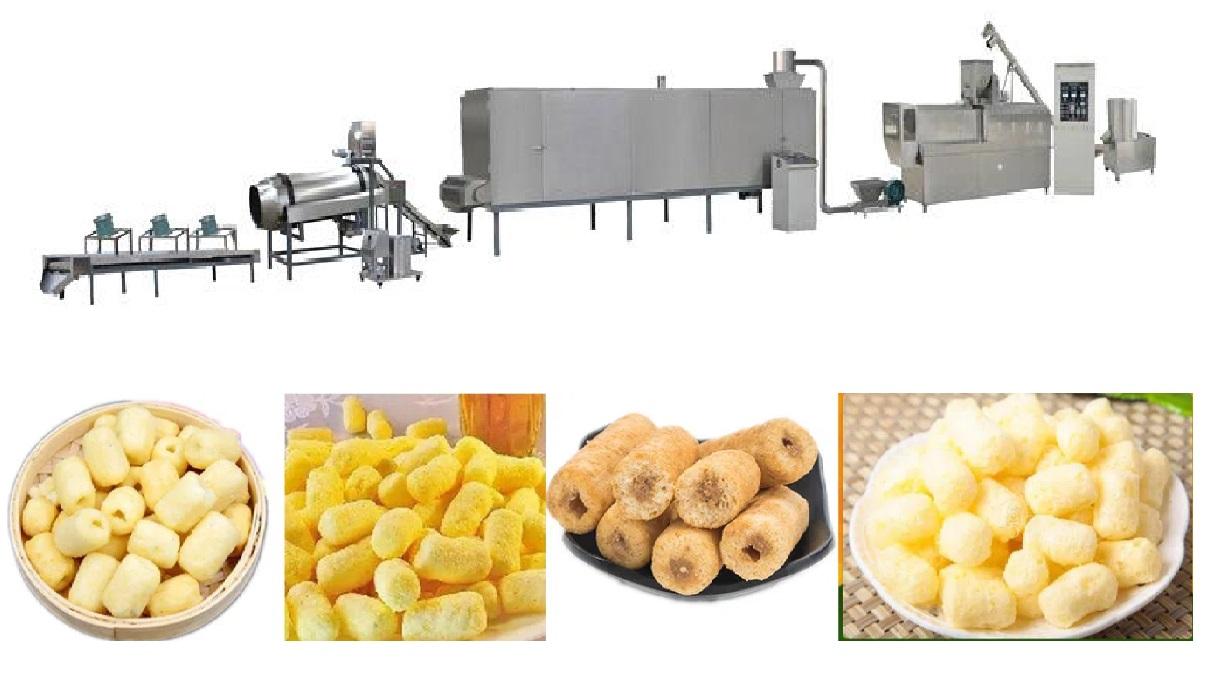
Getting that ideal crunch isn’t just about high heat—it’s a delicate dance between moisture control and fat. Whether you’re frying or baking, the goal is to drive off surface water fast enough to set a rigid, golden shell without burning it. Frying plunges food into a blistering oil bath, instantly steaming the exterior while a crust forms. Baking, on the other hand, relies on dry oven air and often a light coating of oil to mimic that same effect, with a longer, gentler transformation.
Mastering frying means respecting oil temperature like a ritual. Too low and the food soaks up grease like a sponge; too high and you'll have a burnt shell hiding raw dough inside. The sweet spot usually lands between 350°F and 375°F, where bubbling action seals the surface quickly and creates micro-blisters that shatter under your teeth. For baking, the trick is prepping your surface—think parchment, a light brush of duck fat, or a screaming-hot baking stone—to deliver that instant sizzle the moment your food touches down.
Ingredients matter more than most home cooks realize. A pinch of baking powder in a batter encourages browning and tiny air pockets, while breading with panko instead of fine flour yields an open, jagged texture that stays crisp longer. Even after cooking, a short rest on a wire rack rather than a plate lets steam escape instead of turning your masterpiece soft. The perfect crunch is fleeting, but with these details you’ll capture it time and again.
Smart Dispensing for Uniform Flavor
Achieving consistent taste in every cup has long been a challenge for automated beverage systems. Smart dispensing technology tackles this by precisely measuring ingredients in real time, adjusting for variables like temperature, grind size, or liquid viscosity. The result is a drink that tastes exactly as intended, whether it's the first pull of the day or the hundredth.
Unlike traditional machines that rely on fixed timers or manual calibration, these systems use feedback loops to maintain uniformity. Sensors detect subtle shifts—a slight change in coffee bean oil content, for example—and instantly tweak the dispense parameters. This adaptability means the flavor profile remains stable, even as environmental conditions or ingredient batches vary.
Behind the scenes, algorithms learn from every pour, building a dynamic model that refines accuracy over time. This isn't just about portion control; it's about preserving the nuanced notes and aromas that define a quality drink. For cafes and high-volume settings, it transforms consistency from a daily headache into a reliable, automated process.
Rapid Changeover for Multiple Shapes
Switching between different product shapes used to be a major bottleneck, chewing up valuable production time with complex tooling adjustments and calibration. Modern systems now integrate quick-release mechanisms and pre-set parameter libraries, letting operators swap complete forming sets in minutes instead of hours. The real breakthrough is the use of servo-driven slides that automatically reposition based on the selected recipe, eliminating manual tweaks and reducing the risk of misalignment.
What often gets overlooked is how smart sequencing can further compress changeover times. By programming parallel movements—such as stripping one shape while the next tool is already indexing into place—the machine never sits idle waiting for a single step. Add in interchangeable modular components that snap into common base plates, and you create a flexible cell capable of processing round, flat, and irregular profiles without dedicated setups for each. This approach not only cuts downtime but also makes small batches economically viable.
Once the physical switch is done, the final hurdle is validating the first-off quality. Integrated measurement systems that compare the newly formed part against a digital master can greenlight production in seconds. Coupled with automatic offset correction, the machine self-adjusts minor variances, so operators don't have to dig through manuals or tweak knobs. The result is a truly agile process—one where shifting from hexagons to octagons or complex asymmetrical parts feels almost effortless.
Built to Last: Industrial-Grade Hygiene
In demanding industrial settings, hygiene isn't just about cleanliness—it's a relentless standard that separates the exceptional from the mediocre. Materials and designs must shrug off corrosive chemicals, microbial threats, and physical wear without faltering. Every surface, seal, and component is engineered to deny contaminants a foothold, ensuring that rigorous daily operations never compromise safety or compliance.
This level of resilience is born from thoughtful engineering and uncompromising material selection. Stainless steel alloys resist pitting and rust, while seamless joints eliminate crevices where pathogens can hide. Surfaces are treated to repel water and oils, making them effortlessly cleanable even after exposure to the harshest substances. It's a silent, steadfast defense that works around the clock without demanding attention.
Beyond mere durability, true industrial-grade hygiene integrates seamlessly into workflows, supporting productivity rather than interrupting it. Smooth, snag-free profiles prevent debris accumulation, and components are designed for rapid disassembly and inspection. These features aren't luxury—they're a necessity for facilities where a single contamination event can cascade into costly downtime or reputational harm. This is equipment that doesn’t just survive the environment; it thrives in it, setting a benchmark that's hard to follow.
Data-Driven Efficiency at Every Stage
Modern operations thrive on the intelligent use of information, not just in isolated bursts but woven into the entire workflow. The idea is to let real-time insights guide choices from initial planning through to final delivery. Instead of relying on periodic reports or gut feelings, teams can spot bottlenecks as they emerge, adjust resource allocation on the fly, and preempt costly delays. It’s about creating a living feedback loop where every action generates data that refines the next move, making the whole system learn and improve continuously without manual intervention.
At the design phase, historical patterns and predictive models help shape more resilient strategies, while during execution, live dashboards highlight variances that demand immediate attention. Even support functions like maintenance and customer service benefit by anticipating needs before they escalate. This approach removes the friction between gathering data and using it, turning what was once a retrospective analysis into a proactive advantage. The result is not just faster processes but smarter ones that consistently deliver higher quality with less waste.
FAQ
It's engineered for high throughput without sacrificing product consistency, using precision temperature controls and stainless steel components that resist corrosion and simplify cleaning.
Absolutely. The extruder dies are interchangeable, letting you switch between ball sizes and even experiment with cheese blends or filled varieties with minimal downtime.
It incorporates optimized heating elements and a closed-loop oil circulation system, cutting energy use by up to 20% compared to older models while maintaining even frying.
Routine upkeep is straightforward—most parts are tool-free for quick access, and the automated lubrication system reduces the need for frequent manual checks.
The modular design scales from small-batch runs to continuous high-volume output, so you can start with a compact setup and expand later without replacing core equipment.
All contact surfaces are food-grade stainless steel, and the integrated CIP system automatically sanitizes between batches, minimizing cross-contamination risks and manual scrubbing.
A touchscreen interface lets you adjust speed, temperature, and timing per recipe, with real-time monitoring and alarm notifications for any deviations.
Yes, it seamlessly connects with weighing and nitrogen-flush packaging machines, so the cheese balls stay fresh from fryer to bag with minimal manual handling.
Conclusion
At the core of this professional cheese balls snack processing line is a seamlessly automated workflow that takes raw ingredients from initial mixing straight through to final packaging without a break in rhythm. Every stage is calibrated to preserve the delicate, cheesy crunch that consumers crave—whether the balls are flash-fried to golden perfection or gently baked for a lighter bite. The frying and baking stations are engineered with precision temperature controls and oil management systems that lock in texture while keeping the product consistent batch after batch. Right after cooking, an intelligent dispensing system applies seasonings with pinpoint accuracy, coating each cheese ball uniformly so that the first handful tastes exactly as bold as the last. Rapid changeover mechanisms allow operators to switch between shapes—from classic spheres to quirky stars or rings—in minutes rather than hours, making small-batch variety runs economically feasible without sacrificing throughput.
Underpinning this versatility is an industrial-grade construction designed for relentless production schedules and uncompromising hygiene standards. Every surface is built from food-safe stainless steel, sloped to prevent liquid pooling, and accessible for tool-free cleaning, which drastically reduces downtime between shifts. The line’s true intelligence, however, lies in its data-driven architecture: sensors track critical parameters like moisture content, oil temperature, and seasoning flow rates in real time, feeding a central dashboard that lets operators fine-tune performance on the fly. Historical analytics flag maintenance needs before they become stoppages, while recipe memory ensures that every shape-and-flavor combination can be recalled instantly for repeat orders. This fusion of robust machinery, adaptive formatting, and continuous process monitoring transforms what used to be a labor-intensive snack production into a reliable, high-speed operation that consistently delivers premium cheese balls with minimal waste and maximum profit.
Contact Us
Contact Person: LILY SUN
Email: [email protected]
Tel/WhatsApp: 0086-13969103791
Website: https://www.snackfoodmachinery.com/