

OEM Fuel Dispenser Pump: A Complete Buying Guide for Fleet Owners
2026-10-26
Every gallon counts when your fleet's margins are tight, yet few owners realize how much an underperforming OEM fuel dispenser pump can quietly drain profits. Whether you're replacing aging hardware or planning a new fueling station, the right pump isn't just a purchase—it's a strategic decision that affects uptime, accuracy, and long-term maintenance costs. In this guide, we break down what fleet owners actually need to know, from flow rates and durability to the real-world advantages of trusted manufacturers like BEILIN. Let's get your investment right before the next refueling.
Why Fleet Owners Ditch Aftermarket Parts After the First Major Failure
The first time a fleet owner watches a $40 aftermarket wheel bearing strand a $150,000 truck and a $500,000 load, the math changes fast. That breakdown isn't just the cost of the part—it's the tow, the overnight repair, the missed delivery penalty, and a driver stuck on the side of the interstate. After one of those calls, the parts shelf gets a very different look.
It's not that every aftermarket part is bad. It's that the variation is the problem. Fleet maintenance schedules are built around predictable service intervals, and a part that fails at 60,000 miles instead of 100,000 wrecks that entire plan. One early failure from a cheaper component triggers a domino effect: extra labor, unplanned tire wear, maybe even damage to a hub or axle. That's when owners decide the "savings" were just borrowed from the next breakdown.
There's also the support side nobody talks about until it's 2 a.m. in the middle of nowhere. With OEM parts, a fleet can usually find a dealer or a known supplier nearby. With some aftermarket brands, you're waiting on a warehouse shipment or arguing about whose warranty covers the labor. After the first major failure, many owners keep a strict list of approved parts and don't experiment anymore. The lesson sticks: reliability isn't a line item—it's the whole business.
Matching Pump Capacity to Peak Fueling Windows Without Overspending
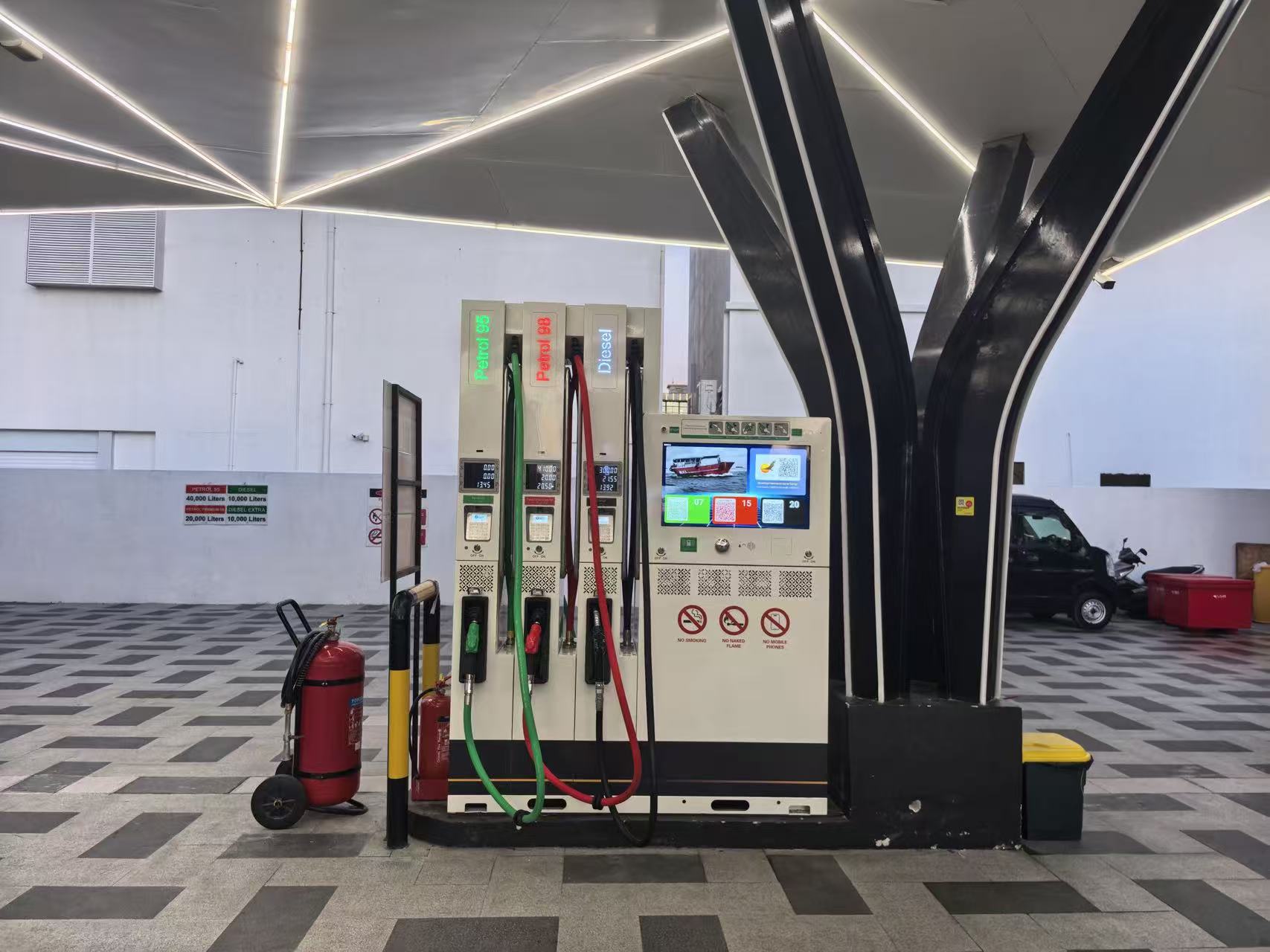
Fueling sites often fall into the trap of sizing a pump for the single busiest minute of the year, then watching it cycle on and off through long idle stretches. A better starting point is to log actual flow during the two or three windows that really matter—say, the 5:30 to 7:00 a.m. commuter push or the late-afternoon fleet return. Those windows rarely demand the pump's theoretical maximum; a pump that can sustain 80% of that peak, paired with modest storage, usually covers the real load without wasted horsepower.
Rather than buying one large pump, consider two smaller units staged to come online as flow climbs. A small buffer tank or accumulator can absorb the short, sharp surges that would otherwise force a bigger motor. This approach keeps each pump running in its best efficiency range and avoids frequent starts, which eat into contactors and seals. The goal is to let the pump run longer at a steady, comfortable speed instead of constantly slamming from zero to full output.
Overspending hides in more than the purchase price. Bigger pumps draw more power during those idle or low-flow periods, and oversized motors tend to run hotter and wear seals faster. Check the math on a variable speed drive or a simple lead-lag controller before adding capacity. Often the payback is under two years, especially when the alternative is a pump that spends most of its life throttled back or short-cycling. Match the equipment to the fueling window, not to a worst-case scenario that happens twice a month.
Diesel, Gasoline, or Blends: Ensuring Your Pump Handles What You Actually Use
很多用户以为泵上标着“柴油”就能抽任何柴油,但事实上,生物柴油混合比例、含硫量甚至添加剂都可能影响泵内密封件和金属部件的寿命。例如,一台为纯石化柴油设计的齿轮泵,接触B20生物柴油几个月后,丁腈橡胶密封圈会膨胀、变软,最终渗漏。反过来,标着“汽油”的泵也不一定适合所有乙醇混合燃料,E85中的高浓度乙醇会腐蚀某些铝合金泵体。所以,别只看标签,要看泵制造商给出的具体燃料兼容清单。
混合燃料是重灾区。有人把柴油和汽油混合后泵送,或者交替使用同一台泵抽不同燃油,残留物可能形成胶质堵塞计量器。更隐蔽的是,一些“通用”泵声称能处理多种燃料,但实际测试中,长期切换柴油和含氧汽油会导致内部O型圈收缩,产生微小裂纹。如果你确实需要处理多种燃料,最好选择专为多燃料设计的泵,而不是临时将就。
确认泵能否处理你实际使用的燃料,最简单的办法不是看泵体上的大字,而是找技术手册中“wetted materials”那一栏。常见的兼容橡胶有氟橡胶(FKM)和聚四氟乙烯(PTFE),丁腈橡胶(NBR)对乙醇和生物柴油的耐受性差很多。另外,粘度变化也要注意:冬季柴油添加剂可能降低润滑性,加剧泵体磨损。用错泵不仅漏油,还可能混入空气导致计量不准,或者更糟——引燃蒸汽。
The Installation Details That Separate Reliable Yards from Constant Repair Bills
The difference between a yard that holds up for a decade and one that starts failing after two seasons rarely comes down to the materials you can see. It's almost always in the base work. A reliable installer will excavate deeper than you'd expect—often 6 to 10 inches for pavers or artificial turf—then lay down a compacted crushed stone sub-base in thin lifts, not one thick dump. They'll also check the slope with a level or laser, making sure water moves away from the house instead of pooling under the surface. Skip any of these steps and you get sunken pavers, wrinkled turf, or a patio that heaves after the first freeze.
Edge restraints and drainage details are another tell. You might not notice that a good crew installs aluminum or plastic edging around the perimeter, or that they wrap the base with geotextile fabric to keep soil from mixing into the stone. But these are exactly the things that stop the edges from crumbling and prevent weeds from punching through. They'll also add channel drains or weep holes where water tends to collect, instead of relying on luck. It's not flashy work, but it's what keeps the yard from turning into a mud pit or a series of trip hazards.
Finally, pay attention to how the top layer is fastened and finished. For decking, that means hidden clips and proper spacing for expansion, not just screws driven straight down. For artificial grass, it's seaming tape and the right infill weight, not just staples around the edges. For pavers, it's polymeric sand swept into the joints and vibrated, not just left loose. These small installation choices don't add much to the upfront cost, but they make the difference between a yard that stays put and one that needs constant patching.
A Fleet Manager's Checklist for Maintenance That Prevents Midnight Breakdowns
Most midnight breakdowns aren't random—they're the tail end of a skipped inspection. Start the weekly walk-around with the easy stuff that actually strands trucks: battery terminal corrosion, loose belts, coolant seeps that never quite become drips, and tire tread wear that looks fine in daylight but turns dangerous under rain. If the driver can feel a pull or hear a new whine, write it down before it becomes a roadside repair. Don't wait for the warning light.
Then cross-check the records against real operating conditions. A truck running desert routes at max GVW needs different brake and bearing intervals than one doing short city loops. Pull the fault code history every Friday and look for repeat offenders—one-off sensor glitches are usually noise, but the same inactive code three weeks in a row is a breakdown waiting for a dark highway. Replace filters, belts, and hoses on a calendar plus odometer basis, and keep a spare alternator and starter on the shelf if your fleet is older than five years.
What a Supplier's Support Network Reveals About Long-Term Reliability
A supplier's support network often gets dismissed as an after-sale convenience, but the way it's structured speaks volumes about the vendor's own confidence in its products. When a company invests in regional depots, cross-trained field engineers, and direct lines to its design team, it signals that downtime is treated as a shared problem, not a customer's burden. That orientation rarely appears overnight—it reflects years of internal alignment that can't be faked during a sales pitch.
Look beyond the brochure-level promises of "24/7 availability" and examine how the network behaves under abnormal conditions. A genuinely reliable supplier maintains relationships with local distributors and independent repair shops that go deeper than transactional contracts. They train third-party technicians on proprietary diagnostics, share failure data proactively, and keep buffer inventory in places that don't make short-term financial sense. Those choices only make sense if the supplier expects the equipment to outlive the initial warranty by a wide margin.
The most revealing sign is how a support network treats customers who aren't currently buying anything. Suppliers that prioritize long-term reliability keep releasing firmware updates for discontinued models, maintain accessible documentation without login walls, and track field failure trends years after the sale. If those quiet investments are absent, the spec sheet's reliability claims should be treated as marketing rather than engineering.
FAQ
OEM pumps are built to the exact specifications of the vehicle or fueling system manufacturer, so they often match flow rates, pressure curves, and connector types more precisely. In fleet use, that usually means fewer compatibility headaches, cleaner installation, and service intervals that line up with the rest of your equipment. Aftermarket units can be cheaper up front, but they sometimes force you to modify fittings or accept slightly different metering behavior.
Start with the fuel type and flow rate your operation actually needs. Diesel, gasoline, and blended fuels all have different seal and hose requirements. Then look at the nozzle and hose reach for your vehicle types. A pump that cannot reach the tank comfortably will slow down every fill. After that, verify the electrical requirements or suction capability if it is a remote dispenser.
For most small and mid-size fleets, yes, if you plan to keep the equipment longer than three or four years. OEM pumps tend to hold calibration better and have replacement parts designed for your exact model, which reduces downtime. The higher sticker price often comes back through fewer repair calls and less fuel loss from inaccurate metering.
Look for certified flow meters, usually with a stated accuracy class or regulatory approval. Ask about the pump's duty cycle: a light-duty unit will fail quickly if you are filling dozens of trucks a day. Also check the housing material and seal ratings for your climate. In dusty, wet, or freezing conditions, cast aluminum or powder-coated steel housings usually last longer than bare metal.
The biggest one is ignoring filter changes. Dirty fuel and clogged filters force the pump to work harder and ruin meter accuracy. Another common issue is skipping the annual calibration check. Even OEM meters drift over time, and small errors add up when you are fueling many vehicles. Also, many fleets forget to inspect hose swivels and breakaways, which can leak or fail at the worst time.
Sometimes, but you need to confirm the manufacturer's approval. The seals, hoses, and internal components must be rated for both fuel types. If you run a mixed fleet daily, it is often better to install separate dispensers or at least use dedicated hoses and nozzles per fuel type. Cross-contamination or wrong fuel dispensing can damage engines and void warranties.
Beyond the pump price, you need to account for the concrete pad, electrical wiring or suction piping, breakaway devices, and possibly a card reader or fleet management system. If you are replacing an old dispenser, the existing plumbing may need adapters. Labor costs can vary widely, so get at least two quotes from certified installers who know the OEM brand.
Conclusion
Fleet owners rarely switch back to aftermarket fuel dispenser pumps once they've been burned by a single major failure. The downtime alone—trucks idling, drivers waiting, schedules collapsing—makes the initial savings look trivial. Smart buyers match pump capacity to actual peak fueling windows instead of paying for oversized units that never run at full load. If your yard sees a rush between 5 and 7 a.m., count the number of vehicles that need to fuel in that window, then work backward from flow rate and nozzle count. Diesel, gasoline, or a seasonal blend—your pump has to handle exactly what runs through your tanks, not a generic spec sheet. Ask for real-world compatibility with the fuels you actually purchase, including any biodiesel or ethanol mixes common in your region.
What separates a reliable yard from one with constant repair bills often comes down to installation details most buyers overlook. Grounding, hose routing, breakaway couplings, and concrete pad slope all affect whether the pump survives daily use or becomes a maintenance headache. A practical checklist should include daily nozzle inspections, monthly filter changes tied to fuel quality, and quarterly calibration checks—small habits that prevent midnight breakdowns when a truck won't start because the pump failed. Finally, look hard at the supplier's support network before signing anything. A local service tech who can show up within hours matters more than a flashy warranty that only works if you ship parts back to a distant warehouse. Long-term reliability lives in the response time, spare parts availability, and whether the company treats your fleet's uptime as their problem too.
Contact Us
Contact Person: Jason
Email: [email protected]
Tel/WhatsApp: 8615876017548
Website: https://www.bei-lin.com/