

OEM Angle Steel Tangent Tower Factory: Key Considerations for Power Transmission Projects
2026-10-31
When planning a power transmission project, the choice of tower manufacturer can make or break your timeline and budget—especially when it comes to OEM angle steel tangent towers. While these structures may look straightforward, their fabrication demands precise engineering, consistent material quality, and a factory that truly understands grid reliability. Many project managers focus on cost per ton, only to face alignment issues, delayed shipments, or corrosion failures down the line. That’s why partnering with an experienced supplier like Anbang isn’t just about buying steel—it’s about securing a seamless link in your project’s success. In this post, we’ll walk through the essential factors to evaluate before signing any OEM contract, from raw material sourcing to load-test documentation, so you can avoid costly surprises and keep your transmission line on track.
Reading the Factory Floor Before Signing
Walking the production line before any agreement is signed is not a box-ticking exercise. It means checking whether the workers know their stations, whether tools and materials are laid out logically, and whether the pace of movement matches what the production manager claims. You can learn more from five minutes at a bottleneck station than from a polished PowerPoint deck.
Pay attention to the small signals that often get overlooked: the condition of maintenance logs, the age of calibration stickers on measuring equipment, the way supervisors react when a machine jams. These details reveal whether the floor runs on discipline or on improvisation. A factory that lets minor drift go unnoticed today will likely miss a critical tolerance tomorrow.
Finally, time your walk against the actual production schedule. If you arrive during a changeover and the team still keeps lines moving without panic, that flexibility is worth more than a written promise. Contracts can be rewritten, but the rhythm and habits of a factory floor are much harder to change.
Why Steel Grade and Coatings Dictate Tower Life
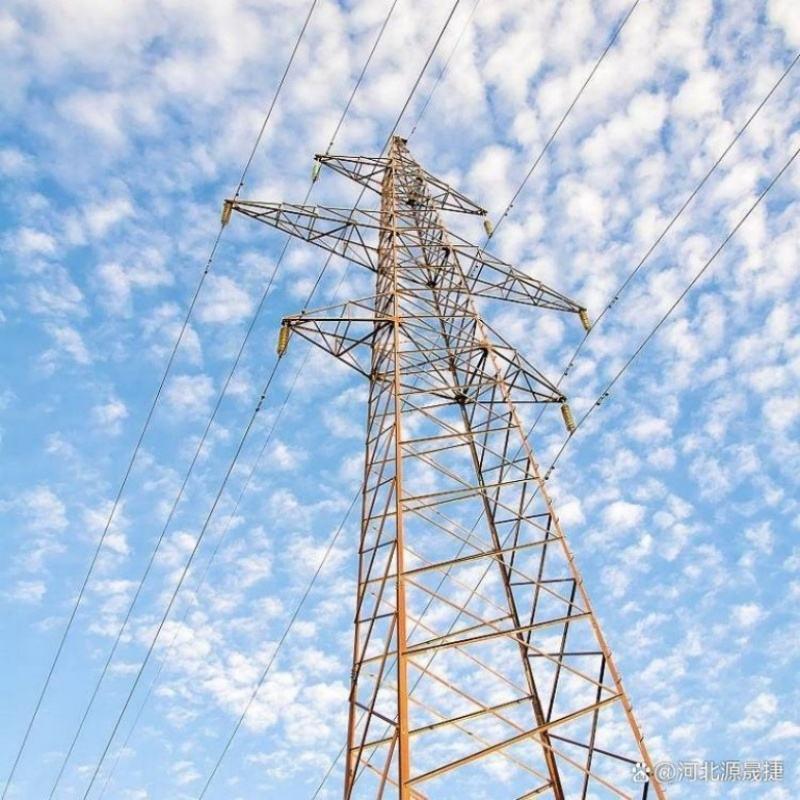
Most tower failures don't happen because of a single dramatic overload. They start with the steel itself. A batch of A36 angles might meet the drawing, but its lower yield strength and looser chemistry leave less margin against micro-cracking at bolt holes and weld toes when the structure cycles through wind gusts. Higher grades like A572 or S355 can carry the same loads with thinner sections, yet the real advantage is fatigue resistance over decades, not just initial stiffness.
Coatings do more than prevent surface rust. In coastal or de-icing salt zones, a 65-micron hot-dip galvanized layer can be consumed within fifteen years at cut edges and abrasion points. Once the zinc is gone, pitting corrosion attacks the base metal and reduces the effective cross-section faster than most owners expect. Upgrading to a thicker zinc layer, a zinc-aluminum alloy, or a duplex system with a topcoat changes the tower's life curve from a maintenance headache to a predictable asset.
What really dictates lifespan is the match between the two. High-strength steel with a thin, scratched coating will still rust and crack at the corrosion pits. Conversely, an excellent coating on weak steel cannot stop fatigue from propagating once it starts. Towers that last are typically designed with a grade suited to the load spectrum and a coating chosen for the specific exposure class, then inspected for coating damage before the underlying steel pays the price.
Customizing Tangent Towers Without Losing Standardization
Most people assume that once you start tweaking the geometry or cladding of a tangent tower, you've abandoned any hope of interchangeability. That assumption usually comes from watching too many bespoke projects spiral into one-off part numbers. In practice, you can hold onto a standardized core—the load path, the connection interfaces, the safety margins—while still allowing the parts that actually meet the eye or the operator to shift. Think of it like changing the cabin trim on a vehicle without re-engineering the chassis.
One way to keep that balance is to define a fixed skeleton and a flexible skin early on. The skeleton includes the tower's primary structural nodes, the positions of climbing rails or cable trays, and the bolt patterns that every contractor already knows. The skin covers things like panel profiles, corner returns, and attachment brackets for signage or sensors. As long as the skin never forces a change to the skeleton's tolerances, you can offer clients real visual or functional variety without multiplying your inventory or rewriting your installation manuals. The result is a catalog that feels less like a rigid menu and more like a set of compatible modules.
Inspection Points That Matter More Than Certificates
A certificate tells you what a batch should have been, not what the person on the line actually measured at 2 p.m. on a Friday. The inspection points that catch real problems are rarely glamorous: weld penetration at the back of a bracket, material thickness near a mounting hole, or the way a gasket sits after the third tightening. Paper trails are easy to store and harder to argue with, but they don't catch the burr left inside a pipe or the paint that's already flaking at the edge of a cutout.
Run your thumb along the inside of a load-bearing seam. Cycle a hinge past its rated count and listen for the change in sound. Put a caliper on the spot where the material tapers and see if the drawing tolerance holds when nobody is watching. These are the checks that reveal whether a supplier built the first article carefully and then quietly switched to a cheaper coil or a faster cooling time once the audit was over.
A useful habit is to ask to see the reject pile, not the showroom samples. The units that failed tell you how the line handles trouble: whether someone circled the defect in marker, whether the rework is honest, or whether the same flawed casting shows up again with a fresh coat of paint. Certificates summarize a promise. The inspection points you can touch, flex, and measure are the ones that tell you if the promise survived contact with the factory floor.
Moving Steel Across Hard Terrain on Schedule
Hauling steel beams over a mountain pass with washouts and loose shale demands more than a capable truck. The crew walks the route twice before the first load moves, marking soft shoulders and checking bridge weight limits. One delay at a river crossing can ripple into a missed window for the crane team, so every fuel stop and permit checkpoint is timed to the minute.
When the terrain turns to deep mud or rubble, the standard flatbed gets swapped for a lowboy with extra axle spacing. Chains and binders are rechecked after the first five miles, then again after any steep descent. Drivers communicate by radio relay rather than relying on cell coverage, passing along notes about oncoming traffic and freshly eroded edges.
Staying on schedule isn't about driving faster; it's about eliminating guesswork. The project manager keeps a rolling buffer of six hours for weather or mechanical trouble, but that buffer only works if the loading crew has the steel staged correctly before dawn. At the delivery site, the receiving team confirms the drop sequence so the truck doesn't sit idle while a crane repositions.
What Happens After the Last Bolt Ships
After the last bolt ships, the quiet is almost startling. The production floor that vibrated for months now sits still, and the trucks pulling away carry more than hardware—they carry the weight of every late-night fix and last-minute supplier scramble. That moment isn’t an ending, though. It’s a shift from building to watching, from pushing toward a launch date to living with what you’ve made.
For the team, attention turns quickly to the details that never made the cut. Field reports start trickling in, and each one reads like a small test of everything decided months ago. The torque spec you fought over, the coating choice you worried about—now they either hold up or they don’t. It’s uncomfortable, but it’s also the only honest feedback loop left. Nobody schedules a meeting for this part; it just happens in the margins of the next project’s kickoff.
Then comes the slower work: documenting the failures nobody saw coming, calling the vendor about a tolerance drift, and drafting the retrofit notes you hope never leave the server. The product you shipped isn’t frozen—it’s just entered a different phase, one where your hands are further away but the responsibility hasn’t shrunk. The last bolt may be gone, but the conversation about it is only getting started.
FAQ
Start with the factory's track record on similar voltage levels and tower weights. Ask for project references where the terrain or climate matches your own, not just a generic list. Check whether their engineering team can handle custom load cases without always deferring to external consultants. In-house galvanizing or a tightly controlled subcontractor matters more than people assume.
A factory that only produces standard tangent towers will struggle when you need a 10-degree line angle or a reduced base width for narrow right-of-way. Look for design flexibility in cross-arm geometry, leg slope, and bolt pattern rather than just dimensional tweaks. The real test is whether they can re-run tower geometry for gust response in a mountainous corridor without adding weeks to the schedule.
Beyond the usual material certificates and dimensional checks, ask about their incoming inspection for angle steel straightness and surface defects. A good factory will have a documented weld repair procedure for galvanized members and will reject members with excessive dross. They should also perform trial assembly on at least one full tower per batch to catch fit-up issues before shipping.
Experience at 132 kV does not automatically translate to 400 kV or 765 kV. Higher voltage levels mean larger base widths, heavier members, and stricter deflection limits. A factory comfortable with 220 kV towers may underestimate the time needed for jig modification and weld distortion control on a 500 kV tangent tower. Ask how many towers in the 400 kV and above range they have delivered in the last three years.
The mill source for angle steel often determines consistency in mechanical properties. Factories that switch suppliers every quarter to chase lower prices can end up with mixed heat numbers and subtle variations in yield strength. Request a list of approved mills and ask whether they perform independent spectro analysis on incoming batches. Galvanizing thickness and bond strength also matter more than a single average coating weight figure.
Don't rely on a certificate that says 'compliant with IEC 60652'. Ask for load tree calculations based on your actual wind and ice zones, and check whether the factory uses the same partial safety factors your consultant specified. If the project references ASCE 10-97, verify that the design software output includes member slenderness checks and secondary bracing loads, not just the main leg members.
Bundle sizes and packing lists should match your unloading equipment at the destination, not just container capacity. Ask how they protect machined holes and galvanized surfaces during ocean transit. A factory with experience exporting to your region will know how to handle wood packaging requirements, port congestion, and the documentation needed for customs clearance without delaying the tower erection crew.
A solid factory will hold a formal design freeze meeting after the first approval drawings, but before any cutting starts. During that review, they should walk you through every connection detail, including the bolts for diagonal bracing and the clearance between tower body and conductor under maximum swing. Errors caught at this stage cost a few hours of engineering time; the same errors found during trial assembly can add six weeks and thousands of dollars in rework.
Conclusion
Walking through a prospective OEM angle steel tangent tower factory before signing often reveals more than any brochure. Watch how raw angle steel is stored, how jigs are set, and whether the galvanizing line runs at a steady temperature. These details matter because the steel grade—typically ASTM A572 Gr.50 or equivalent—and the zinc coating thickness directly dictate how decades of weather and line tension will treat the structure. A factory that lets you specify bolt-hole patterns, leg extensions, and cross-arm heights without forcing a complete redesign is usually one that understands where standardization ends and project-specific needs begin. That balance keeps lead times short and prices predictable.
Certificates hanging on an office wall count for little if the actual inspection stops are weak. Ask to see the jig alignment check after tack welding, the dimensional audit before galvanizing, and the coating thickness test at several points on each member. These are the checks that catch a twisted leg or a thin zinc patch before it leaves the yard. Once production wraps, moving bundled steel across rough terrain demands more than a low freight quote—look for crating that prevents flange damage, load sequencing that matches erection order, and a factory that tracks shipments until the truck reaches the site. Finally, ask what happens after the last bolt ships: a decent OEM will keep drawings on file, offer replacement members, and answer field questions without treating every call as a new sales opportunity.
Contact Us
Contact Person: antor khan
Email: [email protected]
Tel/WhatsApp: 8613863903569
Website: https://www.qdabtower.com/