

LED Face Mask Company Buying Guide for Glowing Skin
2026-08-20
Glowing skin shouldn’t require a degree in light therapy—yet most LED face mask buying guides read like lab manuals. The real difference between a mask that fades your dark spots and one that fades into a drawer often comes down to the company behind it. That’s where Omeina enters the picture, and why this guide skips the jargon to focus on what actually matters before you spend your money.
What Does 633nm Red Light Actually Do for a Visible Glow?
The 633 nanometer wavelength sits in a sweet spot where light penetrates past the epidermis without scattering uselessly in the top layers. Once it reaches the dermis, it gets absorbed by cytochrome c oxidase inside mitochondria — the same enzyme that drives cellular respiration. That absorption kicks off a cascade: more ATP gets produced, fibroblasts shift into a higher gear, and the skin's repair machinery starts working at a pace you can actually see.
This isn't a surface-level trick. As blood flow improves and inflammation dials down, the skin's texture tightens just enough to reflect light more evenly. The result is a glow that doesn't come from a highlighter or a filter — it reads as rested, oxygenated skin, the kind that makes people ask if you've been sleeping better.
The Uncomfortable Reality of Most LED Mask Fits and How to Spot a Good One
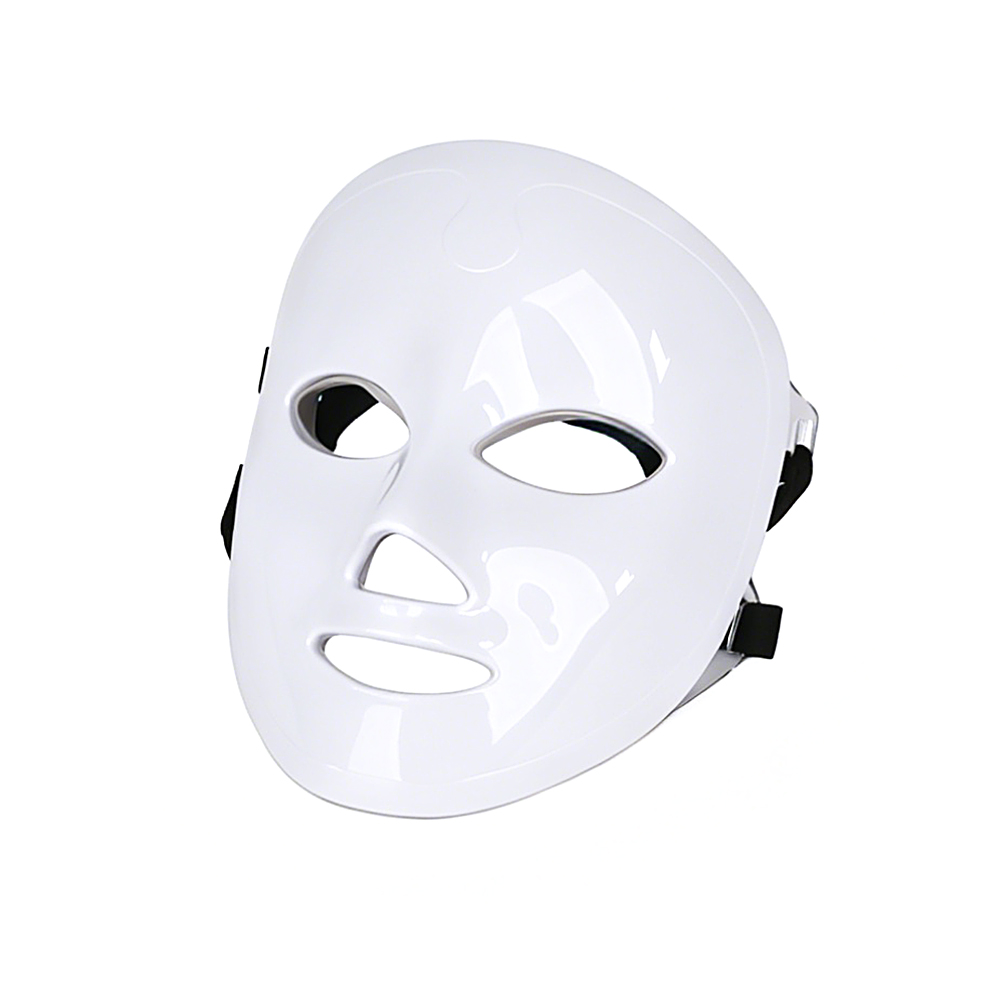
Most LED masks are built around a rigid, one-size-fits-all shell that rarely matches the actual curves of a human face. Noses get pinched, cheeks leave gaps, and the jawline often sits half an inch away from the skin. This matters because light therapy loses effectiveness fast with distance—if the mask doesn't sit flush, you're paying for glow that scatters into the air instead of reaching your skin. People end up pressing the mask with their hands or stuffing tissue into the gaps, which defeats the purpose and makes the whole session feel like a chore.
A good fit starts with flexibility. Look for a mask made from pliable, medical-grade silicone that can bend around the bridge of your nose and wrap slightly toward the temples. Adjustable straps should let you shift tension between the top and bottom of the mask, not just tighten it evenly, because faces are rarely symmetrical in how they carry weight. If you can, check reviews for mentions of different face shapes—people with wider cheekbones or flatter nasal bridges will quickly reveal whether a design actually conforms or just looks contoured in product photos.
Before buying, pay attention to the weight distribution and the way the mask rests on your face. A well-designed mask will support itself from the nose bridge and the area under the eyes, not hang off the ears or dig into the forehead. If the brand doesn't show close-up side profiles or offer a trial period, that's usually a sign the fit is hit-or-miss. Ultimately, the best LED mask is the one you can wear hands-free for ten minutes without adjusting it.
How Often Should You Actually Use an LED Mask for Real Results?
Getting visible changes from an LED mask isn't about blasting your face every single night. For most people, three to five sessions per week hits the sweet spot. That rhythm gives your skin enough exposure to boost collagen and calm inflammation without overwhelming it. If you're just starting out, aim for three short sessions of ten minutes each, then gradually work up to the five-day mark once your skin feels comfortable.
Consistency matters more than intensity. A daily ten-minute routine can be effective, but it's often unrealistic and may lead to skin fatigue or diminished returns. Think of it like exercise: your skin needs recovery time to actually benefit from the light therapy. Skipping a day or two each week lets the cellular repair process kick in fully, so you end up with better long-term results than if you used it every day without pause.
Pay attention to how your skin responds rather than sticking to a rigid schedule. If you notice dryness, redness, or increased sensitivity, scale back to two or three times a week. On the flip side, if your skin tolerates it well and you're targeting stubborn concerns like fine lines or post-acne marks, four to five sessions weekly can accelerate progress. The key is finding a cadence you can maintain for months, not just a few weeks of overuse followed by burnout.
Can a Budget LED Mask Give You the Same Glow as a Luxury One?
The real dividing line between a $50 LED mask and a $500 one often isn’t the number of bulbs but the actual energy hitting your skin. Many budget masks list the same red and near-infrared wavelengths—660nm and 850nm are the usual workhorses—but when measured with a solar power meter, some emit only a third of the irradiance of their premium counterparts. That doesn’t mean they’re useless; it just means you may need to wear them three times longer or use them daily for weeks before noticing that post-facial luminosity.
Where luxury masks tend to earn their keep is in light distribution and material comfort. A rigid, cheap mask can leave hot spots around the nose or gaps near the jawline, so the glow ends up patchy. Higher-end versions use flexible medical-grade silicone and more emitters per square centimeter, which delivers a more even dose. Still, a budget mask with a clearly stated irradiance above 30mW/cm² and a contoured shape can absolutely deliver a visible glow—especially if your main goal is surface brightness rather than deep collagen remodeling.
So, can it give you the same glow? For a quick pre-event radiance boost, yes, a well-chosen budget mask can fake it convincingly. But if you’re chasing long-term firmness and a reduction in fine lines, the extra power and precision of a luxury device will show up in your skin over months. The trick is to ignore brand names and hunt for hard specs: wavelength, irradiance, and fit.
Sensitive Skin Won’t Tolerate Just Any LED Mask—Here’s What to Check
If your skin stings after a short session, the mask itself is often the problem, not the light. Look for a cushion made from medical-grade silicone with no latex, nickel, or phthalates anywhere near the face. Hard plastic frames can trap sweat and bacteria in the creases, and cheap metal studs are a fast route to redness. A flexible, single-piece design that hovers slightly over the skin keeps heat from concentrating on the cheekbones and around the eyes, two zones where sensitive skin tends to protest first.
Pay attention to the light settings before you buy. A mask with only one high-intensity mode leaves no room to adapt, and starting too strong is the quickest way to trigger a flare. Choose a model with at least three brightness levels, a timer that stays under ten minutes, and an automatic shut-off. Also skip any device that comes with scented silicone or requires adhesive gel pads; both introduce unnecessary ingredients. After every use, wipe the surface with a fragrance-free cleaner and let it air dry fully so leftover moisturizer doesn't become tomorrow's irritant.
The Spec Most Buyers Ignore Until It Ruins Their LED Mask Routine
You can count every bulb, compare wavelengths, and still end up with a mask that does almost nothing. The number nobody checks is irradiance—the actual light intensity hitting your skin, measured in milliwatts per square centimeter. A mask with 200 tiny LEDs can deliver less usable energy than one with 60 larger emitters, simply because the diodes are underpowered or spaced too far apart. Without enough irradiance, your ten-minute session becomes a placebo.
This is why two masks with the same red and near-infrared labels produce wildly different results. One might push 40 mW/cm² at the skin surface, while another barely manages 15. Your cells don't care how many lights are inside the plastic shell; they only respond to the dose that actually arrives. If the manufacturer won't publish that number, assume it's low.
Check the fine print before your next purchase. A useful range for at-home devices is usually somewhere between 30 and 60 mW/cm² at the recommended distance—anything far below that means longer sessions for weaker effects, and anything far above needs careful eye protection and shorter exposure. Once you know this one spec, the marketing photos and LED counts stop mattering.
FAQ
Focus on transparency. A good company lists exact wavelengths (not just color names), provides third-party testing or clinical citations, and offers a clear warranty. Look for devices that specify irradiance or energy output, because that determines whether the light can actually reach deeper skin layers. Also check if replacement parts or customer support are easy to reach.
No. The biggest differences come down to wavelength precision, power density, and treatment time. A mask may look similar but if it uses broad-spectrum LEDs without precise peak wavelengths, you might get weaker results. Red light around 630-660nm and near-infrared around 830-850nm are the ranges most linked to collagen support and improved skin tone.
Check for FDA clearance or CE marking if you're in Europe, but also read the user manual for contraindications. People with active skin infections, light-triggered migraines, or certain medications (like photosensitizing drugs) should talk to a dermatologist first. For most skin types, start with the shortest treatment time and watch for any warmth or redness beyond mild post-session glow.
Not necessarily. Many devices show visible improvement with three to five sessions per week over four to six weeks. Daily use can speed things up for some people, but consistency matters more than intensity. If your skin feels dry or irritated, scale back to every other day.
Red light in the 630-660nm window is the workhorse for superficial glow, fine lines, and redness. Near-infrared around 830-850nm goes deeper and may help with firmness. Blue light around 415nm can help with breakouts, but it's not the main glow booster. Avoid masks that only list "red" or "blue" without specific numbers.
Not always. Some premium masks charge for design, brand name, or app features that don't affect light delivery. A mid-range device with precise wavelengths and good power can outperform an expensive one with vague specs. Compare the actual output (mW/cm²) and treatment time needed to reach an effective dose.
Many people with sensitive skin tolerate LED therapy well, but rosacea requires caution. Start with shorter sessions and avoid any added heat or vibration settings. Look for masks that let you adjust intensity or time. If you have active pustules or severe flushing, get a dermatologist's approval before using it.
Most users see a subtle glow after about two to three weeks of consistent use, with more noticeable texture and tone changes around eight to twelve weeks. Photos taken in the same lighting can help you track progress. If nothing changes after three months, the device may not be delivering enough energy or your expectations may need adjusting.
Conclusion
The real takeaway for anyone shopping for an LED face mask aimed at glowing skin is that 633nm red light penetrates just deep enough to kickstart collagen and calm redness, but that glow only shows up if the mask actually stays flush against your face. Ill-fitting masks leak light around the nose and jaw, so look for flexible silicone, adjustable straps, and contours that don't leave gaps. Consistency matters more than intensity; three to five short sessions a week usually beat one long weekly session because skin needs time to recover and rebuild.
Budget masks can work if they nail the right wavelength and irradiance, but luxury devices often earn their price through more even LED coverage and better build quality. If your skin is sensitive, skip anything with added heat, fragranced cleaning solutions, or unshielded near-infrared modes unless you patch-test first. And don't ignore the one spec that quietly ruins routines: battery degradation and charge port durability. A mask that dies mid-session or won't hold a charge becomes a chore, so check user reports on battery life before buying, not just the LED count.
Contact Us
Contact Person: Tina Liu
Email: [email protected]
Tel/WhatsApp: 8618681405932
Website: https://www.omeinabeauty.com/