

Leather Office Chair Factory Tour Highlights Quality Craftsmanship and Ergonomic Design
2026-10-27
Step inside the OFCJNS factory and you’ll quickly see why their leather office chairs stand apart—every stitch, every curve, every adjustment point is a deliberate choice. What starts as raw hides and steel frames becomes a masterclass in quality craftsmanship and ergonomic design, and this tour gives you a front-row seat to the process. But here’s the part that surprised us: the details you can’t see from a product photo are exactly what make these chairs worth a closer look. Ready to see how comfort is built from the ground up?
Where Raw Hides Meet the First Cut
Every hide arrives with its own history—scars from pasture life, variations in thickness, the subtle map of growth rings. Before any machine takes over, a cutter walks the length of the leather, pressing a palm flat to feel for weak spots. The first cut is rarely straight; it follows the grain, separating the dense back from the looser belly. This is where judgement replaces template, and a single wrong angle can waste a square foot of material. You don't just cut a hide. You read it.
In most tanneries, the initial trimming happens fast, driven by yield calculators. Here, the pace is deliberately slower. A curved knife traces the outline of the hide, skirting around barbed-wire scars and brands rather than cutting through them. Those marks aren't flaws to be discarded—they're evidence of an animal's life, and the best artisans know how to position them so they disappear into a seam or become a quiet detail on the underside of a bag. That first pass with the blade sets the entire project's tone. Rush it, and every downstream step inherits the mistake.
The meeting of raw hide and first cut also defines what can be made. A thick shoulder might be reserved for a belt, while a softer flank gets set aside for lining. Watching a skilled cutter work is like watching a tailor lay out pattern pieces on fine wool—except the material was recently breathing. There's no reset button. Each incision commits the leather to a purpose, long before it's stitched, dyed, or burnished.
Stitching Stations That Demand a Steady Hand
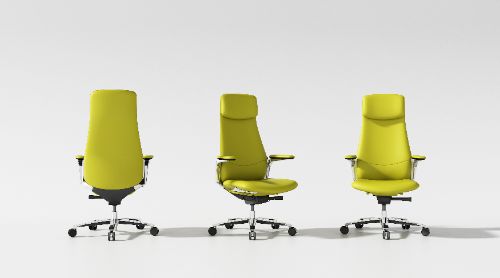
A stitching station built for handwork keeps every tool from walking away. Set the stitching pony at elbow height, clamp the piece so the seam line sits level with your dominant eye, and angle the light so it rakes across the surface. That low-angled glow picks out each punched hole and turns the thread's twist into a guide rather than a guess.
The real trick is arranging the sequence so your hands never cross paths. Wax, awl, needles, thread snips—lay them in the order you reach for them, left to right. Then run the awl through the hole once, follow with two needles, and draw the thread flat before the next bite. A steady hand isn't just practice; it's a station that removes every reason to rush or readjust.
The Ergonomic Blueprint Brought to Life
The chair's backrest doesn't just tilt—it mirrors the subtle S-curve of your spine, adjusting its lumbar support as you shift from typing to leaning back in thought. The seat pan glides forward when you cross your legs, and the armrests drop slightly to let your elbows rest at a natural angle, as if the chair had been studying your posture all day.
Every surface that touches your body is pressure-mapped and sculpted, not simply padded. The front edge of the cushion is waterfall-cut to take weight off your thighs, while the headrest cradles the base of your skull without pushing your chin forward—a small detail that makes late-night video calls feel less like a neck workout.
Even the recline mechanism follows a 2:1 ratio, moving the seat half the distance of the backrest so your eyes stay level with the screen and your feet stay planted. It's the difference between sitting in a chair and wearing one that adapts to the way you actually move.
Stress Tests That Separate Good from Great
Most companies treat stress tests as compliance exercises—check a box, present a clean report, move on. That's precisely why they stay good and never touch great. A real stress test doesn't ask whether your system can hold under a 30% demand spike; it asks whether your people can make hard calls when the data contradicts the plan, the budget is already spent, and the deadline refuses to move. Good teams optimize for the forecast. Great teams build for the day the forecast breaks.
The difference shows up in the small moments before a crisis hits. Watch how a leadership group reacts when a key supplier misses a shipment or a top engineer resigns on a Tuesday morning. Good managers scramble to restore the old normal. Great ones use the rupture to question what the old normal was costing them. They don't ask "How do we recover?" They ask "What were we tolerating that made this failure inevitable?"
Over time, this becomes a cultural fingerprint. Organizations that treat stress not as an interruption but as a diagnostic tool stop being surprised by volatility. They expect their assumptions to be wrong somewhere. So they build decision-making habits that stay sharp under friction—short feedback loops, honest postmortems that don't hunt for scapegoats, and a bias toward fixing root causes over patching symptoms. That's the quiet line between good and great: good survives the test, great becomes harder to break.
Choosing Leather That Ages Gracefully
Look beyond the finish when you're picking out leather. Full-grain hides keep the original surface intact, which means every scratch and scuff becomes part of the story instead of an eyesore. Cheap corrected leather hides that character under a plastic coat—it looks uniform in the store but peels and cracks within a couple of seasons. If you want that lived-in glow, skip the shiny stuff and go for something that already feels a little alive.
Tanning matters just as much. Vegetable-tanned leather darkens and develops a patina as it absorbs oils and sunlight, while chrome-tanned pieces tend to stay flat and lifeless. Check the edges and the back—natural, slightly rough surfaces age far better than the painted, sealed ones. And don't be afraid of marks or color variation; those are signs the leather will grow more interesting, not less, with every year you carry it.
Final Assembly: When Comfort Gets Its Shape
Every cushion, every curved edge, every stitch that holds the upholstery together—this is where the concept of comfort stops being an idea and starts occupying real space. The final assembly line moves with a deliberate rhythm, each station adding one more layer to the feeling you'll notice the moment you sit down. There's no rush here, only the quiet confidence that comes from knowing each piece has earned its place.
The alignment of the frame matters more than most people realize. A millimeter off in the armrest, a slight twist in the base, and the whole posture of the chair shifts. Technicians check and re-check these connections not because the specs demand it, but because they know that true comfort lives in the details you never consciously notice. The last thing attached is usually the smallest: a clip, a cap, a final screw that locks everything into a single, unified form.
When the finished piece rolls off the line, it doesn't look like a collection of parts anymore. It looks like a decision—a promise that the shape you see matches the ease you'll feel. And that's the whole point of this stage. Not just to put things together, but to make sure that when comfort finally gets its shape, it holds it.
FAQ
The tour reveals full-grain hides selected for natural grain patterns and scars, then conditioned with a wax finish that develops a deeper patina over time instead of wearing flat.
Workers test every chair on a simulated seating rig for eight hours, adjusting lumbar tension and seat depth until pressure mapping shows even weight distribution across the thighs and lower back.
Many visitors are caught off guard by the hand-pulled saddle stitching along the armrest seams, where a single artisan uses two needles and waxed thread to lock each stitch without a hidden knot.
The tilt mechanism gets the most scrutiny, cycling through 250,000 reclines while measuring torque consistency, noise, and rebound speed so the chair never feels loose or jolts you forward.
Yes, the factory keeps a dye room where you can pick from twelve base tones, then request a hand-rubbed burnish that darkens the edges and creases for a more lived-in look.
Each chair has its headrest angle, armrest sway, and seat slider set by a technician who sits in it briefly, then fine-tunes the resistance knobs to match the buyer's height and weight notes.
They use CNC cutters for the main hide panels to reduce waste, but all load-bearing seams are finished on vintage walking-foot machines that give the thread a slight lift, preventing flattening under tension.
Conclusion
Stepping onto the production floor, the first thing you notice is the deliberate pacing. Raw hides are sorted and marked before the initial cut, with workers reading the grain and thickness by eye and touch. It is not automated guesswork; it is a practiced judgment that sets the tone. Nearby, stitching stations hum with a quieter intensity. Every seam follows a penciled path, and the operators guide leather through industrial machines with the kind of steady hand that only comes from repetition. You can see the ergonomic blueprint materialize in the chair frames staged along the wall, with lumbar curves, waterfall seat edges, and adjustable armrest geometry all mapped from earlier prototypes, now being translated into real components.
Durability gets its turn in the testing area, where chairs are rolled, rocked, and pressure-loaded far beyond normal use. It is here that the difference between good and great becomes obvious: welds hold, gas lifts stay smooth, and mesh back panels keep their shape. Material choice matters too. The leather is selected not just for its initial sheen but for how it will crease and soften over years, with full-grain hides favored for their natural markings and patina potential. At the final assembly station, all these pieces come together. Foam density, lumbar tension, and seat depth are checked by hand before the chair is boxed. By the end, the tour feels less like a manufacturing walkthrough and more like a study in quiet precision, where comfort is built, not just assumed.
Contact Us
Contact Person: Diff Wang
Email: [email protected]
Tel/WhatsApp: +8613650281199
Website: https://www.ofcmeshchair.com/