

How Digital Inkjet Marking System Factories Are Revolutionizing Industrial Printing
2026-07-14
Industrial printing is undergoing a quiet revolution, driven by the rise of digital inkjet marking system factories. Gone are the days of slow, rigid processes—today’s production lines demand speed, precision, and adaptability that only advanced inkjet technology can deliver. At the heart of this shift is Danmajet, pushing boundaries with systems that seamlessly integrate into modern workflows. From packaging to electronics, these innovations are not just improving efficiency but redefining what’s possible in industrial marking. Let’s dive into how this transformation is unfolding.
Inkjet Innovation: The Factory Floor Goes Digital
Walk onto a modern factory floor, and you might be surprised to find that the rhythmic clatter of mechanical arms is now accompanied by the soft whir of inkjet printheads. Digital printing has moved beyond paper and packaging, embedding itself directly into production lines for textiles, ceramics, electronics, and even automotive parts. This shift is about more than just putting ink on a surface—it’s a fundamental rethinking of how products are customized, decorated, and assembled in real time.
The appeal lies in agility. Unlike traditional methods that require screens, plates, or molds for each design variation, inkjet systems can switch patterns on the fly with a simple software command. A single printhead array can deposit conductive inks for circuit traces, UV-curable coatings for textured finishes, or pigment-based decorations on curved surfaces—all without stopping the line. This adaptability allows manufacturers to produce short runs economically, personalize products at scale, and reduce waste from setup materials.
Behind the scenes, the real innovation is in the data. Every drop of ink carries a digital instruction, and every printhead is a node in a larger network that monitors viscosity, temperature, and jetting accuracy. Maintenance becomes predictive, not reactive, and quality control is baked into the process with in-line cameras and machine learning algorithms. As factory floors evolve into interconnected digital environments, inkjet technology is quietly dissolving the old barriers between design, prototyping, and mass production.
From Stamping to Spraying: A Marking Evolution
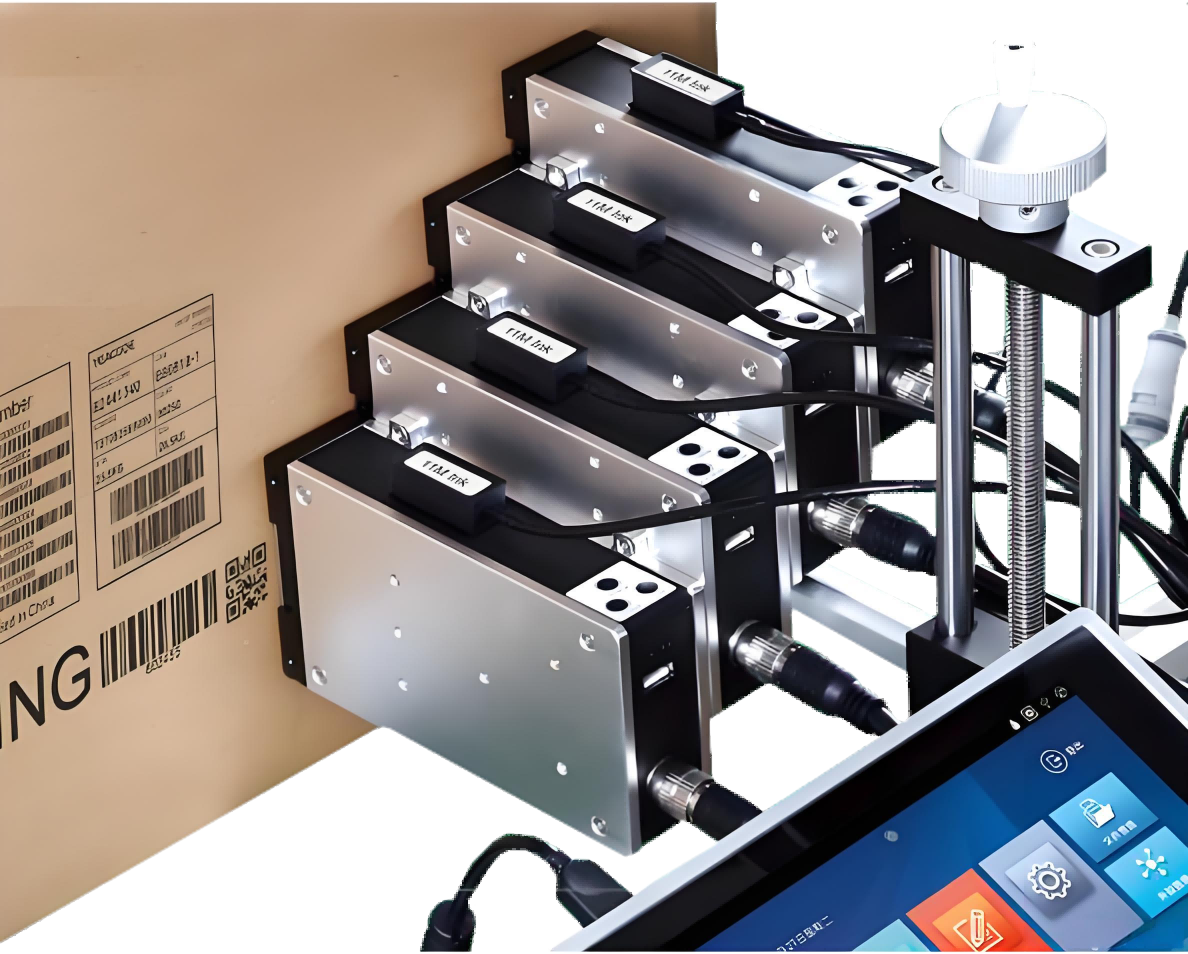
For decades, stamping reigned as the go-to method for imprinting metal and plastic components. Heavy presses thudded down with authority, leaving behind crisp alphanumeric codes and logos. It was a world of dies and impact, where permanence was forged through pressure. Yet for all its reliability, stamping came with a hidden cost—surface stress, die wear, and a stubborn inflexibility when production lines demanded rapid changeovers.
Then the spray gun arrived, quiet and agile. Instead of brute force, it relied on precision and fluidity. Ink, laser-activated coatings, or micro-droplets of paint could be applied with pinpoint accuracy, adapting instantly to different materials and shapes. The clatter of the stamp gave way to the soft hiss of atomized marking, and suddenly, what once required a dedicated die could be done with a programmable pattern. The equipment footprint shrank, maintenance cycles lengthened, and the very texture of marking became lighter—less about denting the surface and more about dancing on it.
This shift wasn’t just a technical upgrade; it signaled a deeper rethinking of industrial identity. Where stamping spoke of brute permanence, spraying introduced the idea of precision without trauma. Parts that once bore the faint stress lines of impact now carried coatings that could be vivid, scannable, and even temporary if needed. The evolution from stamping to spraying mirrors a broader industrial trend away from mechanical domination and toward adaptive, surface-respecting technologies—a quiet revolution written not in stamped letters, but in sprayed symbols.
Precision at Speed: How Inkjet Redefines Production Lines
Inkjet technology deftly handles micro‑positioning tasks that once slowed entire shifts. Droplets land within microns of their target even as conveyor belts surge past 300 feet per minute, a balance that older marking systems could only approximate by sacrificing either clarity or pace. The printhead’s adaptive waveform control adjusts droplet volume and trajectory in real time, ensuring legible batch codes on curved glass, splinter‑prone lumber, or heat‑sealed film without a single pause for recalibration.
Beyond flat surfaces, high‑velocity inkjets now embed variable data into products while they’re still in motion, from best‑before stamps on yogurt cups to QR codes on circuit boards. This integration slashes the need for dedicated drying stations because the ink grabs hold almost immediately, even on challenging substrates like recycled cardboard or powder‑coated metal. As a result, packaging lines shrink physical footprints and energy loads, turning what was once a bottleneck into a silent, three‑centimeter gap that barely registers.
Customization Unleashed: Batch-of-One Becomes Reality
The long-held promise of mass customization has finally shed its constraints, moving from a niche marketing slogan to a tangible production capability. Advanced digital manufacturing platforms now seamlessly weave together customer inputs and automated workflows, collapsing the traditional distance between a fleeting individual preference and a finished, singular item. A shoe designed to the exact contours of a foot, a nutritional supplement blended for a specific genetic profile, or a piece of furniture adjusted to fit an awkward corner—these are no longer theoretical exercises but items born from systems that treat a one-off request with the same efficiency as a thousand-unit run.
Behind this shift is a quiet revolution in industrial thinking: the decoupling of variety from cost. Flexible production cells, driven by real‑time data and modular tooling, reconfigure themselves on the fly, mocking the old logic that demanded massive batches to justify expense. The real magic, however, lies in the digital thread—a continuous loop that captures a person’s choices at one end and triggers a chain of autonomous production steps at the other, all without human intervention. This isn’t simply about adding options to an online configurator; it’s about building an infrastructure where the act of choosing directly initiates manufacturing, making true batch-of-one not just possible, but economically natural.
The Green Side of Ink: Sustainability in Industrial Marking
In an era where environmental responsibility shapes business decisions, industrial marking is quietly reinventing itself. The inks and solvents long relied upon—often petroleum-based and heavy on volatile organic compounds—are giving way to formulations that prioritize biodegradability and lower toxicity. This shift isn't merely about regulatory compliance; it's a reflection of a deeper change in how manufacturers view their role in the ecosystem.
Water-based inks, once considered ineffective for demanding industrial applications, have evolved dramatically. Modern versions now deliver the durability and adhesion required for harsh environments while virtually eliminating hazardous air pollutants. Alongside them, UV-curable inks are gaining traction for their solvent-free nature and energy-efficient curing processes. These advancements mean that marking parts, packaging, or products no longer forces a trade-off between legibility and ecological impact.
Beyond ink chemistry, sustainability extends to how marking systems are designed and deployed. Closed-loop recycling of unused ink, cartridge-based dispensing to minimize waste, and equipment built for longevity rather than planned obsolescence all contribute to a greener footprint. Even the choice of continuous inkjet versus drop-on-demand technology can affect resource use. The result is a quiet revolution where sustainability becomes embedded in the marking process itself, not just a label on a spec sheet.
Smart Factories, Smarter Printing: Connectivity Drives Change
In today’s manufacturing landscape, the line between digital and physical continues to blur. At the heart of this transformation lies a simple yet profound shift: machines that talk to each other. When printers on the factory floor are no longer isolated output devices but connected nodes in a vast network, the entire production rhythm changes. Real-time data flows guide every impression, adjusting ink viscosity, alignment, and speed without human intervention. It’s not just about replacing manual checks; it’s about creating a system where the press anticipates issues before they become downtime, learning from its own output to sharpen precision with every cycle.
This connectivity extends beyond the shop floor. Imagine a design team in one city finalizing a package layout while the production line on another continent receives the file and automatically configures itself for the job. Cloud-based workflows allow version control, color profiles, and client approvals to happen seamlessly, slashing the typical back-and-forth that can delay campaigns. Meanwhile, sensors embedded across the printing press feed health metrics back to both the on-site team and the equipment manufacturer, enabling predictive maintenance that sidesteps catastrophic breakdowns. The result? A dramatic drop in unplanned stoppages and a measurable boost in overall equipment effectiveness, all driven by a thread of data that weaves through every operation.
What makes this shift truly transformative is how it redrafts the role of human expertise. Instead of babysitting machines, operators become interpreters of a rich stream of information, steering production with insights rather than gut feelings. Connectivity also paves the way for mass customization—small, varied print runs that remain cost-effective because the systems adjust on the fly. As factories begin to share data in secure, anonymized pools, the industry edges toward a collective intelligence where one facility’s lesson becomes everyone’s gain. It’s a quiet revolution, one where the smart factory doesn’t just print—it thinks.
FAQ
It's a non-contact printing technology that propels tiny droplets of ink onto surfaces to create codes, dates, logos, and other information directly on products or packaging as they move along production lines. It’s fast, versatile, and works on almost any material, from metal to plastic to glass.
Unlike analog methods like pad printing or hot stamping, digital inkjet doesn't need plates, screens, or physical contact. That means quicker changeovers, less waste, and the freedom to print variable data on the fly without stopping the line. Cleanup and maintenance are also far less messy.
You’ll see it everywhere from food and beverage packaging to automotive parts, electronics, pharmaceuticals, and building materials. Basically, any sector that needs permanent, readable codes for traceability or branding is jumping on board.
Speed and flexibility are the big draws. With digital inkjet, a single line can switch between print jobs in seconds, handle short runs cost-effectively, and eliminate the inventory of pre-printed materials. Plus, direct-to-part marking opens up new design possibilities for product customization.
Absolutely. Modern systems are built for speed, with printheads that deliver precise, durable marks even on items whizzing by at hundreds of meters per minute. Advanced curing technologies ensure the ink dries almost instantly, so there’s no bottleneck.
Definitely. They cut down on solvent use, reduce consumable waste like labels and ribbons, and often use UV-curable or water-based inks that are less harmful. Because they print only what’s needed, material waste is minimal, and energy consumption tends to be lower than older methods.
The main hurdles are getting the integration right with existing production lines and training operators to tweak print parameters for different substrates. Ink adhesion can be tricky on some surfaces, and there’s an upfront cost. But once dialed in, the payback is usually swift.
They’re printing unique identifiers like QR codes, barcodes, and batch numbers directly onto items, making it easy to track products through the supply chain. This helps with recalls, anti-counterfeiting, and meeting regulatory standards without slowing down production.
Conclusion
Digital inkjet marking systems are transforming factory floors by replacing outdated stamping and labeling methods with high-speed, non-contact spraying. This shift brings exceptional precision and adaptability to production lines, allowing manufacturers to print variable data, complex codes, and even vibrant graphics directly onto products without slowing throughput. The move from rigid mechanical processes to agile digital workflows enables batch-of-one customization at scale, making it feasible to tailor marks for individual items without costly setup changes.
Beyond efficiency, this technology supports sustainability by eliminating consumables like ribbons and solvents, reducing waste and energy use. Integrated with smart factory ecosystems, these systems leverage real-time data and connectivity to dynamically adjust prints, trace products across supply chains, and minimize errors. Together, these advances are reshaping industrial printing into a cleaner, smarter, and more responsive operation, where marking becomes a strategic tool for quality and agility rather than a mere post-production step.
Contact Us
Contact Person: Jacky
Email: [email protected]
Tel/WhatsApp: 086 15000607053
Website: https://www.danmajet.com