

High Output PP Hollow Grid Board Production Line: Key Features and Efficiency Gains
2026-10-27
What if you could double your hollow grid board output without expanding your plant? It sounds like a stretch, but COMRISE has made it a reality with its new high-output PP production line, and the efficiency gains go far beyond raw speed.
Why the Melt Pump Now Sets the Pace for the Whole Line
The melt pump has quietly shifted from a supporting component to the heartbeat of modern extrusion lines. In the past, screw speed dictated output, and the pump simply smoothed out pressure spikes. Today, tighter tolerances on film thickness, sheet gauge, and pellet consistency have inverted that relationship. The pump now sets the volumetric throughput, and the extruder adjusts to keep the pump inlet pressure stable. Operators no longer ask how fast the screw can turn—they ask how precisely the pump can deliver.
This change is visible in every corner of the plant. Downstream equipment, from calenders to pelletizers, is tuned to the steady discharge curve of the pump. Start-up procedures have been rewritten around pump speed ramps rather than screw RPM. Even raw material variations, once absorbed by overfeeding the screw, are now managed by the pump's metering accuracy. The line runs at the pace the pump allows, and pushing the extruder harder simply builds inlet pressure without increasing output.
The reason is straightforward: consistency beats volume in most value-added extrusion. A pump that delivers 2% flow variation line-wide removes the need for oversized downstream cooling or stretching capacity. That savings in capital and energy makes the pump the natural governor. When a line is upgraded now, the first question is often which pump size matches the desired output—not which extruder diameter. The pump has become the reference point, and everything else follows its lead.
The Calibration Sleeve Swap That Removes a Classic Speed Limit
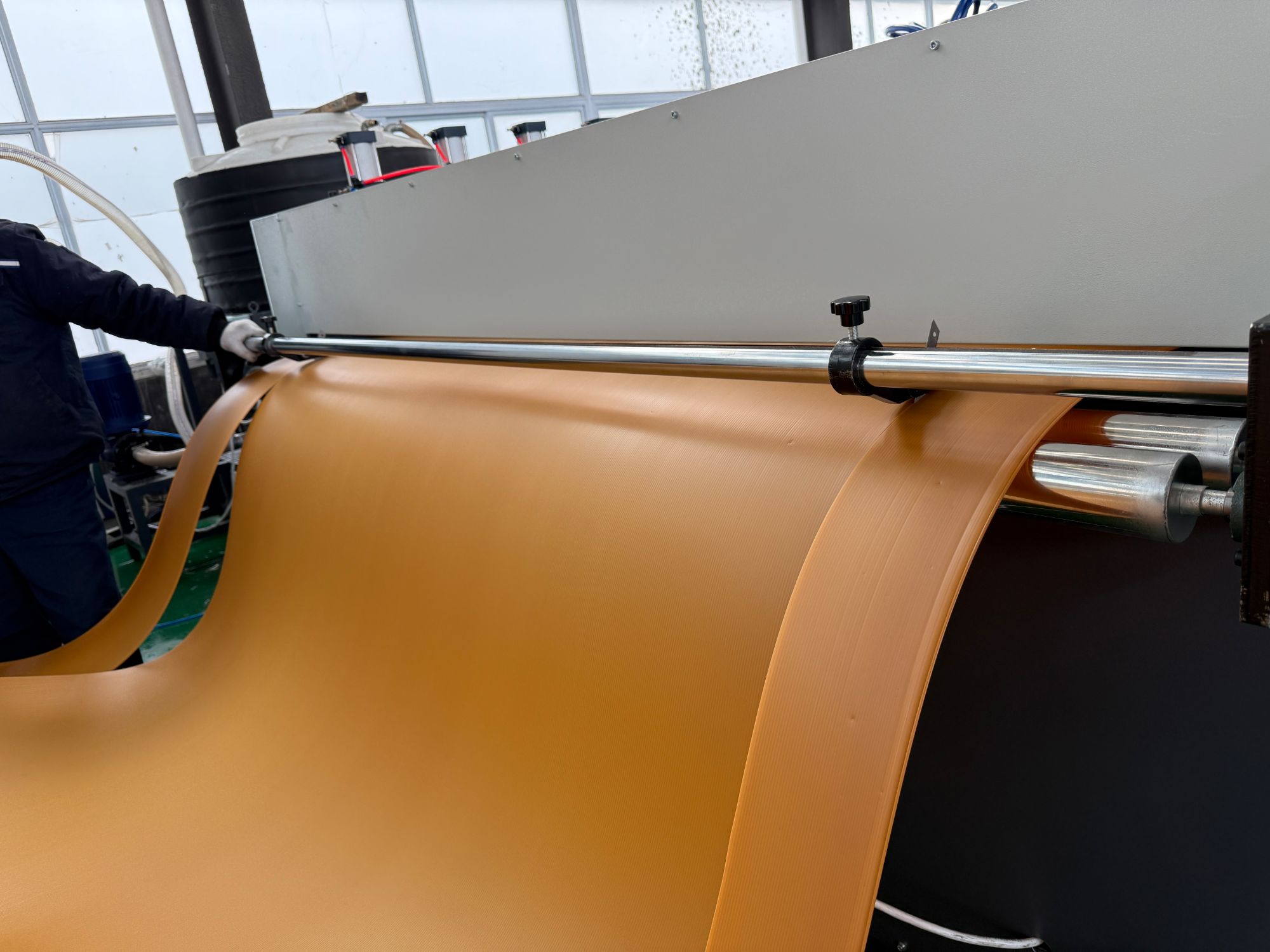
For years, that capped top speed wasn't a motor limitation—it was a calibration sleeve quietly doing its job too well. The original part leaves just enough play in the alignment to trigger protective slowdowns at higher velocities. Swapping in the redesigned sleeve removes that trigger entirely, letting the motion system hold its line without second-guessing the sensors.
The swap itself takes about ten minutes and doesn't require tearing down the entire assembly. Pop the old sleeve, slide the new one into place, and retighten a single retaining screw. Tight-tolerance machining and a subtle taper at the contact edge mean fewer micro-corrections mid-run, so the controller stops cutting speed to compensate for wobble it no longer detects.
Once fitted, the change shows up as a higher usable velocity ceiling and far fewer stutter-stops on long traverses. It's not a dramatic overhaul on paper, but the quiet confidence at speed—and the extra minutes shaved off every cycle—make it one of those small fixes that feels overdue.
What High-Output Really Means for Energy Use Per Square Meter
In most facilities, energy use per square meter is treated as a fixed score—lower is almost always assumed to be better. But in high-output operations, that assumption starts to crack. A production floor that doubles its throughput rarely doubles its energy draw. Lighting, cooling, and humidity control all climb, but the energy burned per unit of finished output often falls sharply. That ratio tells a much more useful story than raw watts per square meter.
High-output environments squeeze more equipment and more process load into the same footprint. As a result, kWh per square meter can rise even while the operation becomes more efficient. Two rooms with identical lighting power density can deliver wildly different output because of temperature stability, airflow patterns, and how well the systems are tuned. The number that matters is energy per kilogram, per liter, or per completed unit—not energy per floor area alone.
Chasing higher output rarely produces a straight-line increase in energy cost. Cooling and dehumidification often grow faster than lighting, especially in tightly sealed rooms. That can make the per-square-meter figure look bad even when the facility is performing well. If the extra energy buys more than a proportional increase in product, the operation may still have a lower total energy footprint per unit than a lower-output competitor. The real test is whether the added power delivers added value, not just a higher reading on a meter.
Inside the Die Design That Keeps Web Thickness Steady at 12 m/min
Keeping web thickness within a tight tolerance at 12 m/min comes down to how the manifold distributes melt before it ever reaches the lip gap. Instead of relying on a single straight channel, the die uses a progressively tapered cross-section that evens out pressure drop across the full width. That geometry alone removes most of the edge-to-center variation that would otherwise show up as thin bands once the web is drawn down.
The lip adjustment system is deliberately coarse on the upstream side and fine at the final land. Operators can nudge localized flow with differential bolts, but the real stability comes from the short, polished land length just before the exit. It damps out small surges from the extruder without creating excessive backpressure, so the melt curtain leaves the die at a nearly constant velocity across all points.
Thermal control matters just as much as geometry at this line speed. Cartridge heaters are zoned to keep the die body within a few degrees from center to edge, preventing viscosity drift that would silently change the sheet profile. With the choker bar set once for a given resin, the same die holds thickness steady run after run, even as ambient conditions shift through a shift.
How Automatic Roll Changes Turn Downtime Into a Non-Event
For years, swapping out worn rolls meant shutting down the line, gathering a crew, and watching the clock burn. Automatic roll change systems flip that script entirely. The moment sensors detect a roll nearing end-of-life, the machine stages a fresh roll, splices the web on the fly, and ejects the spent core without ever dropping tension. Operators barely glance up from their monitors.
The real payoff shows up in the production log. What used to be a scheduled fifteen-minute stop now registers as a two-second blip—if it registers at all. Because the changeover happens at full line speed, there's no ramp-down, no ramp-up, no scrap from restart transients. Quality stays flat across the splice, and downstream processes never notice the handoff.
Maintenance teams like it for a different reason: fewer emergency interventions. The system's predictable cycle count means roll wear becomes a data point instead of a surprise. When a change does occur, it's a choreographed sequence of clamps, arms, and adhesive strips—not a scramble with pry bars and hoists. That's how a formerly disruptive task becomes just another background rhythm on the floor.
The Cooling Section Tweak That Lets You Push Line Speed Without Warping
Most warping at higher line speeds traces back to uneven heat removal across the profile. A simple adjustment to the cooling section—offsetting the upper and lower air nozzles by a few millimeters—changes the quench pattern enough to keep the extrusion from bowing as it exits. Instead of blasting both sides symmetrically, you let the side that tends to contract first get slightly less initial cooling, which equalizes shrinkage stresses.
On a lot of lines, the factory-set nozzle gaps are too generous for thin-wall or asymmetrical profiles. Closing the gap on the slower-cooling side while opening it on the opposite side forces the part to straighten out before it reaches the puller. It costs nothing but an hour of trial runs, and once you map the right offset for a given die, you can push the line speed up another 10–15% without seeing a banana come off the saw.
The real trick is to stop chasing die corrections and look at what the cooling tank is doing. Adding a set of adjustable baffles just after the first spray ring lets you redirect water flow away from the corners that always curl. That local change often eliminates the need for slower line speeds or extra straightening downstream.
FAQ
Look beyond the nameplate capacity. High output units pair a 120 to 150 mm extruder screw with a gear pump that stabilizes melt pressure before the die. That lets the line hold a steady 800 kg per hour while keeping the board's rib structure intact, which standard lines struggle to do above 500 kg per hour.
The melt filtration setup plays an outsized role. A dual-piston screen changer with continuous operation removes contaminants without stopping the line, and combined with internal bubble cooling in the calibrator, you can push faster haul-off speeds. Those two changes alone often lift daily output by 18 to 22 percent.
Higher throughput spreads fixed costs like labor, plant overhead, and machine depreciation over more boards. If a 500 kg per hour line produces a board at 0.42 dollars per square meter, moving to 800 kg per hour typically drops that to around 0.31 dollars, mainly because energy use per kilogram falls once the barrel and die reach thermal equilibrium.
Yes, if the downstream cooling and sizing are matched to the extruder output. You need a calibrator with at least six vacuum zones and a haul-off that pulls evenly across the board width. Without that, you get warpage at speeds above 6 meters per minute. Properly tuned, thickness variance stays under 0.1 mm even at 9 meters per minute.
A gravimetric dosing system is critical. Feeding regrind or virgin PP by volume causes density shifts that force the operator to adjust the screw speed constantly. Gravimetric control keeps the melt index stable, which means the die lips and calibrator settings stay valid for hours, not minutes.
Inspect the screen changer seals every 300 operating hours and replace the breaker plate if the pressure drop exceeds 40 bar. Also, check the calibrator vacuum slots for dust buildup weekly. These steps stop the silent output decline that many plants accept as normal after the first year.
A servo-driven flying saw with auto edge trim removal can keep up with line speeds past 10 meters per minute, whereas a pneumatic cutter often becomes the bottleneck around 7 meters per minute. Automated stacking with adjustable batch counts also removes the need for a dedicated operator at the end of the line, reducing labor cost per unit.
They focus only on extruder size and ignore the cooling capacity. A line rated for 800 kg per hour but with an undersized chiller or short cooling tunnel will force operators to reduce throughput to avoid bowing. The chiller should deliver at least 180 kW of cooling at 10 degrees Celsius for continuous high output.
Conclusion
Replacing the old extruder-driven rhythm with a dedicated melt pump changes the entire dynamic of a high-output PP hollow grid board line. The pump now dictates the pace, smoothing out pressure fluctuations and letting downstream components operate at a steady, predictable rate. Once that bottleneck is removed, the calibration sleeve becomes the next target—swapping in a redesigned sleeve eliminates the speed cap that used to force operators to back off. The result is a line that can run consistently faster without sacrificing board flatness or dimensional stability. High output no longer means throwing more energy at the problem; measured per square meter, energy consumption actually drops because the line spends less time running inefficiently during ramp-ups and adjustments.
The die design deserves attention too. At 12 m/min, web thickness stays uniform because the internal flow channels and lip geometry are tuned for that specific throughput. Automatic roll changes turn what used to be a scheduled interruption into a background operation—splicing and winding continue without stopping the line, so downtime becomes nearly invisible. Finally, the cooling section has been reworked with a targeted airflow and plate layout that extracts heat more evenly. This lets you push line speed beyond previous limits without introducing warping or residual stress. Together, these upgrades create a production line where speed, energy efficiency, and product quality reinforce each other rather than trade off.
Contact Us
Contact Person: LISA LEE
Email: [email protected]
Tel/WhatsApp: +86 13780696467
Website: https://www.qdpipemachine.com