

Electric Heating Reactor Original Manufacturer What to Consider Before Buying
2026-10-25
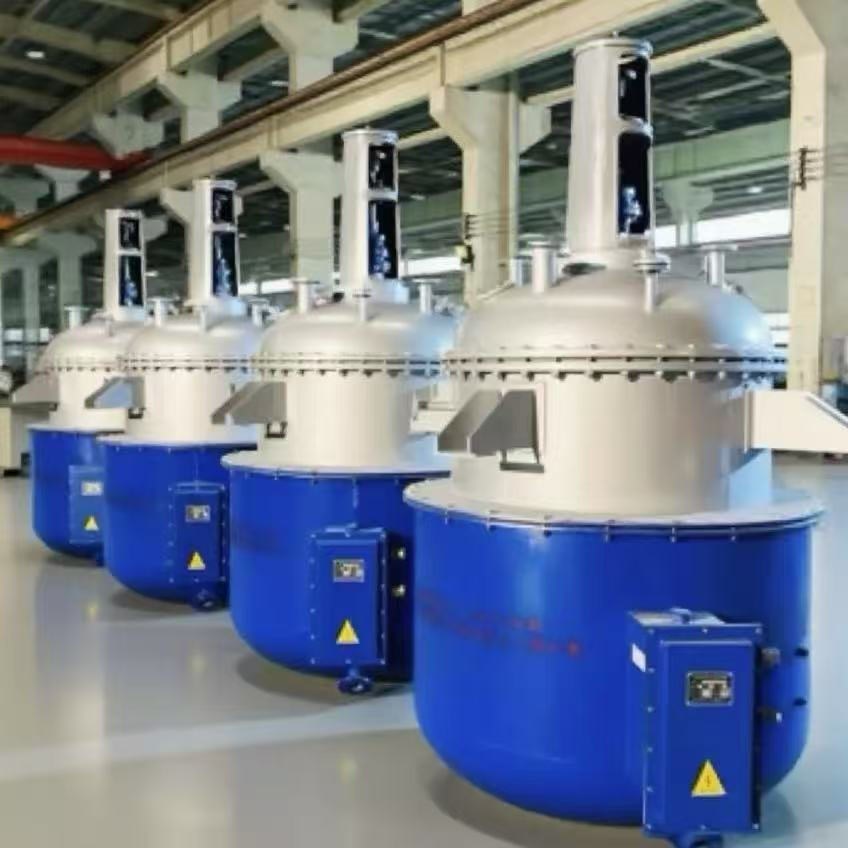
Most buyers start with a capacity and a price range, but those two numbers won’t tell you if the reactor will hold up under real production conditions. A poorly matched electric heating system can cause hot spots, slow heat-up times, or premature jacket failure—issues that only surface after installation. That’s why original manufacturer advice matters. In this post, we’ll cover the factors you should check before committing: vessel material, heating element placement, thermal control accuracy, pressure ratings, and whether the supplier can truly customize for your process. Drawing on direct factory experience, Shenzhou Chemical Industry shares what to ask and what to avoid.
Look beyond the price tag at the engineering team
Price is easy to compare, but it rarely tells you how a product will behave six months after purchase. The engineering team behind a device decides whether updates arrive on time, whether tolerances hold under stress, and whether support staff actually understand the internals. A lower sticker cost often means that team was asked to trim testing, skip material upgrades, or rush a design to market. When you look past the price, you start seeing those trade-offs as future repair bills and downtime.
Good engineering shows up in quiet details: cable strain relief that survives daily bending, firmware that receives patches without breaking existing features, and mechanical joints that feel solid after the thousandth use. Teams that are proud of their work tend to document failure modes and publish repair guides, even when marketing would rather hide them. That kind of transparency is not a sales tactic; it is a sign the people who built the product expect it to be opened, maintained, and kept for years.
Asking who designed something and how they made decisions is more useful than comparing feature lists side by side. If the team has a history of iterating on the same platform, listening to field feedback, and refusing to cut corners in places users cannot see, the product will age differently. The price tag only captures the moment of purchase. The engineering culture determines what you actually own after that.
Material compatibility under your actual operating conditions
Laboratory datasheets and generic chemical resistance charts rarely tell the whole story. In an actual process line, materials are seldom exposed to a single pure chemical at room temperature. They face a cocktail of substances, fluctuating concentrations, and layered stresses from temperature swings, pressure cycles, and mechanical vibration. A polymer that withstands 98% sulfuric acid in a beaker might soften or craze when the same acid carries traces of organic solvents at 80°C. The only reliable way to judge compatibility is to examine the material in the exact environment where it will live.
Long-term exposure often reveals failure modes that short-term tests miss. Stress cracking, for instance, can take weeks or months to appear, especially when a seal or gasket is under constant compression. Similarly, elastomers may swell gradually and lose their rebound, causing leaks that weren't present during initial commissioning. Even minor components such as O-rings, diaphragms, and sight glasses deserve attention—because their degradation can shut down an entire system. Collecting field data from similar installations, or running a controlled immersion test with the actual process fluid, is far more valuable than relying on a universal compatibility table.
A practical approach starts with mapping every wetted material against the real fluid composition, including trace impurities and cleaning agents used between batches. Then consider the full operating envelope: maximum and minimum temperatures, pressure spikes, flow velocity, and exposure duration. Where uncertainty remains, install test coupons or spare gasket samples in a bypass loop and inspect them periodically. This kind of empirical check pays for itself by preventing unplanned downtime and costly material replacements.
Request real temperature uniformity data before ordering
Ask for the raw thermal scan from a production unit, not an engineering mockup or a spec sheet curve. A proper uniformity report should show multiple thermocouple positions across the working volume, recorded under your typical load and ramp conditions. If the file only has a single center-point reading or a heavily smoothed graph, treat that as a missing answer.
Pay attention to where the cold and hot spots actually sit. Some chambers hold within ±2°C in an empty cavity but drift badly once you add mass, shelving, or airflow obstructions. Request data taken with a load similar to yours, and ask for sensor spacing and calibration dates. Corner measurements from the same run matter more than an average value printed in a brochure.
A supplier who hesitates to share the original logger file or only offers a "typical performance" summary is giving you a reason to keep looking. The uniformity data should look like a lab record: sensor ID, position, setpoint, measured value, and time stamp. If it has been cropped, rescaled, or rebranded, the real chamber behavior may not match what you will see on your floor.
Check if customization adds weeks or months to delivery
Before you fall for a particular fabric or finish, ask how it affects the timeline. Custom upholstery, non-standard dimensions, or made-to-order finishes can quietly push your delivery date back by several weeks. Sometimes the delay comes from the workshop queue, other times from sourcing a specific material. The safest move is to ask the retailer to confirm the production window in writing before you pay.
A quick way to spot this is to compare the listed lead time for the base model against the customized version. If the gap is more than two or three weeks, decide whether the personal touch is worth the wait. Off-the-shelf pieces often ship within days, while a simple change like a different leg color can add a month. If you are working with a tight move-in date or a seasonal refresh, that extra time matters more than you might think.
Verify certifications that match your specific process
Before you commit to any certification, take a hard look at the exact steps in your own production line. A generic ISO badge or a well-known industry standard might sound impressive, but if it doesn't line up with the machinery you run, the materials you handle, or the compliance rules your buyers actually enforce, it's just a wall decoration. Ask your team where the real bottlenecks happen — is it in heat treating, surface finishing, raw material sourcing, or cleanroom assembly? Then check whether a certification exists that covers that precise stage, not just your sector as a whole.
Dig into the fine print of each candidate credential. Some certifications bundle multiple process requirements into one, while others focus on a narrow slice like weld inspection or chemical traceability. You want the one that forces you to document and improve the steps you already struggle with, not the one that pads your website with another logo. Talk to a certification body auditor before you pay — describe your workflow in plain terms and see if they can name the specific clauses that would affect your daily operations. If they hesitate or fall back on general language, that's a warning sign.
Finally, match the certification's audit frequency and surveillance demands to your actual capacity. A certification that requires quarterly third-party visits might crush a small shop, while a one-time paper assessment could be too weak for a process with tight tolerances or hazardous inputs. Look for a credential that you can realistically maintain without hiring a dedicated compliance officer, and one that your key customers already recognize in their supplier manuals. The right fit should feel like a tight glove for your process, not a borrowed coat.
Plan for spare parts and service before you need them
A breakdown always picks the worst possible moment. The machines that keep your operation running rarely give a polite warning before a bearing seizes or a drive belt snaps. That is why the smartest maintenance strategy starts long before anything fails: identify the handful of components most likely to wear out on your specific equipment, and keep those on the shelf. It is not about stocking every possible part, but about knowing which failures would stop you for days instead of hours.
Lead times can shift without notice, and the part you assumed was easy to find may be backordered exactly when you need it. Talk to your equipment supplier about expected service intervals and common failure points for your usage patterns. A short conversation now can reveal whether you need an extra seal kit, a replacement sensor, or a spare drive unit. Then put a simple reorder trigger in place, so the shelf never sits empty after a repair.
Service planning matters just as much as parts. If you wait until a critical machine is down to look for a technician, you will compete with every other facility facing the same surge. Build a relationship with a local service provider ahead of time, confirm they know your equipment, and agree on response expectations. That way, when something does go wrong, you are not starting from zero.
FAQ
Start with your largest batch volume and add at least 20 to 30 percent headspace for stirring, vapor expansion, and sensor placement. A reactor that is too small creates constant pressure spikes, while an oversized one wastes energy and makes temperature control sluggish. If you run multiple products, pick a size that handles your most demanding recipe without frequent changeovers.
Direct manufacturers can adjust nozzle positions, jacket zoning, and control logic during production rather than forcing you into a stock design. They also carry the full engineering history of the unit, so troubleshooting later is faster. With a reseller, you often lose that design flexibility and get slower technical responses when something drifts out of spec.
Stainless steel 316L works for many mild acids and solvents, but if you handle chlorides or strong acids, you need a glass-lined or Hastelloy reactor. For highly corrosive environments, a PTFE-lined vessel or titanium might be the only safe choice. Always test your actual reaction mixture under operating temperature before settling on the wetted material.
A well-built electric heating reactor should hold within plus or minus 1 degree Celsius of your setpoint in stable operation. Fast exothermic reactions may swing a few degrees unless the control loop uses cascade logic with cooling compensation. Ask the manufacturer for a heat-up and cool-down curve at your working volume, not just a bare number.
Heating element placement changes everything. Tubular heaters clamped to the outer wall can create hot spots, while immersed elements or a thermal oil jacket spread heat more evenly. If your product is temperature-sensitive, avoid direct contact between the element and the vessel wall; go for a jacketed design with forced circulation instead.
A pressure relief valve or rupture disc, independent high-temperature cutout, and a dead-man switch for the agitator are essential. If you run flammable solvents, the electrical enclosure must be explosion-proof rated for your area classification. Also insist on a fail-safe that cuts heater power if the agitator stops, because static fluid near a hot wall is a common cause of runaway reactions.
Most can modify the number and type of nozzles, add a bottom flush valve, change the agitator blade profile, or integrate a PLC with recipe management. Some also offer interchangeable vessels for small-batch flexibility. Tell them your process constraints early: nozzle bore, CIP access, and sensor port locations are much cheaper to change on drawings than after fabrication.
Ask for on-site commissioning, calibration documentation, and a named engineering contact for the first year. A serious manufacturer will provide a full spare parts list with lead times and offer remote diagnostics if the control panel supports it. Avoid suppliers who only give you a manual and disappear; your reaction process will drift over time and you need someone who knows your exact build.
Conclusion
Price alone rarely tells you how an electric heating reactor will perform once it's installed. The engineering team behind the unit matters more than the initial quote—they determine whether the vessel handles your chemicals without corroding, whether heating elements are positioned to avoid hot spots, and whether the control system responds smoothly to temperature changes. Ask for real temperature uniformity data taken under conditions similar to yours, not just a generic datasheet. A reactor that looks identical on paper can behave very differently in your process if the manufacturer hasn't verified material compatibility at your actual operating temperatures and pressures. Digging into the engineering staff's experience with your type of reaction often reveals more than any polished brochure.
Customization is another area where surprises surface late. A small change in nozzle size or heating zone layout can add weeks or months to delivery if the original manufacturer doesn't keep standard modules in stock. Before signing, confirm exactly how long each modification will take and whether it affects the warranty or certification. Speaking of certifications, don't assume a generic CE or UL mark covers your specific process—hazardous area ratings, pressure vessel codes, and material traceability all need to match what your local inspectors will ask for. Finally, think beyond startup: order the spare heating elements, gaskets, and control board fuses you'll eventually need, and get a clear service response time in writing. A reactor without local support becomes a very expensive paperweight when something inevitably wears out.
Contact Us
Contact Person: Mr. Wang
Email: [email protected]
Tel/WhatsApp: 8613705299955
Website: https://vip.e-baixing.com/szhgyw