

Custom Rapid Transfer Ports for Enhanced Containment and Efficiency
2026-09-22
When containment and speed both matter, off-the-shelf transfer ports rarely fit the bill. Custom rapid transfer ports from AVM are engineered around your process—sealing tighter, moving faster, and cutting the compromises that standard designs force on cleanroom and isolator workflows. In this post, we’ll look at what custom configurations can actually change in day-to-day operation, and why more teams are rethinking the one-size-fits-all approach.
Tailored Rapid Transfer Port Designs for Critical Containment Needs
Standard rapid transfer ports often fall short when a facility handles potent compounds, aseptic processes, or high-containment biological agents. Off-the-shelf units may offer a decent baseline, but the actual operating environment—glovebox interfaces, restricted cleanroom layouts, or aggressive cleaning regimens—usually demands something more deliberate. Tailoring the port geometry, sealing surface, and actuation method around these specific constraints reduces the risk of leaks and operator error from day one.
A well-designed custom port isn't just about swapping dimensions. It involves matching the transfer path to the exact workflow: whether that means a smaller alpha flange to fit a narrow isolator wall, a non-standard beta container for powder handling, or a double-door interlock that only releases after a verified pressure hold. Materials also matter—stainless steel with electropolished finishes for sterile areas, or high-performance polymers for chemical compatibility. This level of detail keeps containment integrity intact without forcing technicians into awkward handling sequences.
Beyond the hardware, customisation often extends into documentation and validation support. When a port is built around a specific containment need, the associated test data, torque specifications, and maintenance schedules can be aligned with the site's quality system from the start. That coherence cuts down on retrofitting surprises and makes long-term regulatory inspections far less painful.
How Custom Port Geometry Improves Workflow Without Sacrificing Safety
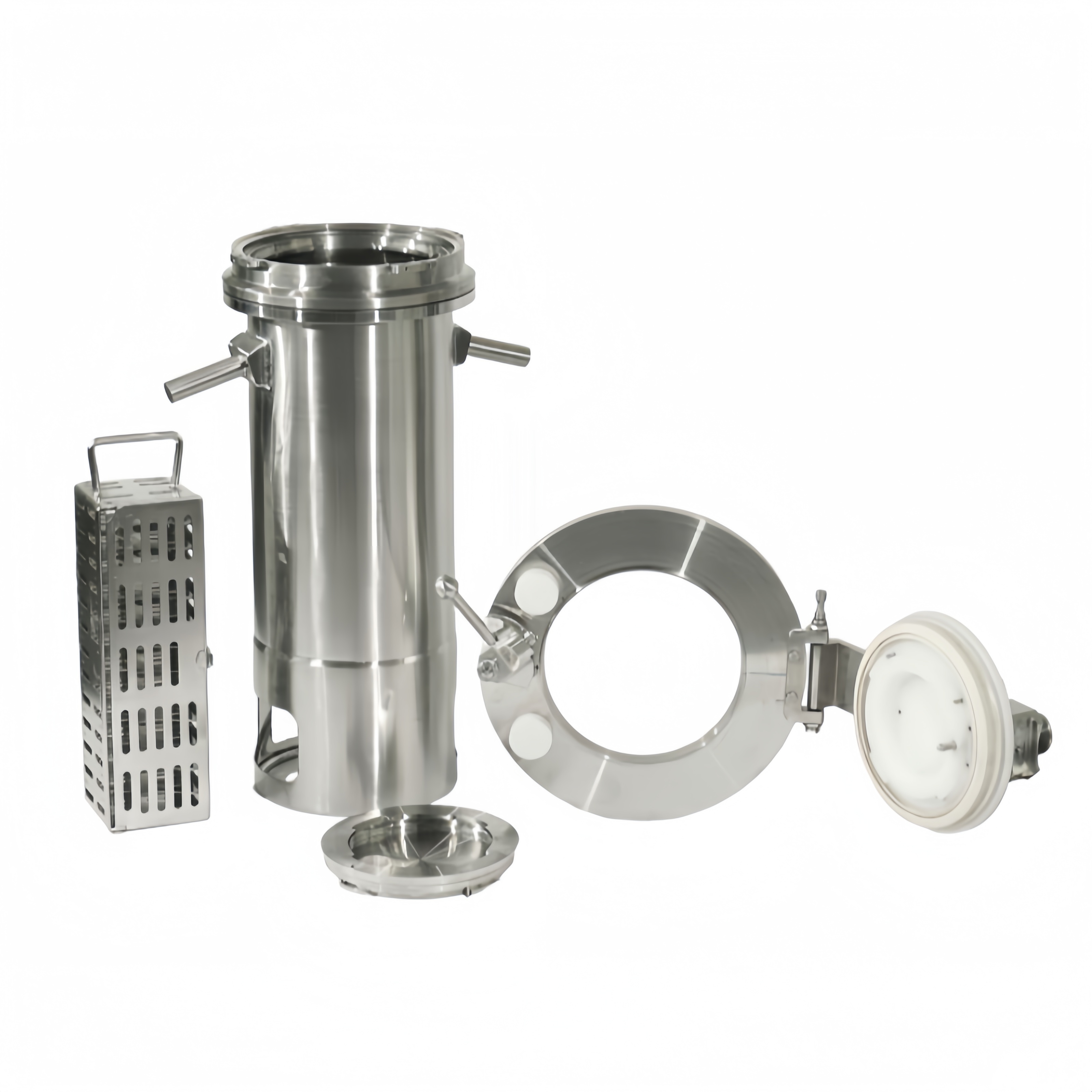
Custom port geometry often starts with the angle of entry. A slight downward tilt on a fluid port, for example, lets tubing seat naturally without forcing the operator to bend it into place. That small change removes a few seconds of fumbling from every connection, and across dozens of daily hookups it translates into less shoulder strain and fewer dropped fittings. The safety side isn't an afterthought either—because the tubing aligns on the first try, there's less chance of cross-threading or a partially seated connector that looks closed but leaks under pressure.
Another overlooked detail is the internal chamfer around the port opening. While a sharp edge can shave an O-ring during insertion, a carefully radiused chamfer guides the seal into position without shaving or pinching. This allows faster assembly because workers don't have to slow down and check every seal before tightening. At the same time, that guided insertion protects the O-ring from damage that would otherwise lead to a slow leak or a blowout later. The workflow gain comes from eliminating rework, not from cutting corners on the connection itself.
The shape of the locking feature matters just as much. A port that uses a short, positive engagement—like a quarter-turn detent or a clearly audible click—gives immediate confirmation without the need for a torque wrench on every line. Technicians can move from one port to the next with confidence, knowing an incomplete connection won't silently pass inspection. This kind of geometry doesn't make the connection weaker; it makes the state of the connection obvious, which is what keeps both pace and safety high in a busy environment.
Material Selection and Finish Options That Hold Up in Demanding Environments
In harsh settings, the wrong material or finish fails fast—corrosion creeps in, coatings flake, and surfaces degrade under thermal cycling or chemical exposure. Specifying durable options means moving beyond generic stainless steel or standard powder coat. For structural components, consider duplex or super-austenitic stainless grades that resist pitting and crevice corrosion far better than 304 or 316. When weight matters, titanium alloys or marine-grade aluminum with proper anodizing offer strength without sacrificing longevity. Avoid thin, decorative platings; instead, opt for thick electroless nickel or hard chrome where wear and galling are concerns.
Finish selection is equally critical. A high-build epoxy or polyurethane coating system, applied over a properly profiled blast surface, outperforms standard enamels in salt spray and UV exposure. For moving parts, PTFE-impregnated hard anodizing or plasma-sprayed ceramic coatings reduce friction and prevent seizure. In food or pharmaceutical environments, electropolished stainless with a surface roughness below 0.5 Ra minimizes biofilm adhesion and eases cleaning. Always pair the coating with a compatible primer and specify cure conditions—rushed or low-temperature cures are a common failure point.
Finally, validate your choices with accelerated testing that mirrors actual stressors: cyclic salt fog, humidity, thermal shock, and chemical immersion. Field data from similar applications trumps lab-only results. One overlooked tactic is designing for selective replacement—use sacrificial anodes or replaceable wear strips where corrosion or abrasion is concentrated, rather than trying to make every surface equally bulletproof. This pragmatic approach cuts lifecycle costs while still meeting demanding environmental requirements.
Integrating Custom RTPs with Existing Isolator and Cleanroom Setups
Adapting a custom rapid transfer port to an established isolator or cleanroom demands more than matching flange dimensions. The real work lies in reconciling the port's sealing geometry with the isolator's pressure cascade, and in verifying that the new interface doesn't disturb the laminar flow patterns near the transfer zone. We usually begin by mapping the existing chamber's pressure differentials and door interlock logic, then design the RTP's gasket compression and locking sequence to mirror those baseline conditions. This keeps the cleanroom's classification intact while adding the port's functionality.
Often, the biggest challenge isn't the mechanical mount but the control integration. Custom RTPs frequently need to speak the same language as the isolator's PLC—whether that's dry contact signals for door status, or a more nuanced handshake for decontamination cycles. A well-designed retrofit will include a small interface module that translates the RTP's sensor outputs into the existing alarm and interlock hierarchy, avoiding the need to rewrite the isolator's core logic. This approach also lets operators retain familiar HMI screens instead of learning a separate control panel.
Field retrofits benefit from a phased validation approach. Start with a dimensional and leak-rate check using a surrogate door, then move to biological indicator testing under actual transfer conditions. We've seen projects stall when teams try to validate everything at once. By breaking the integration into mount, seal, control, and decontamination phases, you isolate variables quickly and keep the existing cleanroom in service for other lines. The result is a custom RTP that feels native to the setup rather than bolted on.
Reducing Cross-Contamination Risks Through Precision Sealing Surfaces
Precision sealing surfaces do more than just close a gap—they actively deny contaminants a foothold. Instead of relying on broad, flat contact areas that invite microscopic debris to settle along edges, these surfaces are engineered with tight tolerances and controlled finishes. The result is a continuous, uniform barrier that leaves no micro-channels or crevices where particles, moisture, or biological agents can accumulate and later migrate into sensitive zones.
A key advantage shows up in high-mix production environments. When seals are machined to exacting geometries, they reduce the need for aggressive chemical washes or repeated manual cleaning between batches. Less residual product means less opportunity for cross-contact, and that directly lowers the frequency of rejected lots. Operators spend less time scrubbing and more time running, while the risk of allergen or pathogen carryover drops without adding extra steps to the line.
Pairing these surfaces with the right material compression also matters. A seal that maintains its shape under thermal cycling and pressure swings won't develop micro-fractures that harbor contaminants. By treating the sealing interface as a critical control point rather than an afterthought, facilities gain a passive, always-on defense against cross-contamination—one that works even when human attention drifts.
Balancing Speed and Containment: Engineering Trade-offs Worth Understanding
In high-performance engine design, pushing for greater speed almost always means compromising on containment. A more aggressive cam profile can squeeze out extra horsepower, but it also increases cylinder pressure and heat, demanding stronger head gaskets, thicker walls, or revised cooling channels. The result is a heavier block or a shorter service life.
Software teams face a similar tension between rapid deployment and isolation. Spinning up a new microservice with few guardrails gets features out the door quickly, yet it can let failures cascade across systems. Adding strict sandboxing or separate test environments contains the damage but slows the feedback loop and multiplies infrastructure overhead.
The real skill is not choosing one side over the other, but recognizing that speed and containment can sometimes reinforce each other. For example, a well-designed safety interlock may allow an operator to run a machine at higher throughput because the risk of runaway is reduced. That kind of rethinking of constraints often leads to better overall performance, not a compromise.
FAQ
A rapid transfer port (RTP) is a double-door system that lets you move materials into or out of a sealed environment without breaking containment. A custom version makes sense when standard sizes or configurations don't fit your existing isolator, glovebox, or process layout, or when you need specific materials, interlocks, or automation features.
Custom RTPs can be engineered to match your exact flange dimensions, seal materials, and pressure differentials, so there are no awkward adapters or weak points. You can also specify higher-grade gaskets, positive-locking mechanisms, and validated leak-tightness for your specific process, which reduces the chance of contamination or exposure.
Yes. Because the port is designed around your workflow, you eliminate steps like repackaging, tooling changes, or wrestling with misaligned flanges. Features like one-hand operation, quick-release alpha/beta flanges, or integrated transfer trolleys can cut transfer time significantly while keeping the barrier intact.
You'll see them most often in pharmaceutical aseptic filling, potent compound handling, biotech research, nuclear hot cells, and chemical or biological containment labs. Anywhere you need to move sterile or hazardous materials across a containment boundary without breaking the seal, a custom RTP is a practical choice.
Quite a lot, actually. You can choose stainless steel or engineered polymers, manual or pneumatic locking, RFID or interlock sensors, pass-through shapes (round, square, rectangular), view windows, glove-compatible doors, and surface finishes for easy cleaning or radiation resistance. The port can also be designed to mate with specific transfer containers or trolleys.
Not if they're designed with validation in mind. Reputable suppliers provide full documentation, material certificates, and leak-test ports for routine integrity checks. Maintenance is usually limited to inspecting seals and lubricating moving parts, and custom doesn't have to mean complicated—good design keeps service points accessible.
Integration typically involves a custom mounting ring or flange that matches your wall or isolator panel thickness and cutout. The supplier can work from your drawings or do a site survey, then supply a port that bolts or welds into place. Some designs also allow retrofit installation with minimal disruption to the controlled environment.
Start with your transfer container size, the required containment level (e.g., BSL-3, OEB 4/5), the frequency of use, and whether you need automation or manual operation. Also think about cleaning protocols, pressure cascade direction, and ergonomics for operators. Sharing these details early helps the supplier propose a design that genuinely fits your process rather than forcing you to adapt.
Conclusion
Custom rapid transfer ports (RTPs) address containment challenges that off-the-shelf units simply cannot handle. Instead of forcing a facility to adapt to a standard port, tailored designs match the exact dimensions, flange patterns, and operational clearances of an existing isolator or cleanroom. Changes to port geometry are not just cosmetic—repositioning an alpha port or adjusting the beta flange can shorten transfer paths, ease glove manipulation, and reduce the number of steps a technician has to take. Material selection also plays a central role. Stainless steel with electropolished surfaces withstands repeated cleaning and aggressive disinfectants, while specialized coatings or polymer blends prevent galling and keep operation smooth. Precision sealing surfaces, machined to tight tolerances, eliminate the micro-crevices where contaminants tend to hide, which directly lowers cross-contamination risk.
Integration with existing infrastructure is another area where custom work pays off. A custom RTP can be engineered to fit the current door opening, transfer hatch, or glovebox port without extensive retrofitting, keeping installation windows short and validation straightforward. There is always a trade-off between speed and containment: larger openings accelerate material transfer but require stiffer frames and more robust locks, while overly aggressive sealing can slow down routine use. A well-designed custom port finds that balance by matching throughput to the actual workflow rather than an idealized spec sheet. In practice, this means fewer interruptions, less reliance on workarounds, and a cleaner transfer process overall. Operators notice the difference in day-to-day use, and quality teams see it reflected in environmental monitoring data.
Contact Us
Contact Person: Ananda
Email: [email protected]
Tel/WhatsApp: 8619016718200
Website: https://www.wzaomi.com