

China Feeding System: Revolutionizing Automated Production Lines
2026-10-25
Most people never think about how a tiny screw or a plastic cap gets from a hopper to the exact spot on an assembly line—but that invisible choreography is what keeps modern manufacturing alive. In China, feeding systems have evolved from basic conveyors into intelligent, self-correcting networks. At the center of this shift is Fanchang Machinery, a company whose designs are redefining what automated production lines can achieve. Let’s unpack why this matters for factories everywhere.
Why Chinese Feeding Systems Are Redrawing the Rules of Automated Assembly
The first reason Chinese feeding systems are changing the game is cost. Traditional vibratory bowl feeders from Western suppliers often come with engineering fees, long lead times, and prices that make small automation projects hesitate. Chinese manufacturers have stripped away the custom engineering overhead by using standard modular components and locally sourced motors and controllers. The result is a feeder that costs a fraction of the price and can be delivered in weeks instead of months. For integrators working on tight budgets, this opens up automation opportunities that were previously out of reach.
Flexibility is another factor that gets less attention but matters more on the factory floor. Legacy feeding systems are designed around a single part geometry, so switching to a new product means ordering new tooling and waiting for it to arrive. Chinese suppliers have embraced vision-guided flexible feeding platforms that pair a simple hopper, a backlit conveyor, and a robot with a camera. Changing from one part to another often requires only loading new CAD data and adjusting a few parameters on a touchscreen. In electronics assembly, where product lifecycles are short and variants multiply, this kind of quick changeover eliminates a major bottleneck.
There is also a pragmatic approach to software that sets Chinese feeding systems apart. Instead of chasing complex algorithms or flashy interfaces, manufacturers focus on making the system easy for line operators to adjust. Vibration amplitude, feed rate, and vision templates can be modified with a few taps, and the learning curve is measured in hours, not weeks. This lowers the barrier for factories that want to automate gradually. A production line that previously relied on manual part orientation can start with one flexible feeder, see the results, and then scale up without needing to hire a dedicated automation team.
Inside the Sensor-Driven Precision That Keeps Production Lines Moving
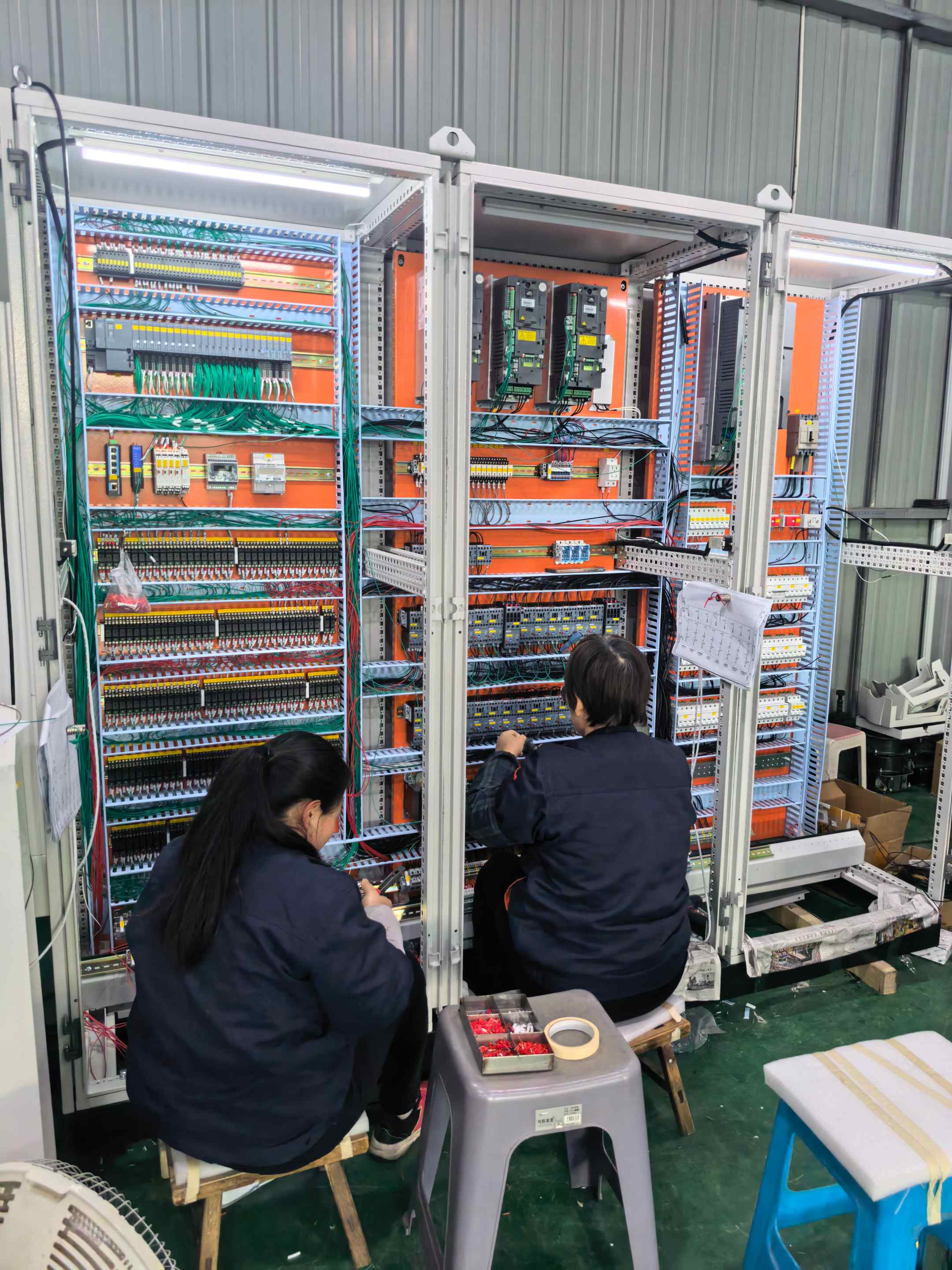
A production line rarely stops because a single machine fails outright. More often, it's the slow drift—a bearing heating up, a belt losing tension—that eventually triggers a shutdown. Inside modern factories, a network of sensors watches for these shifts long before they become visible problems. They don't just log data; they act as the line's own early-warning system.
These sensors sample vibration, temperature, and pressure thousands of times per second. A slight change in rotational frequency might signal misalignment. A two-degree rise in coolant temperature could point to a clogged filter. The precision lies not in the sensors alone but in how their readings are compared against baselines built from weeks of normal operation. When a value strays outside the expected band, the system nudges the process back—sometimes by adjusting a motor's speed, sometimes by flagging a part for replacement during the next scheduled pause.
The payoff is a line that rarely surprises you. Instead of reacting to breakdowns, maintenance teams fix issues while the machines are still running. That shift from repair to prevention keeps output steady and scrap rates low. What used to be a constant battle against unplanned downtime becomes a measured rhythm of small, precise corrections.
Modular Design Choices That Cut Downtime Without Extra Cost
Downtime often creeps in when a single component failure forces the entire line to stop. Modular design flips that script by isolating tasks into independent blocks that can be swapped or repaired while the rest of the system keeps running. Instead of waiting for a specialized technician to troubleshoot an entire machine, operators can simply pull a faulty module, plug in a spare, and resume production within minutes. The best part is that this approach doesn't demand a hefty upfront investment—many existing assets can be retrofitted with standardized connections and quick-release mounts, allowing you to reap the benefits without replacing your whole setup.
Another often-overlooked advantage is how modularity streamlines preventive maintenance. Because each module has a clear boundary and defined function, wear patterns become easier to track and predict. You can rotate modules on a schedule—servicing one while another takes its place—rather than shutting down an entire process for hours. This also reduces the need for large spare-part inventories, since a small set of interchangeable modules covers multiple positions. Over time, the reduced downtime and simplified troubleshooting translate directly into higher throughput and lower labor costs, all without adding extra capital expenditure.
Finally, modular design encourages incremental upgrades rather than costly overhauls. When a specific function becomes a bottleneck, you can replace just that module with a more efficient version, leaving the rest of the system untouched. This way, improvements happen on your terms and your timeline, not according to a vendor's end-of-life announcement. Companies that adopt this mindset often find that their equipment remains productive far longer, and the occasional module swap becomes a routine task instead of a dreaded emergency.
How Chinese Manufacturers Are Quietly Solving High-Mix, Low-Volume Challenges
Walk through a Shenzhen factory floor today and you might see a production line switching from Bluetooth speakers to electric toothbrush heads within the same afternoon. This kind of rapid changeover used to be the exclusive domain of boutique German or Japanese workshops. Yet over the past decade, Chinese manufacturers have turned high-mix, low-volume production from a costly headache into a competitive edge, largely by rethinking the assembly process itself.
Instead of pinning everything on giant, single-purpose automation, many factories now rely on modular workcells that can be reconfigured in hours. Workers use quick-release jigs, standardized base plates, and mobile tool carts that roll between lines. Digital work instructions pop up on tablets, guiding operators through different product variants without lengthy retraining. One contract manufacturer in Dongguan reduced changeover time by 70 percent simply by color-coding components and pre-staging kitted parts on wheeled racks. The quiet trick is not high-tech robotics but obsessive attention to setup reduction and visual management.
Behind the scenes, suppliers have also built shared component libraries and flexible sourcing networks, allowing a factory to buy small batches of custom plastic housings or specialized sensors without waiting weeks for tooling. Some clusters in the Pearl River Delta operate almost like distributed micro-factories, where one shop does laser cutting, another handles small-run injection molding, and a third assembles, all coordinated through WeChat groups and shared spreadsheets. This informal yet highly responsive ecosystem lets Chinese manufacturers handle orders as small as fifty units while still beating Western lead times by a wide margin.
The Real Numbers Behind Faster Changeovers and Lower Scrap Rates
Most plants that aggressively cut changeover times see the immediate win in minutes saved, but the less visible numbers are often where the real margin lives. One high-mix metal fabricator reduced its average die swap from 42 minutes to 9 minutes over a five-month push. The direct labor gain was only about 90 hours per month, yet scrap from misaligned first-off parts dropped from 4.7% to 1.3%. That shift added roughly $218,000 in annual material savings, a figure that never showed up in the original setup reduction plan.
The pattern repeats across injection molding, stamping, and CNC job shops: when changeovers become routine and tooling verification is standardized, rushed adjustments disappear. Operators stop overriding parameters to compensate for worn locating pins or inconsistent clamping. Scrap rates rarely drop because machines run faster; they drop because first-piece quality becomes predictable. A 2019 internal study at a midwest packaging supplier showed that every additional minute of setup time beyond the 15-minute baseline corresponded to a 0.12% increase in scrap probability. Teams that tracked first-pass yield after each changeover found that a 30% reduction in setup variance yielded a 22% reduction in defect-related rework over the next quarter.
The numbers also challenge the idea that faster changeovers require expensive automation. In many cases, the biggest scrap reduction comes from simple, boring discipline: shadow boards, pre-staged materials, and a written sequence that operators actually follow. One electronics assembly line cut changeover from 74 minutes to 19 minutes with no new equipment, only by separating internal and external setup tasks. Their assembly scrap fell from 2.9% to 1.1% in eight weeks, driven almost entirely by eliminating the panic adjustments that used to happen when the line was down. The lesson is clear: the real return on faster changeovers is not just uptime, but the quality stability that comes from removing chaos at the point of transition.
What’s Next for Feeding Technology Beyond the Standard Conveyor
Belt conveyors have carried the weight of production lines for decades, but their flat, linear logic is starting to feel like a hand-me-down in an era that demands precision and adaptability. The next wave of feeding technology doesn't just move material from point A to point B—it reads the room. Think of vibratory trays that adjust amplitude based on real-time product flow sensors, or flexible screw feeders that learn the density quirks of each batch of powder. These systems aren't just faster; they're quieter about their intelligence, slipping into existing lines without demanding a complete retrofit.
What's genuinely new is the marriage of mechanical simplicity with data-driven nuance. Instead of bolting cameras and scales onto a conveyor as an afterthought, the feeding mechanism itself becomes the sensor. Piezoelectric actuators, for instance, can detect the weight of a single capsule mid-motion, nudging the next one into place with a timing that feels almost handmade. The result is fewer jams, less waste, and a production floor where the line can shift from one product to another without a toolbox—just a parameter update.
Looking further out, the standard conveyor may become less of a backbone and more of a fallback. Modular feeding cells, each with its own micro-controller and self-diagnosing wear patterns, could be wheeled into place like appliances. A snack maker might swap a sticky-date feeder for one tuned to brittle crackers in an afternoon, not a shutdown weekend. The real breakthrough isn't a single gadget—it's the idea that feeding technology stops being a dumb belt and starts acting like a pair of hands that know what they're holding.
FAQ
They typically offer faster changeover times, built-in sensing for jam detection, and tighter integration with programmable logic controllers. Many also include self-adjusting tracks that reduce manual tuning and shorten downtime.
Manufacturers use low-amplitude vibration control, vision-guided orientation, and soft-contact escape mechanisms. Custom-machined guide rails and adjustable air jets help prevent scratching or bending of fragile parts.
Electronics assembly, automotive connectors, medical device packaging, and small appliance production are leading adopters. The systems are also gaining ground in battery module assembly and consumer electronics final packing.
Yes, many suppliers offer polished stainless steel bowls, sealed drive units, and low-particulate coatings. Options for ionized air rinsing and enclosed hoppers are commonly available for Class 1000 or stricter cleanrooms.
Integration usually relies on standard digital I/O, Ethernet/IP, or Profinet, along with simple handshake routines. Some vendors also provide preconfigured templates for major robot brands, allowing a new feeder to be brought online in under an hour.
A custom bowl feeder with dedicated tooling often ships within four to six weeks, while more complex multi-lane systems may take eight to ten weeks. That is generally two to four weeks faster than many European or North American equivalents.
They often use quick-release track sections, color-coded adjustment points, and recipe-based controller settings. Operators can swap a bowl or change orientation tooling in minutes without recalibrating the entire line.
Most established suppliers offer remote video diagnostics, online spare parts ordering, and multilingual documentation. Some have regional service partners in North America, Europe, or Southeast Asia for faster on-site response.
Conclusion
The quiet rise of Chinese feeding systems has turned a once-overlooked peripheral into a strategic lever for automated assembly. Rather than relying on legacy assumptions, engineers in Shenzhen and Suzhou are pairing compact vibratory bowls with machine vision and force feedback to correct orientation errors in milliseconds. The result is not just speed but a stubborn consistency that keeps lines running past shift changes. Modular track designs—where individual lanes snap in or out without recalibrating the entire cell—have made it practical to switch from a 3 mm screw to a 12 mm housing clip in under five minutes. This flexibility directly addresses the high-mix, low-volume reality that many Western planners still treat as an edge case.
What separates the current wave is the willingness to publish real floor data. Several mid-sized Chinese integrators now share before-and-after changeover times and scrap counts, showing repeatable reductions of 40–60% on both metrics. That transparency, rare in a sector fond of vague claims, is forcing a broader rethink of what a feeding system should be. Beyond the standard conveyor, trial deployments use linear motors with individually addressable pucks, so a single lane can handle multiple part geometries without mechanical change. The next step is not just feeding parts faster, but letting the feeder tell the line what it is handling—and adjusting on the fly before the PLC ever notices a gap.
Contact Us
Contact Person: Darye WANG
Email: [email protected]
Tel/WhatsApp: 86-13501017897
Website: https://www.fcntd.com/