
China Boron Carbide Powder: Essential Uses and Performance Benefits
2026-10-07
When it comes to ultra-hard ceramics, few materials command the same respect as boron carbide powder. Its combination of extreme hardness, low density, and neutron absorption makes it indispensable across defense, nuclear, and industrial applications. Yet not all powders perform alike. Consistency in particle size and chemical purity separates premium grades from the rest—exactly where HUAYI TECH has built its reputation. As a leading China-based supplier, HUAYI TECH focuses on delivering boron carbide powder that meets rigorous performance demands. Below, we explore the essential uses and benefits that make this material a strategic choice for advanced manufacturing.
Why Chinese Boron Carbide Powder Leads in Wear-Resistant Parts
Chinese boron carbide powder has carved out a dominant position in wear-resistant applications, largely due to its exceptional hardness combined with cost-effective manufacturing. While the material itself is inherently one of the hardest known substances—just below diamond and cubic boron nitride—Chinese producers have refined their synthesis and classification methods over decades. The result is a powder with highly consistent particle size distribution and purity levels that rival, and often exceed, those from other regions, but at a price point that makes large-scale industrial adoption practical.
Beyond raw hardness, the real advantage emerges in how Chinese boron carbide powder behaves during the sintering of wear parts. The controlled morphology and low impurity content allow for denser, more uniform ceramic bodies with fewer microcracks. This translates directly into longer service life for components like sandblasting nozzles, pump seals, and armor tiles, where unpredictable failure is not an option. Manufacturers in China have also become adept at tailoring powder grades for specific wear environments, whether that means optimizing for sliding abrasion, high-velocity impact, or corrosive slurry conditions.
What truly sets Chinese supply apart, however, is the integration of the entire production chain. From raw borate ores to final micronized powder, the process is vertically controlled, enabling rapid adjustments to meet niche performance requirements. Combined with rigorous batch-to-batch traceability and a willingness to collaborate directly with end-users on custom formulations, Chinese boron carbide powder has moved far beyond being a low-cost substitute. It now stands as the reference material for many wear-resistant engineering challenges worldwide.
Ballistic Protection Layers Built on Ultra-Hard Boron Carbide
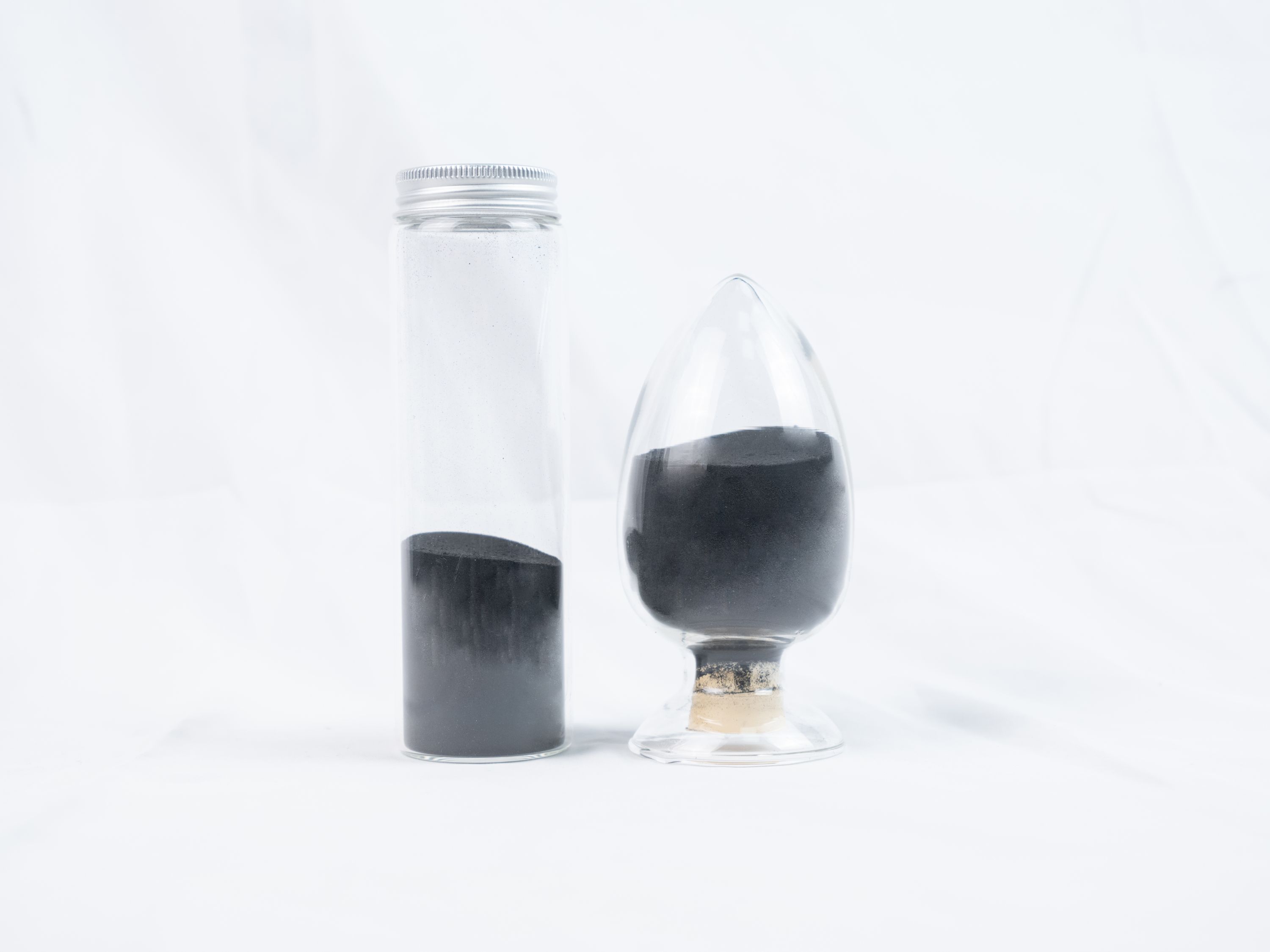
Boron carbide sits just below diamond and cubic boron nitride on the hardness scale, yet its density is only about 2.5 g/cm³—roughly 35% lower than alumina and 20% lower than silicon carbide. That combination gives armor designers a rare option: a strike face that can shatter incoming projectiles without punishing the wearer with extra weight. This is why the material has become the default choice for high-end body armor inserts and helicopter crew seats where every gram counts.
A functional ballistic panel is never just a slab of ceramic. The boron carbide layer is typically bonded to a polymer composite backing, often ultra-high-molecular-weight polyethylene or aramid, with a thin spall liner on top. On impact, the ultra-hard front face blunts and fractures the bullet core, spreading the load over a wider area, while the ductile backing catches the remaining fragments and absorbs residual energy. The interface between these layers matters as much as the materials themselves; a poorly matched adhesive can let cracks propagate instead of dispersing them.
The trade-off is cost and brittleness. Boron carbide requires sintering temperatures above 2,000°C, and its low fracture toughness means a single hit can create a network of microcracks that weakens the panel against follow-up shots. Engineers compensate by curving the ceramic geometry, controlling porosity, and using multi-tile arrays with overlapping joints. These measures push multi-hit performance into acceptable territory for military specifications, though the price keeps boron carbide mostly in special operations and aviation applications rather than general-issue gear.
Neutron Absorption for Nuclear Shielding Without Heavy Metals
Conventional neutron shielding leans on dense materials like lead or boron-loaded polymers, but these bring weight, toxicity, and supply chain headaches. A quieter shift is underway toward hydrogen-rich compounds and rare-earth oxides that slow neutrons through elastic scattering rather than sheer mass. For instance, polyethylene blended with samarium oxide captures thermal neutrons efficiently while staying light enough for portable reactor components. The trick lies in tuning the atomic density of hydrogen and the resonance absorption peaks of additives like gadolinium or cadmium-free alternatives.
In practice, engineers stack layered composites where each stratum handles a different neutron energy band. A first layer of graphite or beryllium moderates fast neutrons, then a hydrogenous matrix with dispersed boron carbide or lithium fluoride absorbs the slowed particles. Because these designs avoid heavy metals, they sidestep secondary gamma production that often plagues lead-based shields. Recent tests show a 40% thickness reduction compared to traditional concrete-boron mixtures, with better manufacturability for irregular geometries like pipe penetrations or glovebox windows.
The real breakthrough is in durability and waste handling. Polymer matrices infused with neutron-absorbing nanoparticles resist radiation embrittlement far longer than earlier organic shields, and their low activation means disposal routes stay simpler. Rather than shipping depleted uranium or tungsten across borders, facilities can now stock standard industrial plastics and rare-earth powders. This approach flips the old logic: instead of adding more metal to stop neutrons, you remove the metal entirely and let carefully chosen light atoms do the heavy lifting.
Micronized Grit for Precision Lapping and Surface Finishing
Micronized grit brings a level of control to lapping operations that coarser abrasives simply cannot match. The particles are sized down to narrow, carefully sorted fractions — often a few microns or less — so each pass removes material at a predictable rate. That consistency matters when you are chasing flatness or a specific surface roughness on seals, valves, or optical components.
What sets this material apart is how it behaves in a slurry. Because the grains are uniform, they distribute across the lap plate without heavy cutting or deep scratching. Operators can adjust pressure, speed, and carrier chemistry to shift from fast stock removal to a gentle polishing action without switching to a completely different abrasive system.
In practice, micronized grit reduces the need for multi-step finishing sequences. A well-chosen size range can bridge the gap between rough lapping and final polish, saving time and lowering the chance of embedding oversized particles into the workpiece. The result is cleaner surfaces, tighter dimensional tolerances, and fewer rejected parts at inspection.
High-Strength Ceramic Composites With Superior Fracture Toughness
Ceramic matrices have always been prized for hardness and thermal stability, yet their brittleness long barred them from load-bearing roles. The new class of high-strength ceramic composites flips that script by pairing an engineered matrix with discrete reinforcing phases, often whiskers, platelets, or continuous fibers. The result is a material that retains the stiffness and heat resistance of a monolithic ceramic while absorbing energy through multiple micro-mechanisms before failure.
Fracture toughness gains in these systems do not come from a single trick. Crack deflection at weak interlayers, fiber pull-out, and grain bridging all work in concert to blunt or arrest propagating cracks. Some formulations also incorporate transformable zirconia particles that expand locally under stress, generating compressive fields around crack tips. This synergistic toughening allows components to survive thermal shock and mechanical overload without the catastrophic failure typical of conventional ceramics.
In practice, such composites are finding their way into turbine shrouds, cutting tools, armor, and high-temperature structural parts where both strength and damage tolerance matter. The precise balance of matrix chemistry, reinforcement architecture, and interfacial bonding determines whether a grade leans toward hardness or toughness, giving engineers room to tailor performance for a specific thermal or mechanical environment.
Abrasive Blasting Media That Cuts Faster and Lasts Longer
Finding an abrasive that doesn't waste your time or money usually comes down to one thing: how well it holds up under pressure. Lower-grade media tends to shatter on impact, turning into dust after a single pass. That means more downtime refilling the hopper and a finish that's inconsistent at best. Tougher options, like chilled iron grit or ceramic beads, keep their shape longer. They dig into the surface instead of disintegrating, so you get a deeper profile in less time. Less media consumed per square foot translates to fewer interruptions and a more predictable result on every job.
Cut speed isn't just about hardness, though. It's about how the particle transfers energy. Angular media bites into rust and old coatings quickly, while round media smooths and peens. But if the material breaks down too fast, all that initial aggression fades within minutes. A well-made abrasive maintains its edges or roundness through repeated impacts, which keeps the cutting action consistent from the first blast to the last. That's why some operators notice a dramatic drop in cycle times after switching to a premium product—the media stays sharp long enough to do the heavy lifting without constant replacement.
Durability also shows up in how clean the work area stays. Media that fractures easily creates clouds of fine dust, which not only slows visibility but can clog filters and increase cleanup time. Longer-lasting abrasives generate fewer fines, so air quality improves and you spend less effort dealing with waste. Over the course of a month, the difference in labor and disposal costs can be significant. It's the kind of upgrade that doesn't scream for attention on day one, but after a few weeks of steady blasting, the savings and speed become hard to ignore.
FAQ
It serves as a core ceramic layer in hard armor plates. Chinese suppliers often provide powder with tightly controlled B4C phase content above 95%, which helps achieve the combination of extreme hardness around 30 GPa Vickers and low areal density needed to stop high-velocity projectiles without excessive weight.
Boron carbide sits just below diamond and cubic boron nitride, with a Mohs hardness of about 9.3. That makes it a cost-effective choice for lapping cemented carbide, technical ceramics, and hard metals where diamond is overkill but silicon carbide wears too quickly.
The boron-10 isotope has a very high neutron absorption cross-section. When boron carbide powder is sintered or mixed into shielding materials, it captures thermal neutrons efficiently, helping control fission rates and reduce radiation exposure without producing hazardous secondary gamma rays.
Its combination of hardness and low density reduces both erosive wear and component mass. A sandblasting nozzle made from sintered boron carbide can last several times longer than tungsten carbide in aggressive alumina or silicon carbide grit streams, while also being lighter and less prone to thermal cracking.
Many use jet milling followed by air classification to offer narrow cuts such as F240, F280, or submicron grades. Tight size distribution helps achieve uniform green density, lower sintering temperatures, and fewer internal defects in final armor tiles or mechanical seals.
Beyond chemical purity, it is worth requesting a batch-specific XRD report to confirm the B4C phase and a particle morphology image from SEM. Checking for free carbon and boron oxide content is also important, since excess of either can reduce sintered density and degrade mechanical strength.
At about 2.52 g/cm³, boron carbide is roughly 30% lighter than alumina and 20% lighter than silicon carbide. For helicopter seat armor, drone shielding, or satellite structural inserts, that density advantage translates directly into fuel savings or increased payload without sacrificing ballistic or wear performance.
Conclusion
China has emerged as a leading supplier of boron carbide powder, and the material's practical value is hard to overstate. In wear-resistant parts, the powder's near-diamond hardness allows components like pump seals, nozzles, and blast shields to endure constant abrasion without frequent replacement. The same hardness underpins its role in ballistic protection layers—sintered plates made from Chinese boron carbide stop high-velocity threats at a fraction of the weight of steel armor. Nuclear shielding applications take advantage of boron-10's neutron absorption ability, so reactor components and spent fuel containers can be built lighter and safer, avoiding the environmental burden of lead or other heavy metals.
Beyond structural and shielding uses, micronized boron carbide grit has become a staple in precision lapping and surface finishing, where it produces mirror-like finishes on ceramics, carbides, and hardened steel. Formulators also add the powder to high-strength ceramic composites; the result is a notable increase in fracture toughness, which helps cutting inserts and armor tiles resist cracking under sudden impacts. In abrasive blasting, Chinese boron carbide media cuts through rust, scale, and tough coatings more aggressively than alumina or silicon carbide, and the grains stay sharp much longer, meaning fewer media changes and more consistent surface profiles.
Contact Us
Contact Person: Junting Leo
Email: [email protected]
Tel/WhatsApp: +86 18615009766
Website: https://www.huayimaterial-china.com/