

Best Rapid Prototyping Service Solutions: Accelerate Your Product Development with Expert Partners
2026-06-03
In the race from concept to market, rapid prototyping can make or break your timeline. Every designer knows the challenge: you need a prototype that’s fast, accurate, and ready to iterate, but finding a partner who truly understands your vision isn’t easy. That’s where ProtoMat steps in—not just as a service provider, but as a committed extension of your team. With cutting-edge technology and a fanatical focus on your success, we turn your boldest ideas into tangible, testable realities, often within days. Ready to leave prototyping headaches behind and accelerate your development like never before? Let’s explore what sets the right partner apart.
Understanding Rapid Prototyping: From Concept to Functional Model
Rapid prototyping isn’t just about speed—it’s a mindset that transforms how ideas take shape. At its core, it’s the practice of quickly creating a scaled-down version of a product to test concepts, gather feedback, and iterate without sinking months into development. It starts with a rough idea, often sketched on a whiteboard, and moves swiftly into a tangible form—be it a 3D-printed part, a clickable wireframe, or a makeshift assembly of off-the-shelf components. The goal isn’t perfection; it’s learning. By making something real early, teams can spot flaws and unexpected opportunities long before committing to expensive tooling or complex code.
The journey from concept to functional model is inherently messy and nonlinear. You might begin with a simple foam mockup to assess ergonomics, then shift to a basic Arduino-powered version that partially simulates core behavior. Each iteration peels back layers of assumption, revealing whether the mechanics are feasible, the user flow feels natural, or the electronics can even fit within the envisioned enclosure. What emerges is a dialogue between the maker and the material—physical or digital constraints push back against the original vision, forcing refinements that the initial sketches never anticipated. This back-and-forth often uncovers simpler, more elegant solutions than the ones dreamt up in abstract planning sessions.
What sets rapid prototyping apart from traditional development is the willingness to embrace failure as a step forward. A prototype that doesn’t work as expected isn’t a setback; it’s a pinpoint on the map of what needs to change. The functional model that finally holds together—lights blinking, parts moving, users interacting—carries the scars of discarded paths and rediscovered priorities. It stands as a quiet proof that the idea has passed through real-world filters, not just theoretical ones. In the end, the process doesn’t just yield a better product; it builds a deeper, shared understanding among the people working on it—and that clarity is often the real deliverable.
Choosing the Right Technology: 3D Printing, CNC Machining, and Beyond
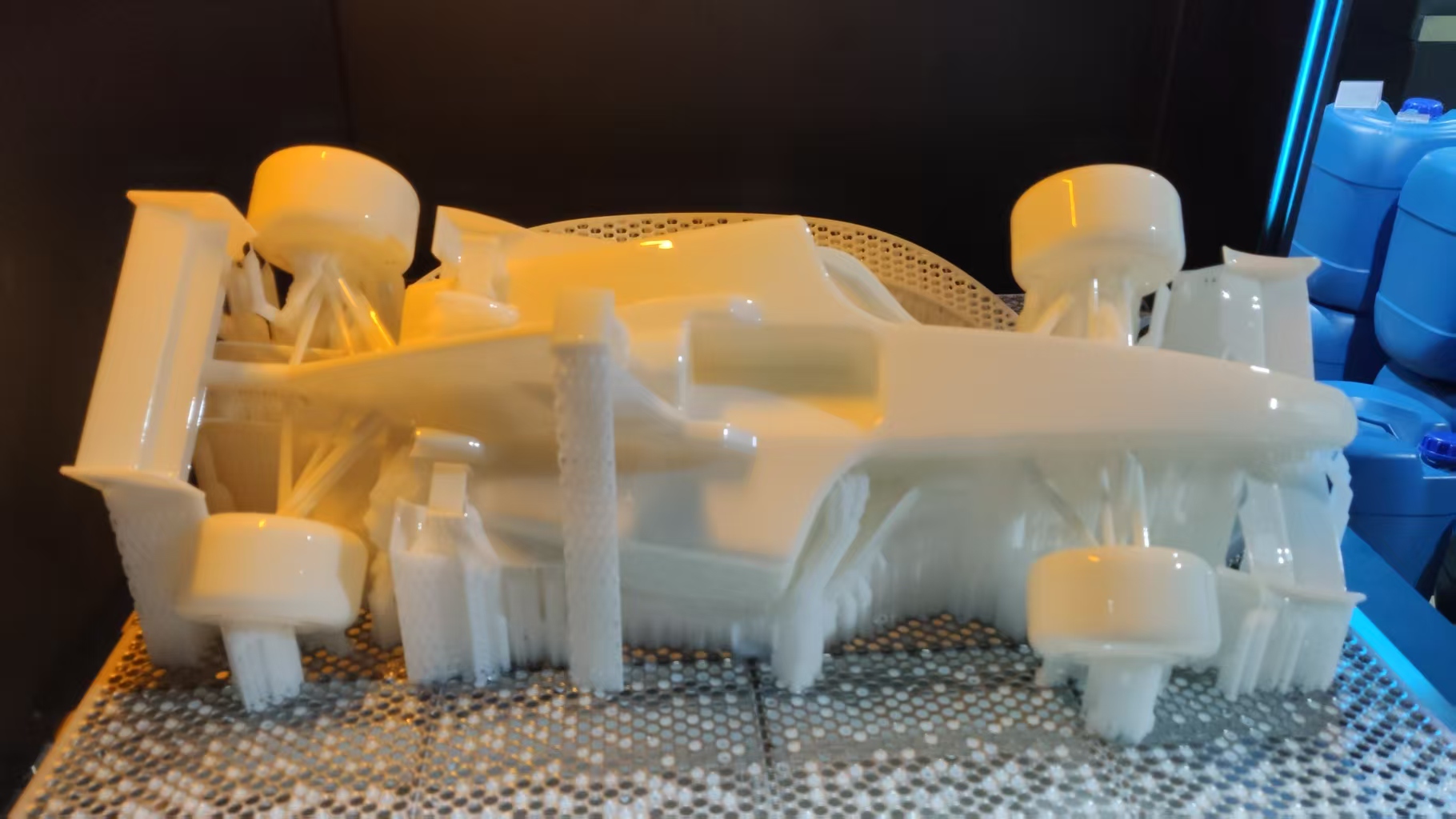
When you're staring at a CAD model and trying to figure out how to bring it to life, the choice between 3D printing and CNC machining often feels like a fork in the road—one that can make or break your project's timeline and budget. 3D printing thrives on complexity and speed at low volumes; it's your best friend when you need a bizarre internal lattice or a snap-together prototype tomorrow. But the moment you require tight tolerances, a specific metal alloy, or surface finishes that look production-ready, CNC machining usually edges ahead. It's not just about picking one over the other—it's about knowing when the geometry screams for additive and when the material properties demand subtractive.
Beyond these two, there's a whole landscape of manufacturing methods that often gets overlooked. Technologies like vacuum casting, sheet metal fabrication, or even injection molding with soft tooling can fill the gap when neither 3D printing nor CNC hits the sweet spot. I've seen teams burn through budgets 3D printing dozens of parts, only to realize later that a simple silicone mold could have delivered better results faster. The trick is to ask the right questions early: Is this part for form, fit, or function? Am I optimizing for surface finish, mechanical strength, or turnaround? The answer rarely lives in a single technology—it lives in a smart mix that actually matches the demands of the part, not just the hype.
Material Selection: Balancing Performance, Cost, and Speed
Choosing the right material never comes down to a single property. It's tempting to chase the highest strength or the best thermal resistance, but what good is a perfect performer if it blows the budget or takes months to arrive? Engineers quickly learn to weigh numbers against the bottom line—and the clock. A superalloy might ace the stress test, yet its lead time could stall the entire project. Sometimes, a more readily available material with slightly lower specs does the job just fine, hitting the sweet spot between capability and cash flow.
Speed adds another layer of complexity. Fast prototyping options like 3D printing have expanded the palette, but not all printable materials meet end-use criteria. A quick-turn plastic part might validate a design, but scaling it to production in metal can introduce unexpected costs and delays. The real art lies in aligning material choices with the project's timeline and lifecycle stage—not just the datasheet. For instance, opting for an easily machined alloy during development might save weeks, even if a forged alternative would be cheaper at volume later on.
There's also the hidden cost of risk. Using an unfamiliar material to shave pennies off unit price can backfire if supply chains are fragile or processing requires special tooling. Seasoned design teams map out trade-offs early, often trading a bit of performance margin for a reliable, familiar material that keeps schedules intact and budgets predictable. In the end, the best material isn't the strongest or the cheapest—it's the one that lets the product ship on time, within budget, and function well enough to satisfy users.
Partnering with Experts: How to Evaluate and Collaborate Effectively
The first step in any meaningful partnership is a thorough evaluation of potential experts. Beyond scanning resumes or LinkedIn profiles, I always dig into their past projects, looking not just at outcomes but at how they tackled unexpected hurdles. A strong candidate shouldn’t just recite their credentials—they should be able to explain their reasoning in simple terms and show genuine curiosity about your challenges. I’ve found that asking open-ended questions like “What’s a time you had to pivot your approach under pressure?” reveals far more than checking boxes on a skill list.
Once you’ve chosen the right expert, collaboration hinges on clarity and mutual respect. Rather than handing over a rigid brief, I start by aligning on the “why” behind the project, leaving room for their input on execution. Regular, informal check-ins help keep things on track without micromanaging, and I make it a point to celebrate small wins together. This turns a transactional arrangement into a partnership where both sides feel invested in the outcome, often leading to solutions neither of us would have reached alone.
Streamlining Iterations: Tips to Accelerate the Design-Test-Refine Cycle
Clear boundaries often get overlooked in the rush to refine, yet they’re the foundation of a faster cycle. Before you touch a single design element, nail down what you’re trying to learn. Is it a usability hiccup, a performance bottleneck, or just a visual polish? Write down the exact question you need answered, and set a cutoff—number of rounds, hours, or dollars—before you start. This stops the cycle from ballooning into an open-ended exploration where perfectionism quietly eats your schedule.
Speed lives in the unsung corners of collaboration. Instead of staging big reveals, show work in a messy, half-baked state. A rough paper sketch or a grayscale wireframe with placeholder text triggers faster, more honest feedback than a pixel-perfect mockup. Pair up with someone who has a different lens—a developer, a customer support rep—and let them poke holes while you resist the urge to defend. You’ll gather actionable input in minutes that might otherwise take days of solo tinkering.
Decouple your cycles where they naturally split. Testing a layout’s readability doesn’t need the final color palette, and checking a micro-interaction’s feel can happen in isolation from the whole flow. Run these small, parallel experiments rather than one monolithic pass. Then, close each loop by logging what you changed and why in a single sentence. Over time, this habit builds a personal playbook that makes future iterations less about guessing and more about leveraging patterns you’ve already seen work.
Real-World Success Stories: Rapid Prototyping in Action Across Industries
A global automotive manufacturer once took a bold step, skipping detailed blueprints in favor of a 3D-printed concept model for a new dashboard. Within two days, engineers could touch the curves, test the ergonomics, and catch design flaws that would have slipped through on a screen. That early insight cut months off their development cycle.
In healthcare, a startup designing a wearable monitor turned to rapid prototyping after traditional methods stalled. They printed functional circuits onto a flexible wristband, instantly fitting patients for feedback. Adjustments happened over coffee, not conference calls, leading to a device that felt less like a gadget and more like a second skin.
Even toy companies have joined the fray. One team iterated through eleven versions of an action figure in a single week, each tweak shaped by real kids’ hands. By the time the mold was cut, they already knew which smiles sold and which joints snapped—saving a fortune in recalls and remakes.
FAQ
You'll want to check their range of technologies—whether they offer 3D printing, CNC machining, or injection molding. Also, look at their material selection, quality control processes, and how well they communicate during the project. A partner with experience in your industry can make a huge difference in avoiding costly design mistakes.
It really depends on the complexity and the process. For CNC machined parts, you might get them in as little as a few days. 3D printed pieces can sometimes ship next day if they fit the printer's build volume. The best partners offer expedited options without sacrificing accuracy.
Absolutely, many top providers have multi-process capabilities. For plastics, they might use SLA or SLS; for metals, DMLS or CNC machining. Having a single partner for both saves you the hassle of coordinating multiple vendors and ensures consistent quality across materials.
Rapid prototyping focuses on speed and iteration—getting a few functional samples quickly to test form, fit, and function. Low-volume manufacturing is more about producing end-use parts, often with tighter tolerances and surface finishes, but still in quantities under a few thousand. Some services bridge both, moving you seamlessly from prototype to pilot run.
They do more than just make parts—they spot design flaws early, suggest material alternatives, and optimize geometries for manufacturability. Their feedback loop can shave weeks off your development timeline and prevent expensive retooling later on.
Yes, many offer design-for-manufacturing (DFM) reviews. Their engineers analyze your CAD files and flag issues like undercuts, thin walls, or impossible angles. That input helps you tweak the design before committing to tooling, which ultimately saves both time and money.
Conclusion
Rapid prototyping transforms abstract ideas into tangible, functional models, bridging the gap between concept and real-world validation. Selecting the right approach—whether it’s 3D printing for complex geometries, CNC machining for precision metal parts, or emerging hybrid methods—depends entirely on your project’s requirements. Material choice further shapes the outcome; navigating the trade-offs between performance, cost, and turnaround time is critical. A well-considered combination of technology and material accelerates initial concept testing, allowing you to catch design flaws early without wasting resources.
The real competitive edge comes from partnering with experienced service providers who guide these decisions. Expert collaborators help you evaluate quick-turn options and refine designs iteratively, shortening the test-refine cycle dramatically. They bring cross-industry insight—from medical devices to automotive—where rapid prototyping has already slashed development timelines and reduced risk. By integrating feedback rapidly and leveraging specialized expertise, teams can move from napkin sketches to market-ready products faster than ever, turning prototyping into a strategic advantage rather than a bottleneck.
Contact Us
Contact Person: Joe
Email: [email protected]
Tel/WhatsApp: +8613799507208
Website: https://www.3dprotomat.com/