

Best Quality Tissue Converting Equipment: What to Look for Before Buying
2026-09-18
Choosing the right tissue converting equipment can make or break your production line — yet too many buyers overlook the details that matter most. Before you invest, you need to know which features separate high-performance machines from costly disappointments. At DAXIN, we believe smart purchasing starts with asking the right questions, not just comparing specs. This guide walks you through the essential checks that ensure you get the best quality equipment for your needs.
Match the Machine to Your Tissue Grade Before Chasing Output Numbers
Most operators rush toward the highest throughput settings before ever checking whether the tissue they're feeding is truly compatible with the machine's design. But tissue grade isn't just a spec on a data sheet—it's the single biggest variable in how cleanly the cutters engage, how evenly the fibers separate, and how much heat builds up in the head. A soft, low-density grade demands different blade geometry and feed pressure than a dense, heavily filled sheet. Run the wrong combination and you'll see output numbers that look great on the display while quality drops so fast that rework erases any gain.
Think of it as matching the tool to the material, not the other way around. A machine tuned for premium toilet tissue will chatter and tear on a high-wet-strength towel stock, producing ragged edges and excessive dust. Worse, forcing higher speeds on mismatched grades accelerates wear on the anvil and blades, turning a short-term output boost into a long-term maintenance headache. The better approach is to map your actual tissue grades—basis weight, crepe ratio, ply bond, and moisture content—against the machine's recommended operating envelope before touching the speed dial.
Once the match is right, output numbers become a natural result rather than a target to chase. You'll find that a properly paired machine and tissue grade deliver consistent sheet length, fewer breaks, and less trim waste. Operators then spend less time babysitting the line and more time improving downstream processes. So before you celebrate a new throughput record, verify that the tissue grade and the machine are actually on speaking terms. Otherwise, those impressive numbers are just a countdown to the next jam.
Winding Tension and Roll Density Matter More Than Top Speed
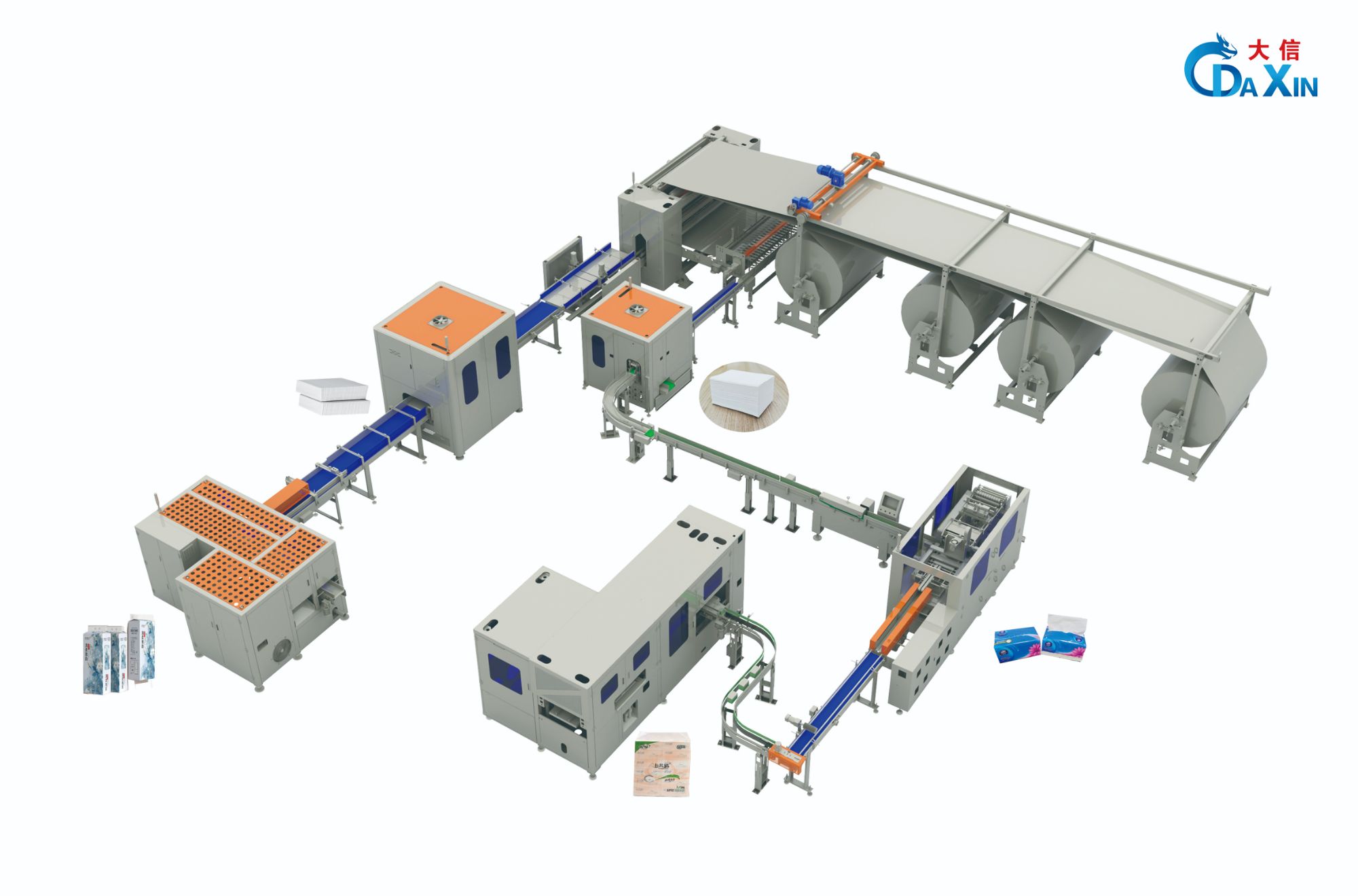
On high-speed slitting and winding lines, operators often chase maximum line speed as if it were the primary benchmark. Yet a roll wound with uneven tension will telescope, star, or develop soft edges long before it reaches the customer. The real measure of productivity is whether every finished roll can survive handling, shipping, and downstream unwinding without defects.
Winding tension controls how tightly each layer grabs the one beneath it. Too little tension near the core creates a loose start, while too much near the outside can crush the core or stretch the web. Roll density, built through a controlled taper from core to outer diameter, keeps the roll round and stable. A dense, evenly wound roll at 800 m/min often outperforms a poorly structured roll produced at 1,200 m/min.
High top speed becomes useful only after the tension curve and nip load are dialed in for the specific film, paper, or foil. Shifting focus from raw speed to wound roll integrity reduces rework, slitter downtime, and customer complaints. In most converting environments, a slower line that delivers consistent roll density is far more profitable than a fast line that creates scrap.
How Quickly Can You Switch Between Jumbo Rolls and Finished SKUs
A realistic answer starts with the slitting section. If you’re moving between a 60-inch parent roll and a stack of narrow finished SKUs, the first thing that eats time is setting bottom knife spacing and getting the rewind shafts to accept the new core lengths. On older machines where each knife holder is locked by hand, expect 30–45 minutes before you can even jog the line. On newer units with automated knife positioning and core chucks that self-center, the physical swap can be done in 8–12 minutes—provided the operator isn’t fighting a dull blade or a misaligned anvil.
But the clock doesn’t stop when the web starts moving. Tension profiles that worked for a wide, heavy jumbo roll will wrinkle or stretch a narrow, low-gauge SKU. You’ll spend another five to ten minutes nudging dancer positions, trim blower angles, and perforation depth until the finished roll passes a visual and tension check. Write those adjustments into the standard changeover time instead of treating them as operator delay.
A useful rule of thumb is to track the time from last good roll on the old SKU to first good roll on the new one, including the inspection step. If that number swings more than 20% between shifts with the same equipment, the issue isn’t the machine—it’s the setup documentation or the training. Fix that, and you’ll find the fastest changeover you can realistically promise without lying to your planning team.
Trim and Splice Losses Are the Hidden Drain on Your Margins
When raw material costs climb, most managers look at purchasing prices or scrap rates. But there's a quieter leak that rarely shows up on standard reports: trim and splice losses. Every time a roll is cut to width or a break is joined, a few feet of usable material vanish. Multiplied across shifts, machines, and product lines, those small losses become a steady drain that erodes contribution margin without ever triggering an alarm.
The problem often hides because trim waste is lumped together with other process waste or written off as 'expected' yield loss. Yet the real cost isn't just the lost material. It's the extra handling time, the splice-related downtime, and the quality risks that come from poorly aligned joints. A splice that fails downstream can turn a tiny loss into a full reel rejection, which is far more expensive than the original scrap.
Addressing this starts with measuring splice frequency and trim width variance by machine and operator, not by plant average. Often, a handful of setups account for most of the excess loss. Small changes—like adjusting slitting blades, standardizing splice overlap, or improving tension control—can recover a surprising amount of margin without any capital investment. The first step is to stop treating trim and splice losses as unavoidable and start treating them as a controllable cost.
Operator-Friendly Controls Beat Flashy Automation Every Time
Walk onto any modern shop floor and you'll see machines loaded with touchscreens, gestures, and voice commands that look impressive in a demo. But the operators who run them every day tell a different story. What actually keeps production moving isn't the latest automation gimmick—it's a control layout that feels intuitive the moment your hands land on it. Physical buttons you can find without looking, a jog dial that responds exactly as you expect, and a display that doesn't bury critical settings under three layers of menus. Those unglamorous details prevent the constant micro-frustrations that quietly eat away at efficiency.
Flashy automation often forces operators to adapt to the machine, rather than the other way around. A glossy interface might allow ten different ways to adjust a parameter, but if the most common adjustment takes four taps instead of one twist, operators will avoid it or find workarounds. Over time, those workarounds become tribal knowledge—undocumented, inconsistent, and fragile. Meanwhile, a simpler control scheme that matches the operator's mental model encourages correct usage because it's simply the easiest path. The result is fewer errors, less hesitation, and a team that actually trusts the equipment instead of fighting it.
There's also a hidden cost to chasing automation theater: training time and turnover. When every new hire needs two weeks to learn a convoluted interface, you're bleeding productivity before they ever make a single part. But controls designed around core operator tasks—start, stop, adjust feed, swap tool—can be picked up in an afternoon. That doesn't mean automation has no place; it means automation should serve the operator, not replace their judgment with a maze of options. The best machines I've seen in high-mix shops aren't the ones with the most features. They're the ones where a skilled operator can walk up cold, glance at the panel, and run the job without a manual.
Check Service Response, Spare Parts, and Real References Before You Sign
Request a clear service-level agreement in writing, but don't stop there. Call their support line before you commit and see how long you wait. A vendor that takes days to answer a simple question during the sales process will only get slower once the invoice is paid.
Ask about spare parts availability, but be specific. Get lead times for the components most likely to fail, not just the consumables. If the answer is ‘we can source it from overseas in six weeks,’ that's a red flag unless you enjoy downtime.
References provided by the vendor are curated, so ask for at least three and then dig deeper. Contact them and ask about unexpected failures, how warranty claims were handled, and whether the company actually delivers on its promises. Better yet, find an unvetted user through industry forums or a local business group.
FAQ
Usually it comes down to consistency at high speed. Look for machines that hold precise fold lengths and clean perforation spacing even as roll diameters change, because that stability is what prevents jams and keeps waste low across shifts.
It depends on your labor situation and order mix. If you run a lot of short-run private label products, look for systems that can store recipes and make tool-less size changes. Otherwise you'll spend more time adjusting than producing.
Long-term costs matter more. A cheaper line can eat up the savings through frequent blade replacements, higher energy use, and downtime. Ask for real consumption figures—power, air, and wear parts—before comparing quotes.
A solid converting line should handle virgin and recycled parent rolls without constant tension retuning. Check that the unwind stand and embossing section can adapt to different basis weights and calipers, especially if you source from multiple mills.
Request sample runs on your actual substrate, not just vendor demo rolls. Then measure perforation tensile strength and inspect edge cleanliness under magnification. If a supplier won't run your material, treat that as a red flag.
Look for full guarding with interlocked doors, light curtains on high-speed sections, and emergency stops within easy reach of every operator station. Also ask about lockout/tagout access points for maintenance, because unsafe access leads to slowdowns and accidents.
Ask for references from plants running similar products and volumes, then call them directly. Focus questions on unplanned downtime, how quickly the vendor resolved issues, and whether spare parts were actually in stock—not just promised in a brochure.
Beyond installation and training, you want a clear response-time guarantee, remote diagnostics access, and local spare parts availability. Also clarify who provides software updates for the control system and whether those are included or billed separately.
Conclusion
Buyers who chase maximum line speed often end up with converting equipment that fights their actual product mix. The first question isn't how many meters per minute the machine can run, but whether its unwind stands, embossing units, and folding sections are built for the specific tissue grade you actually sell—premium 3-ply bathroom tissue behaves very differently from lightweight napkin stock. Winding tension and roll density deserve more attention than top speed because a fast line that produces soft, unstable rolls only shifts the problem to your customers. Equally critical is changeover time: if switching between jumbo rolls or finished SKUs takes half a shift, your theoretical output disappears. Hidden trim and splice losses also eat margins, so look for designs that minimize startup waste and automatic splice tails rather than accepting them as normal.
The most reliable indicator of a good converting line is how easily your operators can run it. Overloaded touchscreens and layers of automation often create bottlenecks when something drifts out of spec, while simple, tactile adjustments let crews correct tension or fold alignment in seconds. Before signing anything, ask the supplier for real references running the same grade and width you plan to convert. Check how fast they ship spare parts, whether service engineers actually answer after installation, and if current users would buy again. These practical checks reveal more about long-term performance than any brochure speed curve.
Contact Us
Contact Person: Sam Xie
Email: [email protected]
Tel/WhatsApp: 86-18938538530
Website: https://www.daxin321.com/