

Best DIN Rail Power Supplies: Top Picks for Reliable Industrial Performance
2026-05-23
In industrial automation, a reliable DIN rail power supply is the unsung hero that keeps operations humming. When failures can mean costly downtime, selecting the right unit isn’t just a checkbox—it’s a strategic decision. From compact designs to advanced protections, today's market offers a dizzying array of options. That’s where this guide comes in: we’ve cut through the noise to spotlight top performers that deliver stability in the harshest environments. Whether you’re upgrading legacy panels or designing new systems, discover why brands like TPS are gaining traction among engineers who refuse to compromise on power integrity.
Key Factors That Separate Durable DIN Rail Units from the Rest
Durability in DIN rail units often comes down to the quality of materials and construction. Units that stand out typically use high-grade, flame-retardant plastics for housings that resist impact, heat, and chemical exposure. Internal components, such as copper alloy conductors and stainless steel clamps, ensure reliable electrical connections over thousands of cycles. Look for units with IP20 or higher protection ratings and robust terminal designs that maintain contact pressure even under vibration—these subtle engineering choices make a tangible difference in long-term performance.
Thermal management is another critical factor that separates lasting units from the competition. Durable designs incorporate generous ventilation slots, heat-dissipating materials, or intelligent layout that prevents hot spots. Components are often derated to operate well below maximum tolerances, reducing stress and extending lifespan. In many cases, the difference is visible: a well-designed unit stays cool under full load, while cheaper alternatives run hot and degrade faster.
Finally, rigorous testing and certification provide a reliable shortcut to identifying durable DIN rail units. Reputable manufacturers subject their products to shock, vibration, temperature cycling, and endurance tests that simulate years of field service. Look for marks like UL, CE, or specific industry certifications that verify compliance with stringent standards. These credentials indicate that the unit has been engineered not just to function, but to survive harsh industrial environments day after day.
Compact Designs That Don’t Compromise on Power Output
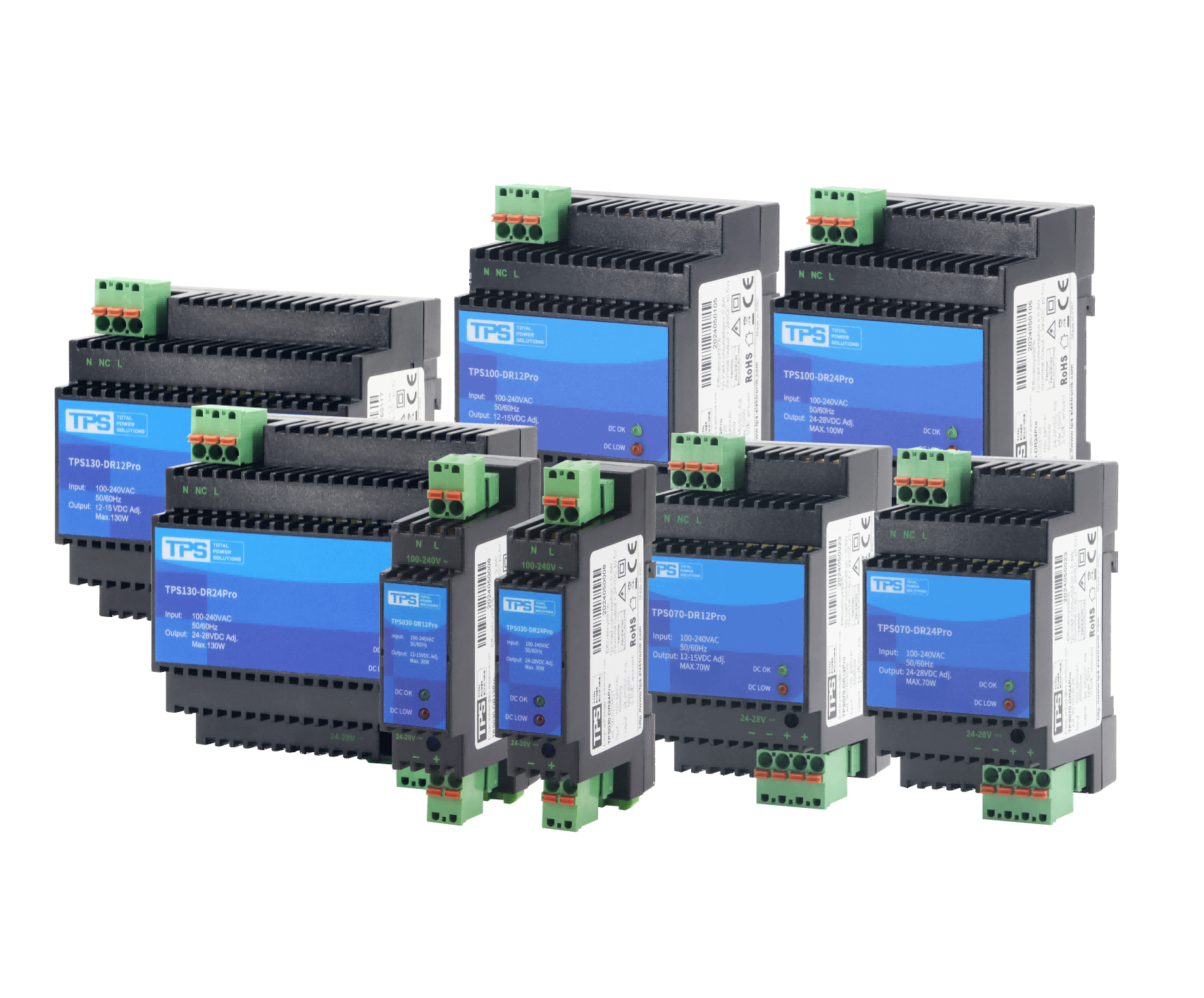
The days when raw power demanded bulky, space-hungry hardware are steadily fading. Modern engineering has unlocked architectures where every component earns its place, squeezing relentless output into chassis that border on impossibly small. This shift isn't about stripping away capability to shrink dimensions; it's a wholesale rethinking of how heat, current, and physical layout can coexist without forcing a trade-off.
Advanced thermal management sits at the heart of these designs. Instead of simply adding larger fans or thicker heatsinks, manufacturers lean on computational fluid dynamics to map every airflow path, using vapor chambers and liquid-metal compounds that pull heat away far more efficiently than traditional pastes. The result is hardware that stays cool under sustained load even when there's barely a millimeter of breathing room, freeing designers to pack higher wattage into forms that would have seemed absurd a decade ago.
Equally vital is the shift to gallium nitride and silicon carbide semiconductors, which switch faster and waste less energy as heat. Combined with miniature planar transformers and densely routed multilayer boards, these components let power supplies and amplifiers deliver full-rated output from packages no larger than a paperback novel. The real achievement isn't just making things smaller; it's proving that compact doesn't have to mean compromised, and that performance density is a far more honest metric than sheer size alone.
How Wide-Input Ranges Handle Unstable Industrial Environments
Industrial environments are rarely electrically quiet. Voltage sags lasting only a few cycles, high-energy transients from motor starts or contactor chatter, and brownouts that dip the rail well below nominal can all appear in a single shift. Power supplies with tight input tolerances tend to reset or overstress protection components when these events stack up, causing nuisance trips and machine downtime. A wide-input design—one that accepts a broad span of voltages and rides through deep sags without interruption—absorbs these fluctuations as part of normal operation, rather than treating them as faults. This means contactors stay latched, logic keeps running, and sensors don’t need recalibration every time the factory floor compresor kicks in.
Beyond simple undervoltage, high-energy surges ride in from the grid or are reflected off heavy inductive loads. A tightly specified front end might clamp aggressively but still leak enough let-through energy to degrade electrolytics or latch up control logic. Wide-range supplies usually incorporate a mix of gas discharge tubes, sizeable metal-oxide varistors, and generously rated diode bridges that flatten transient energy before it reaches the converter stage. They do this without adding unrealistic source impedance assumptions—the kind that collapse when a few hundred meters of cable separate the supply from the panel. By designing the input to handle 300 VAC for 200 ms or 420 VDC for a second without relying on software intervention, these supplies turn what would otherwise be a catastrophic site event into a non-event for the control system.
Component choice also plays a quiet but critical role. Bulk capacitors rated at 500 V and semiconductors with large safe operating areas aren’t typical in narrow-range products, yet they’re standard in wide-input designs because they provide the thermal and electrical headroom needed for heavy industrial service. This keeps inrush current manageable when the line suddenly recovers from a deep sag—a moment that often pops fuses in less robust gear—and prevents the slow thermal walking that kills electrolytic caps prematurely. The result is less frequent replacement, fewer unexplained resets, and the ability to install the same power supply across sites with highly variable mains quality without having to reconfigure taps or swap units.
Thermal Management Features That Extend Service Life
Advanced thermal management goes beyond simple cooling—it actively regulates temperature fluctuations that silently degrade components. By integrating adaptive fan curves and precision sensors, the system dynamically adjusts airflow based on real-time load rather than running at fixed speeds. This means less thermal cycling on solder joints and capacitors, directly slowing the wear that leads to premature failures.
Component placement and airflow design often fly under the radar, but they make a tangible difference. Strategic board layouts channel air across voltage regulators and memory modules first, preventing hotspots that accumulate over months of operation. The use of thermally conductive gap fillers and extended heat sinks draws heat away from critical ICs without relying on loud, high-RPM fans that suck in dust and clog over time.
Intelligent power budgeting further protects the hardware. When ambient temperatures rise, the control firmware can gracefully throttle non-essential circuits while keeping core functions stable, avoiding abrupt shutdowns. Combined with firmware-level monitoring that logs temperature trends, it's possible to predict and mitigate thermal stress before it becomes a failure statistic. These layered strategies keep the device running reliably well past typical lifecycle expectations.
Real-World Applications Where Reliability Is Non-Negotiable
In medical devices like pacemakers or insulin pumps, a split-second malfunction isn’t just a technical glitch—it’s a potential life-or-death failure. These tools operate inside the human body or deliver critical care, where even the tiniest software bug or hardware hiccup can trigger catastrophic outcomes. That’s why manufacturers in this space test relentlessly, simulating years of wear and electrical interference to guarantee that when a life hangs in the balance, the device won’t miss a beat.
Aerospace engineering pushes reliability even further. Avionics systems guiding a jet through turbulence, or the automated controls of a spacecraft docking at the International Space Station, cannot afford a single unpredictable failure. There’s no roadside assistance at 35,000 feet or in orbital velocity. Redundancy is built into every layer—triple-redundant sensors, fail-safe algorithms, and real-time health checks—so that if one component falters, another instantly takes over without the pilot or crew ever noticing.
Beyond these extremes, infrastructure that fuels daily life—think power grids and water treatment plants—quietly depends on systems where reliability isn’t a feature but a foundation. A SCADA failure at a pumping station can poison a city’s drinking water, while a relay glitch in a substation could black out hospitals and homes within seconds. Engineers in these fields embrace a zero-tolerance mindset toward downtime, often designing for decades of continuous operation with minimal human intervention, because the cost of failure is simply too high to calculate.
Installation Tips for Maximizing Performance in Tight Spaces
When room is scarce, rethink cable management from the outset. Pre-route wiring along the edges of the enclosure using slim, right-angle connectors that barely protrude. Swap standard power and data cables for custom-length, flexible options—every inch saved reduces airflow obstruction. Avoid bundling signal lines tightly against high-current wires; instead, lace them along separate paths with a bit of breathing room, even if it means using a few extra zip-tie mounts.
Mounting orientation can make or break thermal performance in cramped quarters. If the device relies on convection cooling, never place its vents against a solid wall—leave at least a finger's width of clearance on all sides, more if the manual calls for it. In forced-air setups, align chassis fans so they pull cool air from the bottom front and exhaust hot air out the top rear, but verify the path isn’t choked by adjacent components. A thin, foil-faced foam baffle can sometimes redirect stray recirculation just enough to drop internal temperatures by a few critical degrees.
Test under load early, while access is still possible. Run the gear hard for an hour and check for hotspots with an infrared thermometer or even the back of your hand. A small auxiliary fan mounted on a nearby bracket might be the difference between stable operation and intermittent throttling. If vibration is a concern, swap rigid metal standoffs for silicone dampers—they eat up a millimeter or two of space but isolate hum that would otherwise resonate through the frame.
FAQ
DIN rail power supplies are compact devices that convert AC mains voltage to a stable DC output, designed to snap onto standard DIN rails inside control cabinets. You'll find them heavily used in industrial automation, building controls, and machinery where space is tight and reliability can't be compromised.
The big advantage is the installation speed and modularity. You can quickly clip them in, reposition, or add more units without drilling holes. They also keep your panel tidy, improve airflow, and make maintenance swaps a breeze - which matters when downtime costs money.
Look for a wide temperature range, high efficiency (above 90% if possible), built-in overload protection, and a rugged metal or high-grade plastic casing. PFC, low ripple, and certifications like UL 508 or ATEX are also key if you're working in demanding environments.
Mean Well, Phoenix Contact, Siemens, Delta, and PULS are all solid choices. Mean Well offers great value for general use, while PULS and Phoenix Contact are often specified for the harshest conditions with long warranties and high MTBF ratings.
Add up the worst-case current draw of all your loads, then add a safety margin of 20-30%. Also factor in the inrush current of motors and the startup surge of capacitive loads. Running a PSU too close to its max rating shortens lifespan drastically.
True reliability comes from careful design: use of quality electrolytic capacitors rated for 105°C, conformal coating against moisture and dust, vibration-proof terminals, and comprehensive protection circuits. A 10-year field track record speaks louder than any spec sheet.
You can parallel many modern units with built-in current sharing, but always check the manufacturer's guidance first. Series connection for higher voltage is generally fine, but make sure both outputs are floating and the units can handle the total voltage isolation. A simple fix for capacity boosts is to use a redundancy module.
Conclusion
When evaluating DIN rail power supplies for demanding industrial setups, several factors truly set the best units apart. Beyond just meeting spec sheets, durable designs incorporate robust components—think high-grade capacitors and coated circuit boards—that resist vibration, temperature swings, and electrical noise. Compact models these days manage to pack impressive output into narrow housings without sacrificing stability, a critical advantage in crowded control panels. Equally important is how well a supply handles the messy reality of factory power: a wide AC/DC input range means it rides through sags, surges, and harmonic distortion that would trip lesser units. Combined with smart thermal management—often using convection cooling or strategically placed heat sinks—the best supplies run cooler and last years longer, avoiding premature field failures.
Where this reliability becomes non-negotiable is in sectors like water treatment, food processing, and automated manufacturing, where downtime can mean lost batches or safety risks. These environments demand power that stays on even when ambient temperatures soar or dust clings to vents. For installers, squeezing every drop of performance often comes down to proper mounting orientation and leaving enough clearance for airflow, especially in compact enclosures. A small tweak like adding a cooling gap can dramatically extend a unit's service life. In the end, the top DIN rail supplies earn their reputation not through flashy features but through consistent, quiet performance when the rest of the system depends on them.
Contact Us
Contact Person: Lily
Email: [email protected]
Tel/WhatsApp: +49 (0) 2161 49526-0
Website: https://tps-elektronik.com/en/