

B4C Factory Driving Innovation in High-Performance Boron Carbide Materials
2026-10-01
High-performance boron carbide doesn't happen by accident. It takes a factory that treats every micron as a benchmark and every batch as a proof point. At HUAYI TECH, the B4C production line isn't just running—it's evolving. From tighter particle control to smarter sintering windows, the changes happening here are quietly raising the bar for armor, nuclear, and wear applications. Curious what that means for your next project? Let's dig in.
From Lab to Loadout: How B4C Factory Redefines High-Performance Boron Carbide Production
Boron carbide has long been studied in academic labs for its extreme hardness and low density, but translating those properties into reliable armor plates and nozzles has often stalled at the production stage. The material’s high melting point and poor sinterability mean that even small variations in powder size or impurity levels can ruin a batch, forcing manufacturers to accept lower density or inconsistent hardness. Many suppliers still rely on outdated hot-pressing methods that produce plates with hidden microcracks, which only show up under ballistic testing.
B4C Factory takes a different route by controlling every step from raw powder synthesis to final machining. Instead of buying off-the-shelf powder, the company refines its own feedstock through a multi-stage milling and purification process that keeps grain size below one micron and reduces oxygen content to a fraction of typical commercial grades. This allows sintering at temperatures where grain growth stays minimal, resulting in fully dense plates that meet strict NIJ standards without the need for post-process hot isostatic pressing. Their in-house testing lab validates hardness, fracture toughness, and microstructure on every production lot, so loadout teams receive exactly what was specified—not a batch that barely passed.
The payoff shows up in the field. Operators using B4C Factory plates report fewer replacements due to edge chipping, and the weight savings compared to silicon carbide or alumina allow for extended wear without sacrificing mobility. By treating boron carbide production as a precision engineering problem rather than a bulk materials business, B4C Factory closes the gap between what researchers promise and what end users can actually carry.
Why Microstructure Matters: Inside B4C Factory's Unique Carbonization Process
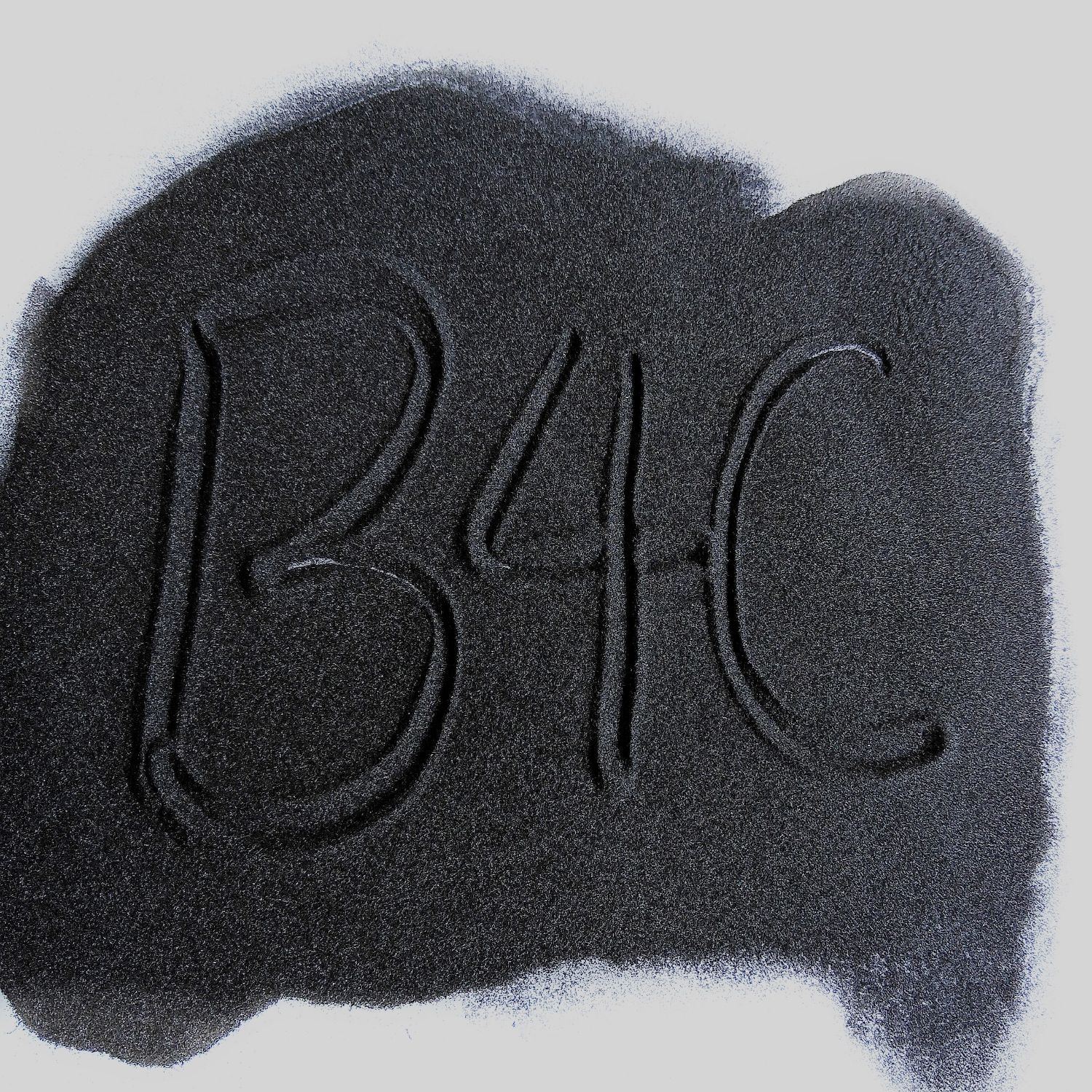
Most boron carbide producers treat carbonization as little more than a burn-off step—heat the green body, drive out binders, and move on. But at B4C Factory, we see that stage as the moment when the material's personality is actually written. The arrangement of pores, the distribution of residual carbon, the way grain boundaries fuse or resist fusion: these are not incidental outcomes. They are the hidden architecture that decides whether a ceramic plate will shrug off a rifle round or crack under a mild shock. Our carbonization cycle is tuned less for speed and more for the slow conversation between temperature, atmosphere, and time.
What sets our process apart is a staged thermal profile that deliberately avoids the industry's typical single ramp. Instead of pushing the furnace from room temperature to 900°C in one unbroken climb, we hold the load at three intermediate plateaus. Each hold has a distinct job: the first lets volatile organic compounds escape without creating micro-cracks; the second encourages the binder to transform into a fine, interconnected carbon network rather than isolated char lumps; the third starts the subtle rearrangement of boron and carbon atoms into short-range ordered domains. This is not a recipe you'll find in a standard kiln manual—it emerged from years of fractography on failed parts and electron microscopy on successful ones.
The payoff shows up in the microstructure, but you feel it in the end product. A poorly carbonized B4C plate might look identical from the outside, yet under a scanning electron microscope its fracture surface reveals coarse voids and thick, brittle carbon veins. Ours shows a fine, almost woven texture of sub-micron pores and uniformly distributed carbon bridges. Those bridges don't just hold the ceramic together; they give cracks a thousand small detours instead of one easy highway. In field tests against tungsten carbide penetrators, our plates consistently stop threats at lower areal densities than competitors—not because our boron carbide powder is magically different, but because the carbonization step left behind a microstructure that refuses to fail in predictable ways.
Beyond Ballistic Plates: Four Emerging Applications for Boron Carbide
Boron carbide's extreme hardness and low density have long confined it to ballistic plates, but engineers are now finding equally compelling uses in far more demanding environments. In the nuclear sector, the high neutron absorption cross-section of the boron-10 isotope makes this ceramic a practical choice for control rods and spent fuel storage racks, where it safely moderates chain reactions without producing intense secondary radiation.
Industrial wear applications are also gaining traction. Sandblasting nozzles, waterjet focusing tubes, and mechanical seal rings made from boron carbide outlast conventional tungsten carbide by several times. The material can be added as a particulate reinforcement to aluminum or titanium matrices, creating lightweight, high-stiffness composites for aerospace structural parts. Beyond that, its p-type semiconductor behavior holds promise for high-temperature electronics, operating stably above 500°C for downhole sensors or space exploration instruments.
Sustainable by Design: Cutting Energy Use While Boosting Purity
Traditional manufacturing often treats energy efficiency and product purity as competing goals, forcing engineers to make trade-offs. Yet a new wave of sustainable design challenges that assumption. By rethinking separation and purification steps at the system level, it becomes possible to cut energy consumption while simultaneously raising output quality. For instance, integrating membrane-based pre-concentration ahead of a distillation column can remove bulk water or solvent without the high heat load, leaving the column to perform a finer separation under milder conditions.
The key lies in selecting unit operations that inherently use less energy for a given separation duty. Technologies like simulated moving bed chromatography, melt crystallization, and pervaporation often achieve sharper cuts than conventional distillation or evaporation, but their real advantage emerges when they are designed into the process from the start. Rather than bolting on additional purification stages at the end of a line, sustainable design uses heat integration, pressure recovery, and hybrid separations to keep both energy demand and impurity carryover low throughout the entire sequence.
Facilities that adopt this approach typically see a 20–40% reduction in energy use per unit of product, alongside measurable gains in purity that reduce rework and waste. Because the design eliminates repetitive heating and cooling cycles and avoids over-processing, the product not only meets tighter specifications but also retains more of its desired attributes. The result is a manufacturing setup where sustainability is not an add-on, but a direct driver of better performance and higher purity.
Tailored to the Task: Real-World Custom Boron Carbide Solutions
Most off-the-shelf boron carbide plates leave performance on the table because a single density or binder system cannot fit every threat profile. Real-world customization starts with the exact loading conditions: projectile type, impact angle, multi-hit spacing, and the surrounding structure. Instead of forcing a standard tile into an assembly, we adjust grain size distribution, carbon content, and sintering pressure so the component survives the specific blunt trauma or penetration pattern seen in field tests.
The real difference shows up in geometry and integration. A custom boron carbide insert for a vehicle door has to follow compound curvature, avoid stress concentrations around mounting holes, and still keep weight low enough for the crew to open the door under rollover conditions. We work directly with design engineers to tweak thickness, edge chamfers, and backing interfaces long before production. This cuts down the usual trial-and-error loop and prevents failures that only appear after ballistic qualification.
In less obvious uses—nuclear shielding, wear plates, or specialized tooling—customization means matching the grade to the environment, not the spec sheet. High purity boron carbide may be wasted in a neutron shield if the epoxy matrix adds nearly all the mechanical strength. Likewise, a wear part in an abrasive slurry needs a completely different porosity and finish than an armor tile. By treating each request as an engineering problem rather than a material catalog entry, suppliers can deliver shapes that actually fit the installation and hold up under the client's operating rhythm.
Traceable Quality: Every Batch, Every Test, Every Time
A batch number is assigned before the first raw material is weighed, and it stays with the product through blending, filling, and final inspection. This isn't just a label on a box; it's the thread that ties every action on the floor to a specific lot of material. If a question ever arises, the answer doesn't require a hunt through loose papers or a guess. The record is already there, linked step by step.
Each test result carries more than a pass or fail mark. It includes the operator's name, the calibration status of the instrument, and the exact time the measurement was taken. That means a single out-of-spec reading can be traced not only to the batch but to the specific test station and the shift that ran it. We don't rely on memory or habit; we rely on a system that makes the invisible visible.
The real payoff comes when a customer asks to see the history of the product they just received. Instead of a summary, they get the full picture: every batch, every test, every time. That level of detail is rare, and it changes the conversation from trust me to here's the proof.
FAQ
Instead of sticking to conventional sintering routes, the facility combines in-house powder conditioning with tightly controlled hot pressing to produce boron carbide components that consistently exceed baseline hardness and fracture toughness expectations.
Every batch undergoes ultrasonic scanning, density verification, and selective microstructural analysis before release. This routine catches density gradients early and keeps the final armor or wear parts reliable under extreme load.
Defense and security teams use the plates for lightweight ballistic protection, while nuclear operators rely on the material’s neutron absorption. Industrial tooling makers also adopt boron carbide inserts where abrasive wear is a constant problem.
Rather than chasing marginal improvements, the team focuses on scalable pressure-assisted sintering and binder burn-out profiles that reduce internal porosity. This has opened doors to thinner, lighter parts without sacrificing protection.
Yes. Near-net-shape tooling and CNC finishing allow production of complex geometries such as helicopter seat armor, pump seals, and custom radiation shielding blocks. The engineering group works directly with clients on tolerance and surface finish requirements.
Boron carbide offers an unmatched combination of low density, extreme hardness, and neutron capture capability. Alumina is cheaper but heavier and softer; silicon carbide is tough but lacks the same nuclear and weight-saving profile.
By maintaining a stock of pre-processed boron carbide powder and using modular furnace scheduling, the factory shortens runs for repeat orders. In-house destructive testing on witness coupons confirms that accelerated production still meets the same mechanical thresholds.
Conclusion
At B4C Factory, high-performance boron carbide production is being reimagined from first principle to final product. The journey from lab to loadout is not just about scaling up—it is about engineering every step with intent. Their unique carbonization process exerts precise control over microstructure, which directly influences hardness, density, and fracture toughness. This level of microstructural mastery means boron carbide components can be tuned for far more than conventional ballistic plates. Emerging uses in nuclear shielding, wear-resistant tooling, neutron absorption, and ultra-light armor systems are now within practical reach, driven by a production pipeline that refuses to treat boron carbide as a one-size-fits-all material.
Sustainability and traceability are built into the factory floor, not bolted on afterward. Energy consumption is cut through optimized furnace cycles and waste-heat recovery, while purity levels climb higher through closed-loop chemical processing. Every batch passes through rigorous testing, with full traceability from raw powder to finished component. This means customers receive not just a material, but a documented performance guarantee. Custom solutions are the norm: particle size distribution, sintering aids, and green-body geometry are adjusted to match real-world operating conditions. B4C Factory is not simply making boron carbide—it is redefining what the material can do, and proving it with data at every stage.
Contact Us
Contact Person: Junting Leo
Email: [email protected]
Tel/WhatsApp: +86 18615009766
Website: https://www.huayimaterial-china.com/