

Autonomous Handling: Which Option Works Best for You?
2026-08-20
Autonomous handling is no longer a question of if, but which. With so many options—from automated guided carts to full-size reach trucks—it’s easy to get lost in spec sheets and sales pitches. At HANGCHA, we see this decision every day, and the truth is there’s no single right answer. The best choice depends on your floor layout, load types, and how much flexibility you actually need. Before you commit to a system that might fight your workflow, let’s cut through the noise and look at the options side by side.
Why Most Autonomous Setups Stumble Out of the Gate
Most autonomous initiatives fail before the first real workload is even deployed. Teams get seduced by the promise of fully automated pipelines, but they skip the unglamorous groundwork: data quality checks, access controls, and a clear definition of what "done" means for a machine-driven process. The result is a system that can execute steps quickly but has no reliable way to catch its own mistakes, so small errors compound into expensive rollbacks.
Another early misstep is trying to automate everything at once. Instead of picking one repetitive, well-understood task and proving value, teams spread their effort across a dozen half-finished workflows. That overloads the people who have to review logs, manage exceptions, and maintain half-baked integrations. The setup doesn't stumble because the technology is bad; it stumbles because no one built the feedback loops and human oversight points that let autonomy evolve without turning into chaos.
The Real Price of Picking the Wrong Automation Level
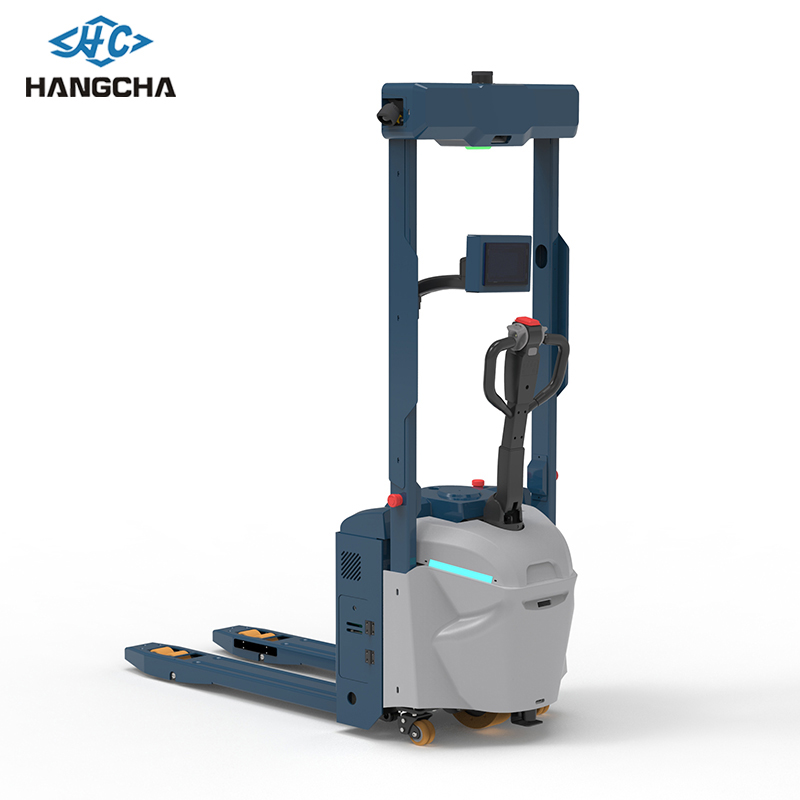
Companies rarely calculate the hidden costs of mismatched automation until a process breaks. Going too far with automation often means every exception becomes a crisis, requiring engineers to write new scripts or manually override systems that were never designed for edge cases. The result is not lower labor costs but shifted labor—from routine tasks to firefighting.
Under-automating has its own quiet drain. Teams end up copying data between systems, manually checking outputs, and fixing errors that software could have caught. These hours don't show up as a line item, but they compound. Worse, slow manual handoffs create bottlenecks that customers feel, even if internal reports look fine.
The smarter approach is to match automation to variability, not to ambition. Processes with stable, high-volume steps can handle full automation. Those with frequent exceptions need a human checkpoint. Build in manual overrides and log them, then review those logs quarterly. That way, you're not paying for flexibility you don't need or rigidity you can't afford.
Three Questions That Reveal Your Handling Needs
Every operation has blind spots when it comes to handling. The first question is not "what equipment do we want?" but "what exactly are we moving, and where does it start and end?" This shifts focus from shiny features to real constraints like weight, shape, and pathway.
Second question: Who actually touches the load? Ask line workers about repetitive strain, awkward reaches, or pinch points. Their answers often contradict budget proposals. A cheap cart that saves money upfront can quietly drain productivity if it forces two-person lifts or blocks narrow aisles.
Third question: What happens when volume spikes or product mix changes? If your current answer is "we'll figure it out," your handling system is already behind. Look for patterns in past bottlenecks. The goal isn't a perfect answer today—it's a clearer picture of where flexibility has to live.
Finding the Sweet Spot Between Manual and Fully Autonomous
Automation promises speed, but handing everything to a machine creates brittleness; keeping every task manual wastes human attention on repetitive noise. The useful middle ground emerges when the system owns predictable, high-volume tasks and hands control back the moment context shifts. That threshold isn't fixed—it moves with the data, the user, and the cost of getting it wrong.
A practical example shows up in document review. A rule-based filter can flag obvious duplicates and formatting errors without slowing anyone down, while a human remains responsible for nuanced judgment calls like whether a clause changes legal exposure. Trying to automate the latter fails; leaving the former to people burns hours. The sweet spot lives between those two failure modes.
To locate it, watch where people override the machine and where they ignore it. Overrides point to automation that's too aggressive; ignored alerts signal a system that's too noisy to trust. Adjusting the handoff point until both signals drop—without pretending the automation can handle every edge case—yields a workflow that feels less like a tug-of-war and more like a well-timed relay.
What Your Floor Plan Says About Your Ideal System
Your floor plan isn't just a map of rooms. It quietly points to the kind of system that would actually work in your home. Open layouts, for example, beg for whole-space audio and lighting scenes that stretch across zones, while a warren of small rooms tends to favor per-room climate control and motion sensors that don't trip over each other.
Look at where the windows, doors, and load-bearing walls sit. Long hallways and thick plaster can kill a mesh network if you're not careful. A narrow Victorian terrace with solid brick partitions demands a different approach than a glassy open-plan loft where signals fly freely but privacy is a joke.
Even the small stuff matters: ceiling height, outlet placement, where you actually hang out versus where you just pass through. Trace your daily path on the floor plan and you'll see which corners deserve smart lighting or a thermostat sensor, and which ones can stay dumb without anyone noticing.
The Trade-offs Nobody Mentions: AGVs vs. AMRs
Most comparisons of AGVs and AMRs focus on flexibility and cost, but one trade-off rarely gets airtime: the hidden infrastructure you still need either way. AGVs demand physical guides like magnetic tape or buried wires, and everyone knows that. What is less obvious is that AMRs, despite their map-based navigation, are quietly picky about floor flatness, ambient lighting, and Wi-Fi dead zones. A facility with polished concrete and large skylights can still throw off an AMR's lidar or camera localization, forcing you to re-map the space more often than the vendor's brochure suggests. The real cost is not the initial setup; it is the ongoing tuning of an environment that was never designed for robots.
Safety certification is another under-discussed balancing act. With AGVs, the safety logic is almost boring: stop when a scanner sees an object, follow the line, no surprises. AMRs bring more capable obstacle avoidance, but that capability comes with a heavier safety engineering burden. You might need redundant sensors, safety-rated PLCs, and a risk assessment that accounts for the robot choosing a new path in real time. Operators also need a different kind of training. Instead of learning where a fixed route is, they learn to predict what an AMR might do next, which is a cultural shift many warehouses underestimate until an incident or near miss forces the conversation.
Then there is the data problem nobody mentions. AGVs generate little more than stop/start events and battery levels. AMRs generate a continuous stream of paths, obstacle detections, localization confidence scores, and diagnostic logs. That data can be useful for optimization, but it also creates a new operational burden: someone has to store it, secure it, and decide what to do when the robot's cloud portal flags an anomaly at 2 a.m. If your IT team already struggles with IoT devices, adding a fleet of AMRs can quietly shift the bottleneck from the warehouse floor to the server room. The trade-off is not just in the robot, it is in the data pipeline that comes with it.
FAQ
It's broader than most people assume. Autonomous handling can include automated guided vehicles, autonomous mobile robots, self-driving forklifts, conveyor integrations, and even robotic arms that work without direct human control. The common thread is that the system uses sensors and software to move, pick, sort, or store materials without someone steering every move. But not every option fits every operation, so the real question is about matching the specific task to the right level of autonomy.
Start by mapping your current material flow. If you have repetitive routes, predictable load sizes, and clean floor conditions, you're likely a strong candidate. If your workflows change daily and involve a lot of one-off tasks, a semi-autonomous or assistive system might be a better first step. Many companies also overlook data readiness. Your inventory and warehouse management systems need to talk to the autonomy layer, otherwise you'll create new bottlenecks.
Fully autonomous means the equipment can complete an entire task cycle, like picking up a pallet, traveling to a drop point, and setting it down, without human intervention. Semi-autonomous usually still requires an operator for certain steps, such as attaching a load or confirming a destination. In practice, many operations start with semi-autonomous features like auto-docking or line following and gradually move toward full autonomy for specific, well-defined routes.
Not anymore. Smaller operations often see faster payback because their labor constraints hit harder. A single autonomous pallet mover can free up one or two workers for higher-value tasks, and the upfront cost has dropped significantly over the last few years. That said, you need enough throughput density to keep the machine busy. If it sits idle for most of a shift, the math won't work.
It depends on the navigation technology. Some systems use SLAM or LiDAR and need only a good initial mapping session, with no physical guides. Others rely on magnetic tape, QR markers, or reflectors, which means more setup and less flexibility when you rearrange the floor. You'll also need robust Wi-Fi coverage, clear charging zones, and updated safety signage. Don't overlook docking stations, pedestrian barriers, and a plan for how the autonomous units will interact with truck docks and elevators.
Modern systems use a mix of cameras, LiDAR, and ultrasonic sensors to detect obstacles and either slow down, stop, or reroute. But unexpected is the key word. If your environment frequently has loose shrink wrap, leaning pallets, or overhead obstructions, the system may pause more often, which eats into productivity. Irregular loads are still a challenge. Most systems work best with standardized pallet and container sizes. For odd-shaped items, you may need custom end-effectors or a human-in-the-loop exception process.
The biggest one is focusing on the robot itself instead of the workflow. A shiny autonomous forklift won't help if your pick locations are disorganized or your ERP data is inaccurate. Another common mistake is underestimating change management. Operators and warehouse staff need to trust the system, not fight it. Finally, some buyers ignore service and support. These are complex machines and software; if the vendor can't provide fast remote diagnostics and local parts, downtime will erase your savings.
Yes, but safety has to be designed into the traffic management plan, not bolted on afterward. Use physical separation where possible, set speed limits, and make sure all workers understand how to behave around autonomous units, for example, not cutting in front of them. Many sites also use wearable tags or geofencing so the autonomous vehicle knows when a person is nearby. The best implementations treat humans and autonomous machines as part of the same team, with clear right-of-way rules.
Conclusion
Plenty of facilities jump into autonomous handling expecting immediate payoff, only to discover that the wrong level of automation creates fresh bottlenecks instead of removing them. Early stumbles usually trace back to a mismatch between what the system assumes about your floor plan and how your team actually moves material day to day. The real price shows up later, in rework, underused vehicles, and workflows that still need constant human babysitting. Before committing to any platform, ask three direct questions: how often do your routes change, how much variability exists in load types and pickup points, and what happens when an exception interrupts a normal cycle. Honest answers reveal whether you need a mostly manual assist, a hybrid setup, or a fully driverless flow. Most operations land somewhere in between, where people handle unpredictable tasks and vehicles take over repetitive, high-volume moves.
Your floor layout is often the deciding factor. Narrow aisles, dynamic staging areas, and frequent layout changes favor autonomous mobile robots (AMRs) that map and adapt on the fly. Fixed routes and stable infrastructure may justify automated guided vehicles (AGVs), but those come with less flexibility and hidden costs for infrastructure upkeep. The trade-off rarely appears in vendor demos: AGVs follow a predictable path and cost less upfront, while AMRs reroute around obstacles but demand better mapping hygiene and sensor maintenance. Rather than chasing a fully autonomous future, pick the option that matches how your floor actually behaves today, and leave room to adjust as volumes shift. That balanced approach usually delivers better throughput than an expensive, overbuilt system that fights your daily reality.
Contact Us
Contact Person: Liuxue
Email: [email protected]
Tel/WhatsApp: +86-19084200370
Website: https://www.hf-ec.com/