

Autonomous Handling Manufacturer: How to Evaluate the Right Partner for Your Facility
2026-11-19
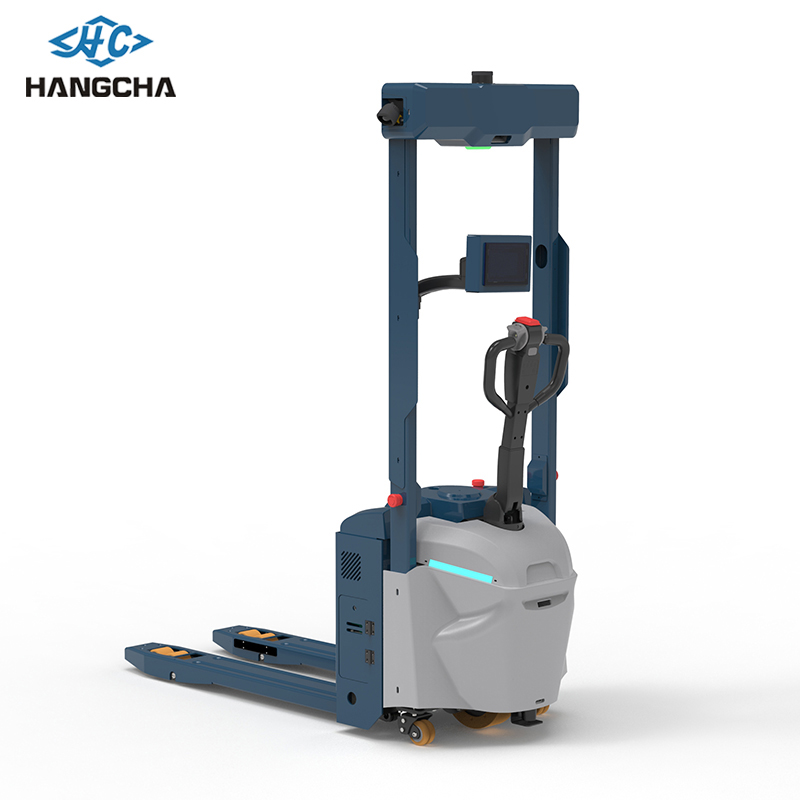
Choosing an autonomous handling manufacturer rarely comes down to hardware alone. The right partner has to read your facility's rhythm, adapt to narrow aisles, shifting loads, and peak throughput without forcing you to redesign the floor around the technology. HANGCHA builds its autonomous solutions around that kind of operational fit. Before you commit to a vendor, here are the factors that separate a dependable long-term partner from a costly experiment.
Define the Routes That Truly Need Autonomy
Autonomy is not a one-size-fits-all upgrade. Before wiring sensors and control loops into every corner of a facility, take a hard look at the actual movement patterns. The routes that genuinely benefit from autonomy share a few telling traits: they are repetitive enough to bore a skilled operator, hazardous enough that a lapse in attention carries real consequences, and stable enough that a machine can build reliable context over time. A shuttle run between a loading dock and a staging area is a far better candidate than a path that shifts daily through temporary construction zones or depends on constant human negotiation.
The question to ask is not “can this route be automated?” but “does removing the driver here solve a problem worth solving?” Some corridors are better left with a person at the wheel, precisely because their value lies in improvisation. Forcing autonomy onto a route that changes every shift, involves mixed pedestrian traffic with no clear right-of-way, or requires frequent exceptions will create more edge cases than it eliminates. The goal is to pick routes where the environment is legible to a machine: clear boundaries, predictable obstacles, and a task that repeats often enough to justify the calibration effort.
A useful filter is to shadow the operator for a full week and mark every moment they deviate from the nominal path. If those deviations are rare and simple to categorize, autonomy has a chance. If they are constant and context-heavy, the route is not ready. By narrowing autonomy to the routes that truly need it, you avoid the costly trap of automating for the sake of automation and instead free human attention for the unpredictable work that machines still cannot handle.
Probe How the System Reacts During Peak Surges
Ramping traffic to a synthetic peak is less about breaking things and more about watching where the first cracks appear. A checkout flow that holds steady under normal load can start queuing requests in odd places once concurrent sessions climb—sometimes it is the payment gateway, sometimes a database connection pool that quietly exhausts itself. The useful signal is rarely the failure itself; it is the order in which components give way.
One practical approach is to run short, aggressive spikes instead of a slow climb. A sudden surge often exposes cold-start latency in auto-scaling groups or cache stampedes that a gradual test never triggers. Logging the exact shape of the degraded response—whether timeouts come back as 502s, retries multiply, or the UI simply stalls—tells you how much headroom actually exists before users notice.
After the spike, the more interesting question is recovery. A system might absorb the peak but stay wobbly for twenty minutes afterwards, with stale connections and half-filled queues still draining. Watching that tail is just as important as tracking the peak itself, because the next surge rarely waits for the previous one to fully settle.
Ask for a Working Demo in Your Own Aisles
Most vendor demos are staged in clean, open spaces with ideal lighting and plenty of room to maneuver. Your aisles are not that. Asking for a working demo on-site puts the equipment or software in the exact constraints you deal with every day: narrow turns, cluttered shelves, inconsistent barcode placement, and staff moving in both directions. Small issues that stay hidden in a showroom tend to surface within the first few minutes between your own racks.
Bring a handful of real products or use a section of live inventory rather than letting the vendor supply a prepped sample set. Watch how the scanner handles damaged labels, high shelves, and items pushed to the back. Have the people who will actually operate the system run it, not just the vendor's trainer. Their questions and hesitations often reveal more than a scripted walkthrough.
If a supplier pushes back on an on-site trial or tries to limit it to a conference room, treat that reluctance as useful information. A working demo in your own aisles is not a courtesy; it is a reasonable expectation before committing budget. Set clear pass/fail criteria around speed, accuracy, and ease of use, and let the results in your actual environment guide the decision.
Look Beyond the Uptime Percentage
Most uptime figures are calculated as an average across a month or a year, which flattens the moments that actually matter. A service can post 99.9% availability and still deliver a miserable afternoon of slowdowns, partial errors, or a checkout process that only works part of the time.
What tends to matter more is how the platform behaves when something goes wrong. Look at how quickly incidents are acknowledged, whether status updates are honest, and how often the provider performs maintenance during the hours your users are most active. A vendor that quietly restarts servers at noon might be technically “up” without being dependable.
In practice, response time consistency and error rates tell a clearer story than a single percentage. If a critical action takes ten seconds to complete or fails silently for a small group of users, those numbers rarely show up in the uptime report, but they absolutely shape the experience.
Check Whether Support Comes From Engineers or Scripts
The easiest tell is usually buried in the follow-up. A script tends to answer the question it expected rather than the one you actually asked, repeating a canned paragraph about clearing cache or updating to the latest version even when you have already said you did that. An engineer, by contrast, will quote the exact error string you pasted, ask what changed just before the failure, or admit that a particular log line does not make sense yet.
Watch how the conversation handles a narrow, specific request. Ask for the meaning of one parameter in a config file, or whether a certain timeout value would cause the timeout you saw. A script will often return a broad overview of configuration options, or another copy-pasted list of troubleshooting steps. A real support engineer may push back, ask for a sanitized snippet of the file, or explain why that parameter is unlikely to be the culprit and what to check instead.
Also pay attention to silence and mistakes. Scripted flows rarely leave room for inconvenient details: they move fast, stay polite, and close the loop as soon as possible. A human response is slower, sometimes a little less polished, but it will typically acknowledge the exact symptom, correct itself if it misunderstood you, and return with a targeted next step instead of a broader restart-and-reinstall routine.
Plan Your Fleet Around Next Year’s Volume, Not Last Year’s
Fleet decisions often get anchored to what the trucks did twelve months ago. That rearview mirror approach quietly builds in waste: too many assets for routes that have softened, too few for regions suddenly waking up. Instead, start the planning cycle with a forward demand map. Ask which lanes are expanding, which customer contracts are up for renewal, and where production schedules are shifting. Only after sketching next year's actual volume shape should the conversation turn to how many vehicles, what classes, and which lease or ownership mix makes sense.
The difference shows up fastest in utilization. A fleet sized to last year's peak will sit idle during new seasonal valleys, while a shortage appears exactly where the market is heating up. Working backward from anticipated shipments lets you rightsize before the pressure hits. It also changes the conversation with finance and operations: instead of defending a replacement cycle, you are presenting a capacity plan tied to revenue expectations. That tends to get approved faster than a nostalgic headcount.
One practical guardrail is to build the plan around a range rather than a single number. Use a base case, a stretch case, and a downside case for volume. Let the fleet composition flex within those bands, with short-term rental or pooling options covering the upside instead of permanent additions. This way, the decision is not about right or wrong predictions but about staying flexible enough to absorb whatever next year actually brings.
FAQ
Look for a manufacturer that asks about your shift patterns, payload mix, and exception workflows before quoting hardware. A real partner can walk the floor, identify where manual and automated traffic will conflict, and explain how their system degrades safely when something breaks. A component vendor usually stops at spec sheets and leaves integration risk with you.
Don't start with the sticker price. Ask what it costs to add a vehicle, change a pickup point, or reroute around a new racking row. A cheaper system often locks you into fixed paths and expensive service contracts. The better comparison is cost per productive hour over five years, including the hours you lose waiting for vendor support.
Floor flatness, dust and humidity, Wi-Fi coverage in aisles, dock door timing, and how often people walk through travel lanes. These details change the vehicle design and sensor package more than most buyers expect. If a manufacturer doesn't ask about them early, treat that as a warning sign.
Ask for a demonstration of an emergency stop at full load, a person stepping into a blind corner, and a lost network connection mid-task. Also ask which safety standards their vehicles are certified to and whether they can share an incident report from an existing site. Real safety claims survive specifics; vague ones fade fast.
Ask what changed in their last two software releases and why. Then ask how long it takes to get a technician on site, whether you can roll back an update, and if your team can edit routes or priorities without calling support. The answers tell you more about day-to-day ownership than any dashboard screenshot.
The pilot usually runs in a clean, controlled area with one vehicle and a narrow set of tasks. Scaling exposes variability: mixed pallet quality, narrow aisles, different door heights, legacy WMS quirks, and operators who weren't part of the pilot. Strong manufacturers plan for that mess from the beginning instead of assuming the pilot conditions will repeat.
You should be able to see live vehicle status, error codes, task completion times, and bottleneck locations without asking the vendor to run a report. The data should also export into your existing WMS or MES through a documented interface. If the system feels like a black box during evaluation, it will feel worse during a production crisis.
Confirm which open interfaces or standard protocols the vehicles support, whether third-party attachments are allowed, and who owns the historical performance data. Also ask what happens if you cancel the service contract: can the vehicles still run, and can another integrator maintain them? The answer reveals whether you're buying a solution or just renting dependence.
Conclusion
Evaluating an autonomous handling manufacturer starts with separating operational gaps from impressive technology. Map the routes that genuinely need autonomy, including high-frequency replenishment lanes, long travel distances, or areas where labor turnover creates constant retraining. Once those are clear, press the vendor on what happens when order volumes spike. A system that holds cycle times during a 30 percent surge without manual fallback is far more revealing than one that performs well in a steady-state demo. Ask them to run that test in your own aisles, with your rack profiles, floor conditions, and traffic patterns. A working demo inside your facility exposes integration quirks that a staged showroom cannot.
Uptime percentages also need scrutiny. A 99 percent figure means little if the remaining 1 percent stalls a critical dock door for hours. Ask for mean time to recovery, failure modes, and the real operational impact of a lost vehicle. Support quality matters just as much, so when something breaks at 2 a.m., you want an engineer who understands your layout, not a scripted triage operator reading from a decision tree. Finally, size the fleet against next year's volume projections, SKU shifts, and peak season forecasts rather than last year's throughput. A partner worth selecting will plan for expansion, software updates, and changing workflows without forcing a full redesign.
Contact Us
Contact Person: Liuxue
Email: [email protected]
Tel/WhatsApp: +86-19084200370
Website: https://www.hf-ec.com/