

Asphalt Shingle Roof Mounting System Factories: The Top 10 from China
2026-08-02
Asphalt shingle roofs dominate residential markets worldwide, but their installation demands mounting systems that balance grip with grace. China has emerged as a powerhouse for these precision-engineered solutions, and the top 10 factories are redefining reliability. Among them, Topfencesolar stands out for its innovative approach, proving that solar-ready roof mounts don't have to compromise on aesthetics or strength. Peek into our curated list—your next project might just hinge on one of these names.
Why China Dominates Asphalt Shingle Roof Mount Production
China’s dominance in asphalt shingle roof mount production isn’t just about cheap labor—it’s a story of clustered supply chains and decades of manufacturing refinement. Entire industrial zones, particularly in provinces like Hebei and Guangdong, have evolved to house every link in the process, from raw aluminum extrusion to custom fastener fabrication. This proximity slashes lead times and logistics costs, allowing factories to turn around large orders faster than competitors in other regions. The result is a level of efficiency that’s hard to replicate elsewhere.
Beyond infrastructure, there’s a deep bench of engineering know‑how that has been cultivated through years of iterative product development. Chinese manufacturers have quietly perfected the art of producing universal and custom mounting solutions that meet diverse international building codes. By investing in automated stamping, precise welding, and rigorous load testing, they’ve turned what many see as a commodity bracket into a high‑reliability component. This technical maturity, paired with the ability to scale production, means that a roof mount made in China often undergoes more quality checks per dollar spent than its counterparts from other manufacturing hubs.
Another overlooked factor is the agile response to shifting market demands. Chinese producers aren’t just following global trends—they’re often setting them through close collaboration with overseas distributors and installers. Whether it’s adapting to new shingle profiles or integrating rapid‑mount features, the feedback loop is remarkably short. This adaptability, combined with streamlined export procedures and a vast logistics network, ensures that Chinese roof mounts remain the default choice for projects ranging from residential retrofits to large‑scale solar farms.
Inside the Manufacturing Process: Precision and Craftsmanship
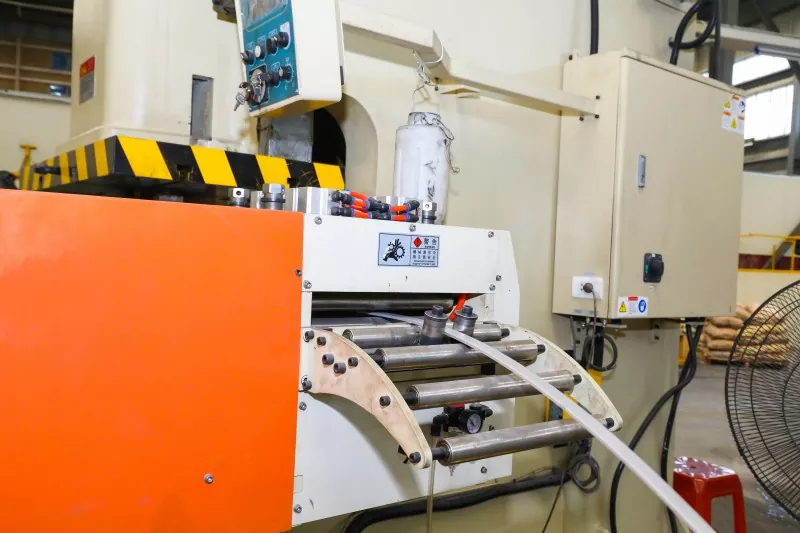
Stepping onto the production floor, you immediately sense the quiet rhythm of skilled hands and calibrated machinery working in unison. Every component is handled as if it were the only one that matters—edges are checked twice, surfaces scrutinized under shifting light, and assembly sequences refined through decades of collective experience. The precision here isn’t simply about hitting tolerances; it’s a deliberate patience, a refusal to let even the smallest deviation pass unnoticed.
What elevates the process beyond standard manufacturing is the way craftspeople internalize their work. They don’t just follow prints; they anticipate how materials will behave under stress, how finishes will age in real-world conditions, and where subtle improvements can be layered in without sacrificing integrity. Finishing touches are applied by hand, not because machines can’t do them, but because a human sense of texture and balance still catches what automated systems overlook.
Underpinning this marriage of instinct and engineering is a culture that treats documentation not as a chore but as a living record. Corrections on the line aren’t punitive—they’re shared immediately, often with a quick pencil sketch on a scrap of paper, then folded back into the master files. This constant, quiet feedback loop turns each batch into a lesson, ensuring that every subsequent piece isn’t just a duplicate but a subtle refinement of the last.
Custom Engineering for Every Roof Pitch and Profile
At the core of our approach is a deep appreciation for the fact that no two roofs are exactly alike. Whether you're working with a steep A-frame or a nearly flat commercial expanse, each pitch demands a tailored structural logic. Our engineers don't rely on off-the-shelf assumptions; they calculate load paths, wind uplift, and thermal movement for your specific geometry. The result is a support system that feels almost organic to the architecture, as if the building itself decided where every bracket and rail should sit.
Roof profiles add another layer of complexity—corrugated sheets, standing seams, trapezoidal ribs—each one reshapes how attachments are made. We’ve developed a range of clamping and fastening solutions that adapt to these contours without puncturing weather seals or creating stress points. Think of it less as mounting hardware and more as a precision fit: the connection grips securely but floats just above the water channel, leaving the roof’s integrity fully intact. This attention to detail means installations are not only safe but nearly invisible from the ground.
We also recognize that engineering isn’t static. As roofs age, settle, or get retrofitted, the original calculations might drift. Our systems include adjustment points that allow for minor realignments over time, and our field teams are trained to interpret site conditions with an engineer’s eye. What you end up with is a rooftop setup that respects the building’s original design, weathers decades gracefully, and never asks the roof to be something it’s not.
Material Innovation Driving Long-Term Performance
Material innovation isn't just about using newer or more advanced substances—it's about rethinking how a product interacts with its environment over time. By selecting composites and alloys that actively resist corrosion, thermal stress, and mechanical fatigue, engineers are extending operational lifetimes far beyond conventional expectations. This isn't achieved through incremental improvements but through fundamental shifts in material science, where self-healing polymers and nano-structured ceramics shift the paradigm from reactive maintenance to sustained, intrinsic durability.
What truly separates leading solutions is how material choices anticipate real-world conditions rather than simply tolerating them. For example, hydrophobic coatings that repel moisture without degrading under UV exposure, or high-entropy alloys that maintain structural integrity across extreme temperature swings, become strategic assets. These materials don’t just survive stress—they leverage it to maintain peak function, effectively turning potential weaknesses into performance advantages. The result is a product that not only lasts longer but performs consistently with minimal degradation, directly impacting overall lifecycle costs and reliability.
Beyond physical resilience, the ingenuity lies in materials that respond dynamically to usage patterns. Consider polymers that stiffen upon impact to absorb shock, then return to a flexible state, or coatings that self-smooth minor scratches through heat activation. Such responsive behavior fundamentally alters the relationship between wear and performance, making longevity an active characteristic rather than a passive trait. It’s this fusion of durability and adaptability that defines next-generation material innovation, anchoring long-term value not in periodic upgrades, but in sustained, uncompromised output.
Global Reach: How These Factories Handle Delivery and Support
Operating across continents means these factories have built robust logistical frameworks to ensure products reach any destination promptly. They partner with major freight carriers and maintain regional distribution hubs, which drastically cut down transit times. From express air freight for urgent orders to cost-effective sea shipping for bulk shipments, clients can choose a delivery method that aligns with their timeline and budget. Real-time tracking is standard, giving customers full visibility from the factory floor to their doorstep.
Localized support is another cornerstone. Instead of a one-size-fits-all approach, these manufacturers maintain multilingual customer service teams and on-the-ground technical staff in key markets. Whether it's a pre-sales consultation, installation guidance, or troubleshooting, assistance is available within the client's time zone. This structure not only speeds up issue resolution but also fosters stronger, trust-based relationships—customers feel heard and supported in their own language and cultural context.
After-sales care doesn't end at delivery. Dedicated account managers oversee long-term needs, from spare parts replenishment to ongoing maintenance training. Automated reorder systems can be set up for consumable components, ensuring production lines never stall. This proactive mindset transforms a simple transaction into a lasting partnership, where the factory's commitment to service matches the quality of its products.
Picking a Partner: What Matters Beyond the Production Line
When you’re sizing up a potential manufacturing partner, it’s easy to get fixated on the machinery, the output numbers, and the shiny certifications. But the truth is, a well-oiled production line only gets you so far. What keeps a partnership alive when things go sideways—and they always will, eventually—is the softer stuff that no audit checklist can measure.
Look past the tour-guide smiles and dig into how they handle hiccups. Do they own mistakes without finger-pointing? Are they open about capacity constraints before they become your emergency? A partner who voluntarily shares bad news early is worth ten who just parrot your own deadlines back at you. Real reliability isn’t about perfection; it’s about transparency when imperfection strikes.
Also, pay attention to cultural alignment—not just in terms of language, but in how they treat their people. Walk the line at shift change. Are there tired eyes on the floor, or does the team seem sharp and respected? Long-term quality depends on factors far from the production line: fair wages, sustainable practices, and a genuine curiosity about your end user. Those things can’t be stamped out in a factory tour; they have to be felt.
FAQ
An asphalt shingle roof mounting system is a specialized setup for attaching solar panels or other equipment to roofs covered with asphalt shingles without causing leaks. It typically uses flashing and brackets that integrate with the shingle layers. These systems are widely used in residential solar installations across North America and Europe, where asphalt shingles are a dominant roofing material.
Chinese factories have become a go-to source due to their extensive manufacturing experience, cost-effectiveness, and ability to deliver large volumes quickly. Many of the top producers have strong R&D teams, use high-grade aluminum and stainless steel, and hold international certifications like UL or TÜV, making them reliable partners for distributors and installers worldwide.
Key factors include their production capacity, in-house testing facilities, certification portfolio (such as ISO 9001, UL 2703), customization options, and real-world project references. It's also wise to check if they perform cyclic load testing and salt-spray corrosion tests to validate durability. Direct communication with their engineering team often reveals how flexible and knowledgeable they truly are.
Absolutely. Most leading factories provide highly tailored solutions, from adjustable tilt kits for various angles to flashing plates shaped for architectural shingles. They routinely modify rail lengths, clamp types, and attachment methods based on client specifications, and some even offer collaborative design services to accelerate time-to-market for unique projects.
They rely on precision-engineered flashing components that slide under the shingles and seal with EPDM or silicone gaskets. The top factories conduct extensive water-spray testing and follow strict dimensional tolerances to ensure each mount diverts water correctly. Many also supply detailed installation guides and video tutorials to assist on-site teams.
For North America, UL 2703 certification is critical for bonding and grounding compliance, along with UL 1703 or UL 3703. For Europe, CE marking and compliance with EN 1090 for structural aluminum are often required. Reputable Chinese factories will provide these certificates from accredited third-party labs and routinely pass annual factory audits.
Yes, nearly all top-tier factories are willing to supply samples, though they may charge for shipping. Some provide free samples for evaluation if you cover the courier cost. This lets you check build quality, finish, and packaging firsthand. It's common to request a pre-production sample as well to ensure alignment with your exact specifications before mass production begins.
It typically comes down to a blend of manufacturing scale, continuous innovation, strict quality control, and long-standing partnerships with major solar brands. These factories often export to dozens of countries, maintain a low defect rate, and invest in automated production lines. Their engineering teams stay ahead of evolving roof integration standards, which gives them a competitive edge.
Conclusion
China's dominance in asphalt shingle roof mounting system production is no accident—it's built on a foundation of precision engineering, scalable manufacturing, and deep material science. Top factories combine automated cutting, bending, and coating lines with rigorous quality checks, ensuring every bracket and rail meets exacting international standards. What truly sets them apart is their ability to custom-engineer solutions for virtually any roof pitch or profile, from steep residential slopes to low-slope commercial buildings, often working directly from architectural plans. Behind this flexibility lies continuous material innovation: advanced aluminum alloys, reinforced polymer composites, and multi-layer anti-corrosion coatings that dramatically extend system lifespan, even in coastal or extreme weather regions.
Beyond the production floor, these factories have refined global logistics into a science, offering consolidated shipping, multilingual technical support, and on-site installation guidance when needed. They maintain regional warehouses and partner with local distributors to slash lead times. Still, choosing the right partner demands looking past catalogs and certifications. The best relationships start with transparent communication, shared design responsibility, and a willingness to co-develop products for niche markets. Visiting a factory, auditing their supply chain, and evaluating their after-sales responsiveness often reveals more than any brochure—because in a market where performance under real-world conditions is everything, trust is built on consistency, not promises.
Contact Us
Contact Person: Nancy
Email: [email protected]
Tel/WhatsApp: +86-13365923720
Website: https://www.topfencesolar.com/