

Air Handling Unit Supplier Checklist for Reliable HVAC Performance
2026-10-14
Selecting an air handling unit supplier isn’t just about comparing fan curves or coil specs—it’s about ensuring every decision downstream holds up under real operating conditions. A practical supplier checklist can mean the difference between stable airflow and constant HVAC headaches. In this guide, we break down the key criteria that separate vendors who deliver reliable performance from those who only promise it. At shairko, we’ve learned that trustworthy AHU partnerships start long before installation.
Build quality checks that reveal more than a supplier's brochure
Most supplier brochures are polished marketing pieces, not reality. If you want to see what a factory actually delivers, walk the floor. Look at how workers handle raw materials, whether jigs and fixtures are maintained, and how finished parts are stacked. A quick check of weld spatter, burr edges, or inconsistent paint thickness will tell you more about their daily discipline than any glossy photo.
Ask for independent test reports from labs you recognize, or better yet, pull random samples yourself and send them out. Test the things that actually fail in the field: load capacity, coating adhesion, dimensional stability after temperature cycling. If a supplier hesitates to let you pick samples or delays shipping them, that hesitation is itself a quality finding.
Build a scoring sheet that forces you to look past the sales pitch. Rate the incoming inspection area, the calibration stickers on gauges, the way nonconforming parts are quarantined. Give points for process control charts on the wall that show real data, not just decorative posters. When you score three suppliers side by side, the differences in operational honesty become impossible to ignore.
The service network question that prevents costly downtime later
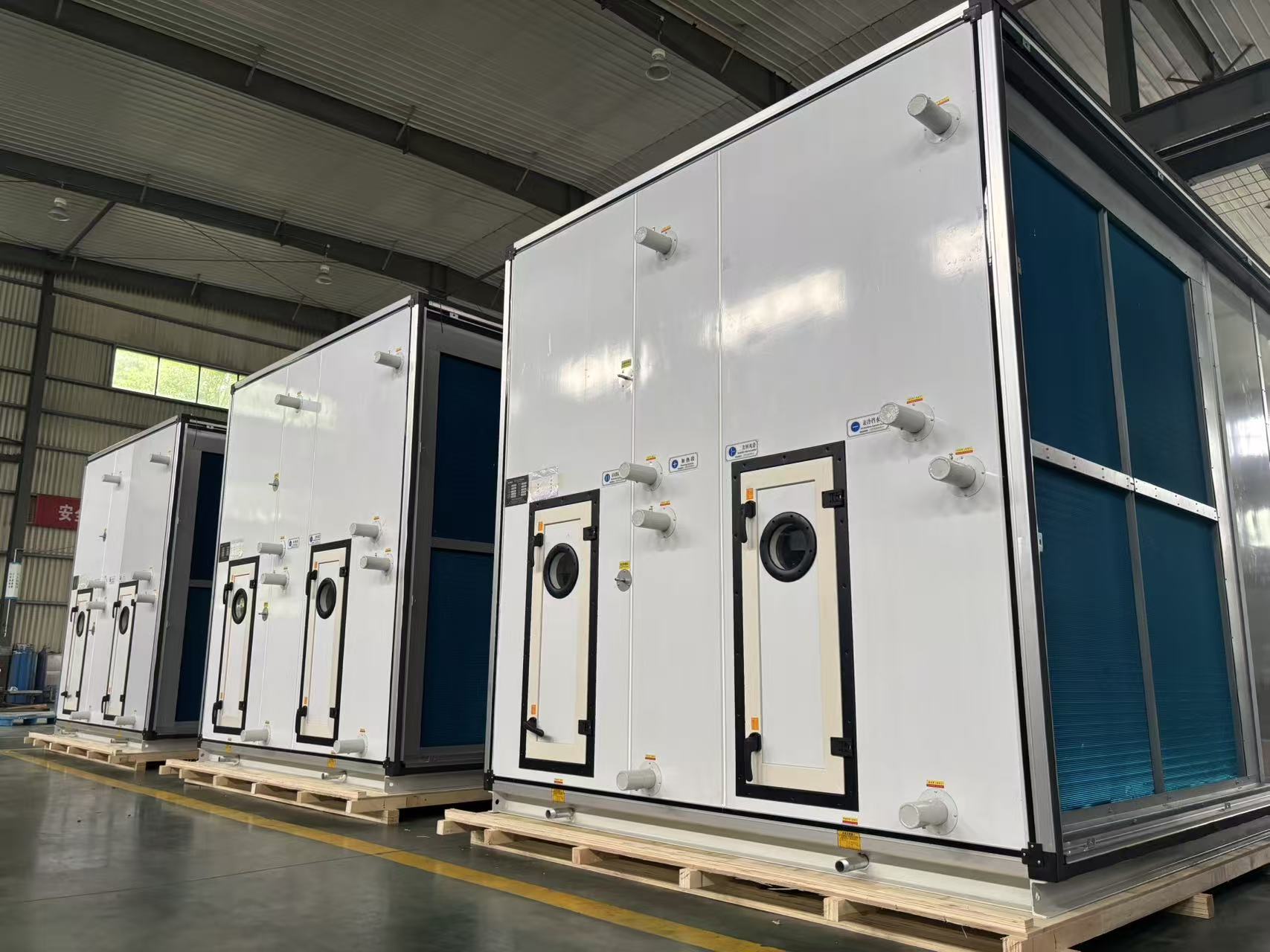
Most operators only ask about uptime percentages and monthly fees. The question that actually saves money later is simpler: “If a unit goes down at 2 a.m. in a remote location, which technician is close enough to reach it before morning?” That single question forces vendors to reveal whether they run their own service network or rely on third-party contractors who may be hours away.
A dense service footprint does more than shorten repair times. It means local parts stock, familiar equipment histories, and technicians who already know the site layout. Without that, a small component failure can stretch into days of lost revenue while someone waits for a part to ship from a warehouse three states over.
Ask for a map of active service vehicles and recent response times in your specific area, not a national average. The answer often separates vendors who can back up their promises from those who are only reachable when nothing goes wrong.
Why custom airflow design beats off-the-shelf compromises
Every chassis starts with the same basic premise: move air from front to back. But the moment you rely on a standardized fan layout, you accept a set of silent compromises — blade geometry chosen for cost, not turbulence; mounting positions dictated by tooling, not thermal reality. Custom airflow design inverts that logic. Instead of forcing components to fit a pre-stamped vent pattern, you start with the heat map: GPU exhaust pooling beside the power supply, VRM hotspots hiding behind cable clusters, that dead zone under the CPU socket where recycled air lingers. Then you shape the intake, the baffle, the exhaust path to break those pockets deliberately. That’s why a hand-tuned airflow path can drop GPU temperatures by eight degrees while spinning fans slower than a generic case at full blast.
Off-the-shelf cases also tend to chase one metric — peak CFM — while ignoring how air actually behaves at low pressure. A row of three front fans looks impressive in a spec sheet, but if the intake is choked by a restrictive mesh or the fan curves fight each other, you get noise without movement. Custom airflow design treats the chassis as a pressure vessel, not a showroom. You tune positive pressure to keep dust out of unfiltered seams, angle a dedicated duct toward the RAM slots where stagnation hides, or move the hard drive cage fifteen millimeters because that’s where the real turbulence starts. These are the kinds of micro-adjustments that never make it into a mass-produced case, yet they determine whether your system runs quiet at 40 percent fan speed or whines at 70 just to stay under throttle limits.
There’s also the longevity angle. A generic case forces you to compensate with louder fans, more radiator surface, or aggressive fan curves that wear out bearings in a year. A custom airflow path solves the same thermal problem with less moving air and fewer components working hard. That means lower dust accumulation, longer fan life, and a build that stays stable through summer heat waves without sounding like a server room. In the end, the difference isn’t about raw cooling capacity — it’s about refusing to accept the hidden inefficiencies baked into every off-the-shelf design, and instead shaping air the same way you’d shape any other part of the build.
Factory testing steps that expose hidden performance gaps
Every production line runs standard checks, but the real story often hides in the margins. A motor that passes a five-minute load test might still fail after two hours of continuous operation once thermal expansion shifts tolerances. By extending tests beyond the nominal duty cycle and logging performance at multiple intervals, factories can catch drift that short spot-checks miss.
Another overlooked approach is to vary the test environment deliberately. If a device is only validated at room temperature, its behavior at 5°C or 40°C remains unknown. Running a subset of units through thermal chambers while monitoring current draw, vibration, and response latency can expose weak solder joints or underperforming capacitors that appear fine on a bench but degrade on-site.
Finally, compare your factory data against field returns to refine pass/fail thresholds. A test that always passes is not necessarily a good test—it may simply be blind to real-world stress. Adjusting limits based on warranty claims and customer-reported failures turns the production line into a diagnostic tool, not just a gatekeeper.
Smart controls and monitoring: the practical questions to ask
When evaluating smart controls and monitoring for a building system, the first question should always be about interoperability. Will the devices talk to your existing infrastructure, or are you locking yourself into a proprietary ecosystem that limits future upgrades? Ask for specific protocol support—BACnet, Modbus, MQTT—and request real-world examples of integrations with equipment from different manufacturers. Without this clarity, a promising control system can quickly become a costly island of isolated data.
Another practical area to probe is the granularity of monitoring and alerting. Does the system simply log energy use, or can it pinpoint anomalies at the circuit or zone level? How are alerts prioritized, and who receives them when something drifts outside normal parameters? Look for platforms that offer adjustable thresholds, trend analysis, and clear escalation paths. A dashboard that looks impressive in a demo but floods your team with low-value notifications will be ignored when it matters most.
Finally, ask about the human side of smart controls. What happens when the network goes down? Can staff override settings locally without a cloud connection? What training and documentation come with the system, and how are firmware updates managed over the building's lifespan? The best monitoring tools are not just technically capable—they are operable by the people who actually run the facility day to day.
Warranty and support clauses worth reading twice
Warranty fine print often hides more than it reveals. Before you sign, look past the headline coverage period and examine what actually voids the claim. Some vendors require you to use only their certified technicians for routine upkeep; others consider a single missed software update enough to reject a repair request. These are not hypothetical edge cases—they are the clauses that turn a comfortable purchase into an expensive lesson.
Support terms deserve the same skeptical eye. A promise of 24/7 assistance might mean an offshore call center reading from a script, while actual on-site help comes with a ten-business-day window and a capped number of incidents per year. Ask for the escalation path in writing, and confirm whether remote diagnostics are counted as a billable service. If a clause feels vague, assume the narrowest interpretation until the vendor clarifies it in an email you can keep.
FAQ
Look for evidence of in-house thermal and structural calculation, not just a catalog of casing sizes. Reliable suppliers can provide deflection data under specified pressure, thermal transmittance values for panel construction, and fan selections based on measured performance curves rather than generic software defaults. Ask for a sample submittal with point-by-point coil performance, casing leakage class, and acoustic predictions—if they hesitate to share calculated data, that is a warning sign.
Request certified fan curves from the actual motor-impeller combination, not catalog maximums. Demand coil face velocity, water or refrigerant pressure drop, and sensible capacity at part-load conditions. Also ask for filter bypass leakage test results and casing air leakage at design static pressure. A reputable supplier will include tolerances for airflow, external static pressure, and sound power levels—not just a single design point.
Check whether panels use a thermal break between inner and outer skins, and ask for the panel joint design—tongue-and-groove or gasketed flanges with concealed fasteners perform better than simple butt joints with exposed screws. Ask for EN 1886 classifications for mechanical strength, casing air leakage, filter bypass leakage, and thermal transmittance. Values like L1 or L2 for leakage, T2 or T3 for thermal transmittance, and D1 or D2 for deflection typically indicate tighter construction.
Fan and motor selection usually drives both energy cost and long-term bearing life. Verify that the fan operates near its peak efficiency at the design operating point, not on a steep part of the curve where small duct changes cause large flow swings. Ask for motor efficiency class—IE4 or IE5 for new installations—and confirm the supplier can provide variable speed drive compatibility without shaft grounding issues. If they default to oversized fans to be safe, that often leads to surge and premature bearing failure.
Ask how the unit communicates with building automation systems: native BACnet or Modbus points, not just dry contacts. Request a points list with sensor locations, and ask whether they can supply factory-mounted sensors, valve packages, and damper actuators calibrated as a package. A supplier that only offers terminal strips and leaves all control logic to the installing contractor often creates commissioning gaps, especially for face-and-bypass dampers, heat recovery wheels, or demand-controlled ventilation sequences.
Ask for a written startup and commissioning scope, including who provides initial bearing lubrication checks, belt tension verification, and control loop tuning. Request names of local service technicians, not just a national hotline. Confirm spare parts availability for at least ten years for coils, fans, and controls. Also verify whether the supplier offers factory witness testing—if they encourage you to visit during a performance test, that is usually a sign of confidence in their build quality.
Present a specific non-standard scenario: a high-humidity process application, a coastal environment with corrosive air, or a unit that must fit through a narrow mechanical room door. Listen for whether they ask about operational hours, filtration stages, and access clearances before quoting. A supplier that immediately proposes section splits, stainless steel drain pans, or double-sloped floors without being prompted shows experience. Avoid those who simply add cost without explaining how the modification improves maintainability or longevity.
Watch for missing acoustic data, no mention of coil casing pressure class, or fans selected without providing a system curve. If the proposal bundles components but does not state the design ambient conditions for motor cooling or control panel temperature limits, that is a concern. Also be wary of extremely short delivery promises for custom units, as that often means standard modules are being forced into a layout that creates poor service access. Finally, if the warranty excludes coils, fans, and controls under normal operating hours after only one year, the supplier likely knows those are weak points.
Conclusion
A supplier brochure won't show you how the unit behaves under partial load or after a few years of dirty filters. Real build quality checks involve opening access panels, inspecting corner joints, measuring panel thickness, and looking at how coil connections are supported. You also want to know the service network before you sign: ask for local technician response times, stocked parts inventory, and whether the supplier has handled projects in your climate zone. Custom airflow design matters more than people expect because a stock unit with a mismatched fan curve can easily waste energy or create noise problems in occupied spaces. Factory testing should include more than a basic fan spin; a proper factory witness test covers coil pressure drop, leakage rates, vibration levels, and control sequence verification under load steps.
Smart controls and monitoring questions should be practical: can the unit's sensors and onboard controller talk to your BMS without a costly gateway, and does the monitoring package actually log airflow, filter differential pressure, and energy consumption, or just temperature? Warranty and support clauses deserve a second read, especially around coil corrosion, fan bearings, and controls hardware. Some suppliers exclude parts that fail most often or require you to ship failed components back at your own cost. A supplier who is transparent about testing procedures, service limitations, and custom airflow options is normally the one that will keep your HVAC performance stable long after the installation crew leaves.
Contact Us
Contact Person: Crystal
Email: [email protected]
Tel/WhatsApp: 8613524235353
Website: https://www.airkohvac.com